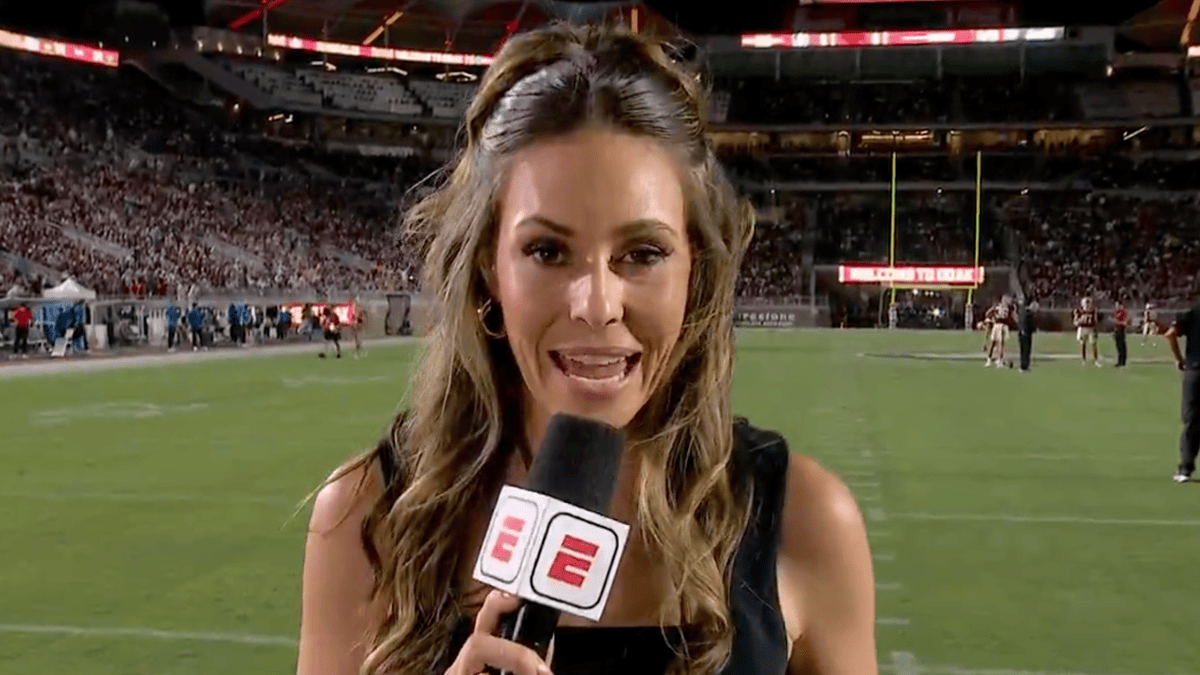
Monday night's Florida State–SMU clash was already shaping up to be a season opener with serious stakes. But nobody expected the game to be thrown into chaos before a single snap was played—except for ESPN sideline reporter Taylor McGregor, who turned a nightmare broadcast scenario into a masterclass in live journalism.
The ACC showdown, originally scheduled for a 7:30 p.m. ET kickoff, was delayed by more than 90 minutes after a power outage plunged Doak Campbell Stadium into darkness. When the lights finally flickered back on, the game began at 9:15 p.m.—but not everything was fully operational. There was no public address system, no scoreboard, no coach-to-player helmet communication, and no replay review. Players, coaches, and officials had to adapt on the fly, and so did the broadcast crew.
Amid the confusion, McGregor became the calm, reliable voice for viewers at home. She provided frequent updates, interviewed coaches and officials, and kept the audience informed as the situation evolved. Her performance did not go unnoticed.
Fans Rally Behind McGregor
Social media lit up with praise for McGregor, with many calling her work “amazing” and a testament to the value of sideline reporters. One fan wrote, “Congrats Taylor! You earned a massive paycheck! Hope they extend your contract—you showed the world yesterday you were made for what you do.”
Another added, “Well done tonight. WELL done. Didn’t have THAT on your bingo card when you left the hotel for kickoff today... a true professional job turned in tonight in some EXTREMELY challenging conditions.”
The praise kept coming. “You were an absolute Rockstar tonight. Made me proud to be a Cubs and FSU fan. Boog & JD were smiling!” one fan posted. Another highlighted her journalistic instincts: “Outstanding job on the coverage last night. Great information, with frequent updates on a fluid situation with interviews of coaches and officials. Exhibit A of great sports journalism.”
One fan summed it up succinctly: “You legit carried a nearly 2-hour game delay, that’s an insane feat on little notice.”
A Night of Unprecedented Challenges
The delay itself was a test of everyone's patience. ACC commissioner Jim Phillips told The Athletic that the decision to play came after “it was determined the game could proceed safely—and with the full support of the presidents, athletic directors and head coaches from both schools—we agreed to move forward despite not having the usual technology available at the start of the game.”
By halftime, the stadium's systems were fully restored. But the first half was played under unusually primitive conditions, making McGregor's ability to keep viewers engaged even more impressive.
Sideline reporters often go underappreciated, but Monday night proved just how crucial they are. McGregor's composure, thorough reporting, and ability to adapt under pressure earned her a viral moment that highlights the ongoing debate about the role of sideline interviews in modern sports broadcasting. While some have questioned their value, McGregor made an undeniable case for their importance.
Her performance also drew comparisons to other standout sideline reporters who have faced challenging situations, such as Holly Rowe's sideline work and Laura Rutledge's stylish sideline presence. McGregor, however, carved out her own moment of excellence on a night when everything seemed to go wrong.
As the college football season kicks off, McGregor's performance serves as a reminder that the best broadcasters shine brightest when the spotlight is hottest—and sometimes, when the lights go out entirely.