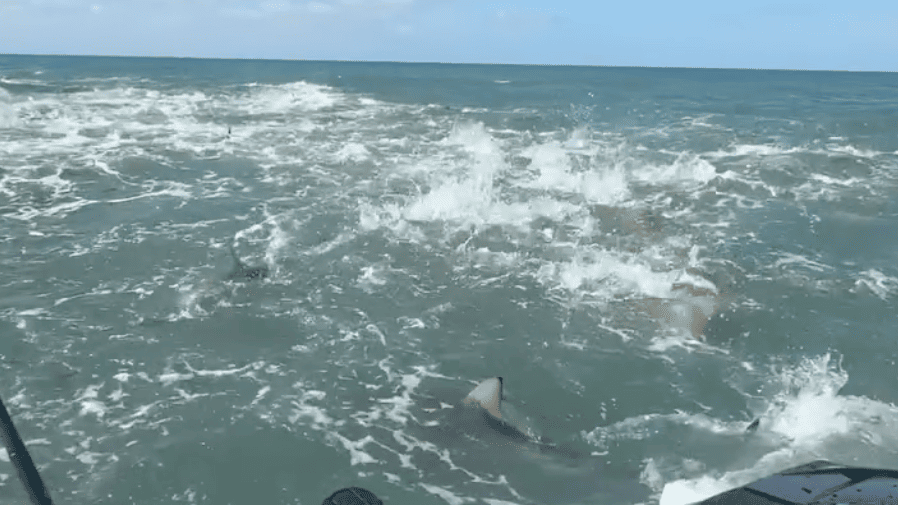
A jaw-dropping video filmed off the North Carolina coast has sent shockwaves through social media and triggered an urgent response from U.S. authorities. The clip, capturing a massive gathering of sharks in what can only be described as a primal feeding frenzy, has prompted an official safety warning aimed at beachgoers and anglers alike.
The footage, shot by a fisherman near the Outer Banks, shows a churning mass of sharks in a scene straight out of a nature documentary. The angler, initially curious, steered closer to investigate the commotion. His tone quickly shifted from intrigue to alarm as the scale of the spectacle became clear. A frantic, "I need to get out of here!" echoes from the video, a sentiment any viewer can instantly understand. Thankfully, the fisherman escaped unharmed, but the encounter served as a stark reminder of the powerful predators sharing our coastal playgrounds.

In direct response to the viral video, officials have issued a comprehensive set of safety guidelines. The core message is one of vigilance and respect for the ocean's inhabitants. This isn't about fearmongering; it's about smart, informed recreation. Similar proactive warnings have been issued for other environmental hazards, like the recent Portuguese Man O' War sightings in the Gulf.
Essential Safety Guidelines for Ocean Enthusiasts
The advisory distills expert knowledge into actionable tips for anyone heading into the water. First and foremost, never swim or surf alone. There's safety in numbers, and staying within reach of assistance is crucial. Timing also matters—dawn, dusk, and nighttime are peak feeding hours for many shark species, though it's noted that some, like tiger sharks, aren't strictly bound by the clock.
Your physical condition and surroundings play a key role. Avoid entering the water with any open wounds, as sharks possess an extraordinary ability to detect minute traces of blood. Steer clear of murky areas, harbor mouths, and spots where rivers meet the sea, especially after heavy rains, as these zones often attract marine life, including sharks.
Minimizing Your Risk in the Water
What you wear and how you behave can also influence risk. Ditch high-contrast swimwear and shiny jewelry, which can catch a shark's eye. Erratic movement is another attractant, so avoid excessive splashing and keep pets—who swim unpredictably—on dry land. The guidance is clear: if sharks are known to be in the area, stay out. If you see one while you're in the water, exit calmly and steadily. Never attempt to provoke or interact with a shark, regardless of its size.
Pay attention to the behavior of other marine animals. If fish or turtles begin acting strangely, consider it a sign to head for shore. Even the presence of dolphins, while often a welcome sight, can indicate larger predators are nearby, as they are prey for some big sharks. Anglers and spearfishers should remove their catch from the water immediately and maintain a safe distance from others in the area. Always avoid swimming near people who are fishing or where there are dead animals in the water.
This incident serves as a powerful reminder that the ocean is a wild and dynamic ecosystem. While encounters like the one filmed are rare, heeding expert advice is the best way to ensure a safe and enjoyable experience. It's a lesson in co-existence, much like the warnings issued for terrestrial sports events facing natural disruptions, such as the flash flood threats that recently plagued the Midwest sports scene.
Staying informed and prepared is paramount, whether you're facing a weather delay or planning a day at the beach. By respecting the power of nature and following these guidelines, everyone can do their part to stay safe while enjoying the incredible resources our coasts provide.