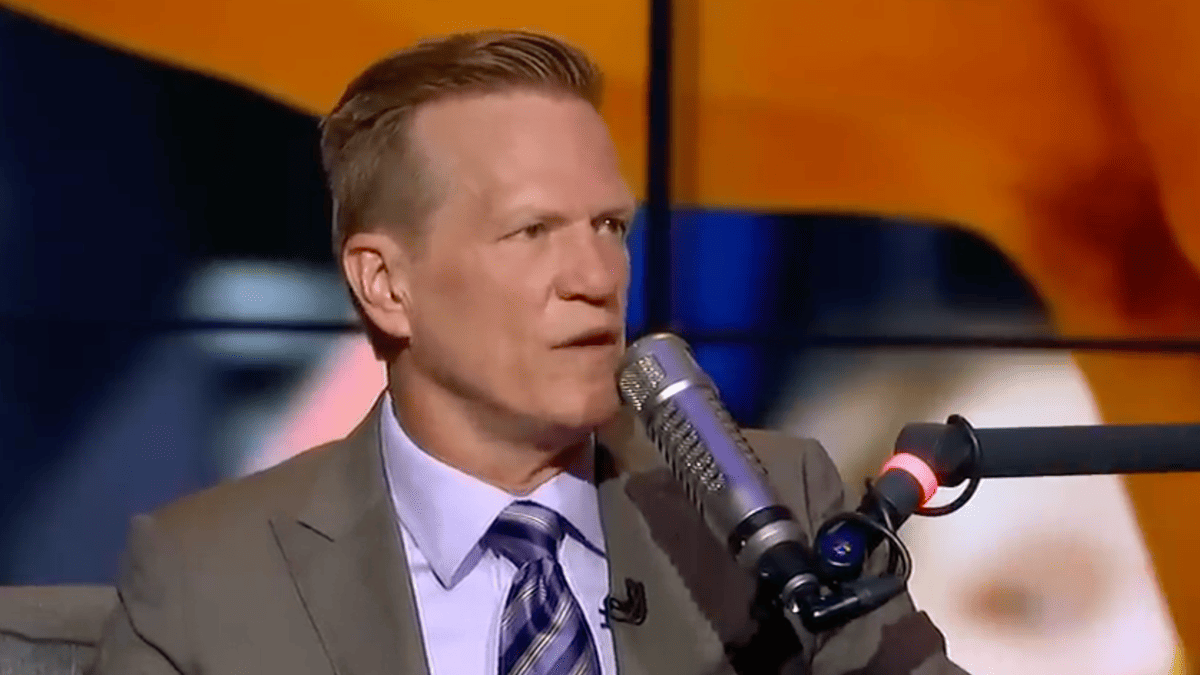
Longtime NBA reporter Ric Bucher has ignited a firestorm after taking aim at the WNBA's media landscape, labeling it a "girls club" and questioning why networks rely heavily on all-female broadcast panels. His comments, made during a recent podcast episode, have drawn sharp rebukes from fans and media observers alike.
Bucher, known for his decades covering the NBA, didn't hold back in his critique. He specifically called out networks like ESPN and NBC for featuring only women as studio hosts and analysts during WNBA games. "Why are all the color analysts and studio hosts women?" he asked. "Women have served in a variety of positions on national NBA broadcasts. Why shouldn't there be diversity on national WNBA broadcasts? What are the networks afraid of?"
His remarks didn't stop there. Bucher argued that the coverage lacks the kind of robust debate and differing opinions that fans expect from sports broadcasting. "There are some smart, basketball-savvy women, both in the studio and the broadcast booth, but I don't hear a whole lot of differing opinion or debate," he said. "It all comes off as safe and monotone and cookie cutter, especially when it comes to controversial topics."
As an example, he cited a recent incident where Connecticut Sun guard DiJonai Carrington delivered a hard foul on Indiana Fever's Sophie Cunningham. Bucher claimed the broadcast crew hesitated to call it a Flagrant 2 even after replays showed Carrington made no play on the ball. "The studio analysts were no better," he added. "All of it feels like a girls' club. The media protecting the league from real scrutiny or critique."
He went further, questioning the motives behind such coverage. "I'll ask again: What are they afraid of? Players can't take it? That critiquing a woman in public is no way to treat one?"
The backlash was swift. WNBA fans took to social media to slam Bucher's comments. One fan wrote, "Toxic men are mad they aren't being given a safe space to hate." Another pointed out the hypocrisy, saying, "We can't spend as much time as we did saying NBA national broadcasts started to suck because the league wasn't being celebrated enough on national broadcasts and then turn around and [criticize] the WNBA for celebrating their sport on national broadcasts."
Others compared his complaints to a champion whining about draft picks. "He sounds like the defending champion that's complaining that the worst team in the league got the 1st pick in the draft. When you complain about the all male TNT crew of Ernie, Kenny, Chuck and Shaq I'll take you seriously," one user tweeted.
Some fans acknowledged a kernel of truth in his broader point about a lack of critical analysis in WNBA coverage, but argued it stems from the league's growth and the need to combat bigotry. "I do agree that in the WNBA it's a bit taboo to hate on a player or talk trash about a rival team I think as the league grows these things will become more acceptable," one fan wrote. "Especially as we work past all the bigotry issues. One of the best things about sports is banter from rivals."
This isn't the first time Bucher has waded into controversial territory, and it likely won't be the last. The debate over media representation and the tone of WNBA coverage is hardly new—recently, a network faced backlash for omitting Caitlin Clark in a pregame graphic, highlighting the sensitivity around how the league and its stars are presented. Meanwhile, former WNBA player Angel McCoughtry recently suggested that drama in the league is often fueled by players seeking social media fame, adding another layer to the conversation about the league's public image.
As the WNBA continues to grow in popularity, the scrutiny on its media coverage—and the voices behind it—will only intensify. Whether Bucher's criticism sparks meaningful change or simply adds to the noise remains to be seen, but one thing is certain: the conversation is far from over.