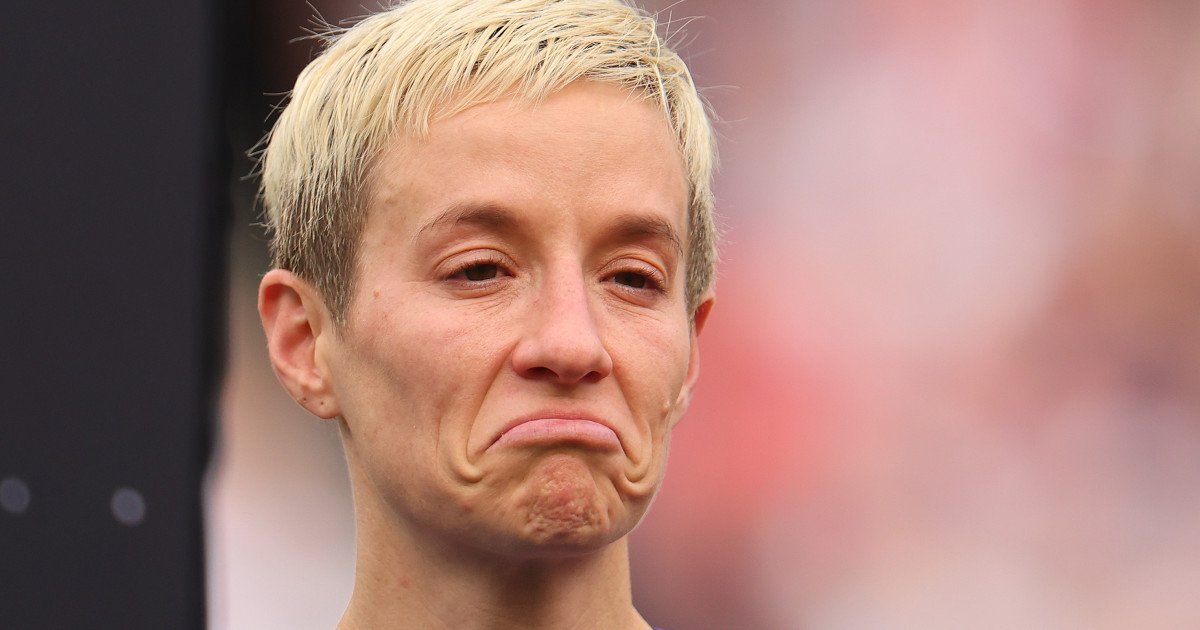
Megan Rapinoe, the iconic and often outspoken former US Women's National Team star, finds herself in the eye of a new storm. This time, however, the criticism isn't about her play on the pitch, but her perceived silence off it. The soccer legend is facing mounting accusations of hypocrisy for not publicly addressing the precarious situation of the Iranian women's national soccer team, whose players fear severe punishment—or worse—if forced to return home.
A Vocal Advocate's Quiet Moment
Rapinoe has built a global reputation as a fierce advocate for social justice, LGBTQ+ rights, and gender equality. Her powerful voice has resonated far beyond soccer, making her recent quiet on this international issue all the more conspicuous to critics. The controversy stems from the Iranian team's protest during a tournament in Australia, where players refused to sing their national anthem. Several team members have since remained in Australia, seeking asylum due to legitimate fears for their safety if repatriated to Iran.
"The silence over this from Rapinoe, and so many supposed 'feminists' like her, is so telling, damning, and hypocritical," blasted commentator Piers Morgan in a social media post that ignited the debate. He sharpened his critique, adding, "They'd rather campaign for biological men to wreck women's sport than campaign for these heroic young sportswomen to help save their lives."
Contrast With Past Commentary
The accusations gain traction when contrasted with Rapinoe's recent, very public critiques of other athletes. Just weeks ago, she made headlines by lambasting the U.S. men's Olympic hockey team's conduct, stating they "ruined" their "moment of glory" and "childhood dreams" by being "co-opted by a clown." This willingness to call out fellow athletes makes her apparent non-comment on the Iranian players' plight a focal point for her detractors.
The threats facing the Iranian team are far from theoretical. Iranian state television has aired chilling warnings. "Traitors during wartime must be dealt with more severely," said presenter Mohammad Reza Shahbazi in verified footage. "Anyone who takes a step against the country under war conditions must be dealt with more severely... These people must be dealt with more severely." This rhetoric underscores the life-and-death stakes for the athletes involved.
Political Pressure and Asylum Efforts
The crisis has drawn attention at the highest political levels. Former President Donald Trump publicly urged Australia to grant the team asylum, warning on social media that forcing them back to Iran could be a "terrible humanitarian mistake" where they "will most likely be killed." He later reported speaking with Australian Prime Minister Anthony Albanese, stating some players had been "taken care of" while others felt compelled to return due to fears for their families' safety back home.
This international drama places a harsh spotlight on the selective nature of athlete activism. For a figure like Rapinoe, whose brand is intertwined with advocacy, the criticism questions the consistency of her principles. It's a stark reminder that in the world of sports commentary, what you don't say can be as powerful as what you do. As the saga of the Iranian players continues to unfold, the pressure on high-profile allies in the sports world to speak up only intensifies.
This incident follows a pattern of high-profile figures facing scrutiny over their public stances. Similar to how Dak Prescott faced accusations that contrasted with his public image, or how Tarik Skubal's WBC exit sparked 'coward' accusations, Rapinoe's situation highlights the intense public judgment athletes face. Furthermore, the direct political intervention mirrors other cross-sport dramas, such as when Trump extended an asylum lifeline in a previous iteration of this very crisis.
Whether Rapinoe chooses to break her silence or maintains her current position, the debate has been ignited. It forces a conversation about the expectations placed on athlete-activists and the complex calculus of when to speak out on global issues. For now, the US soccer legend's legacy, built on fearless advocacy, is being tested by a crisis half a world away.