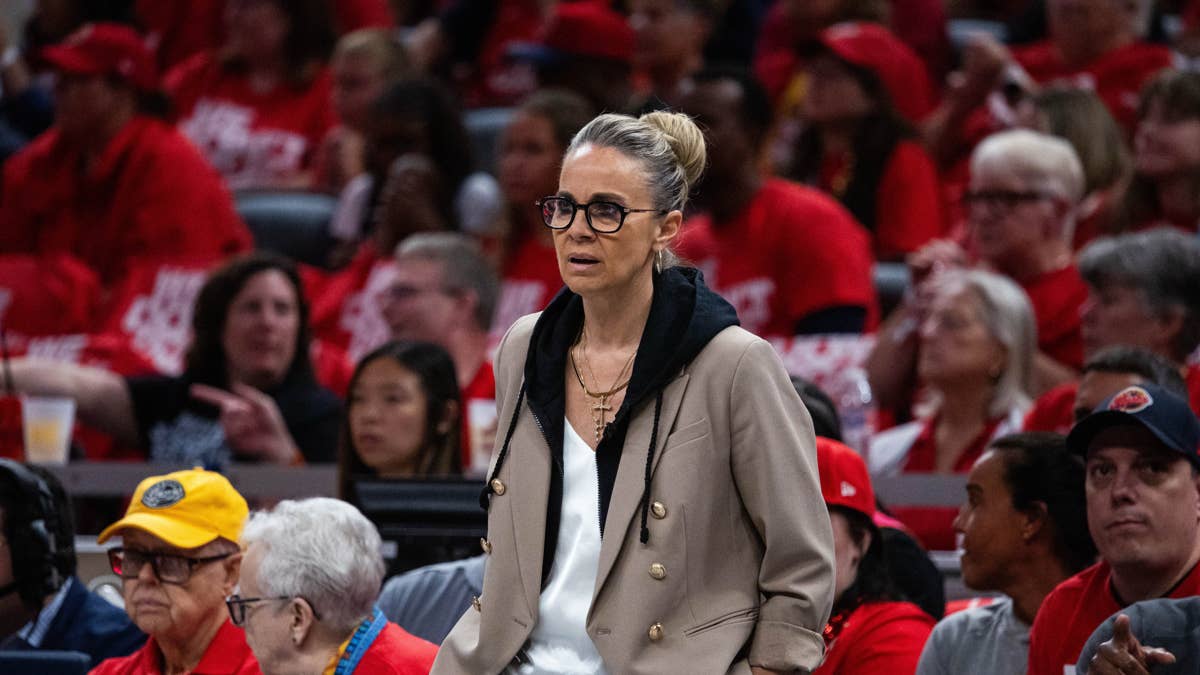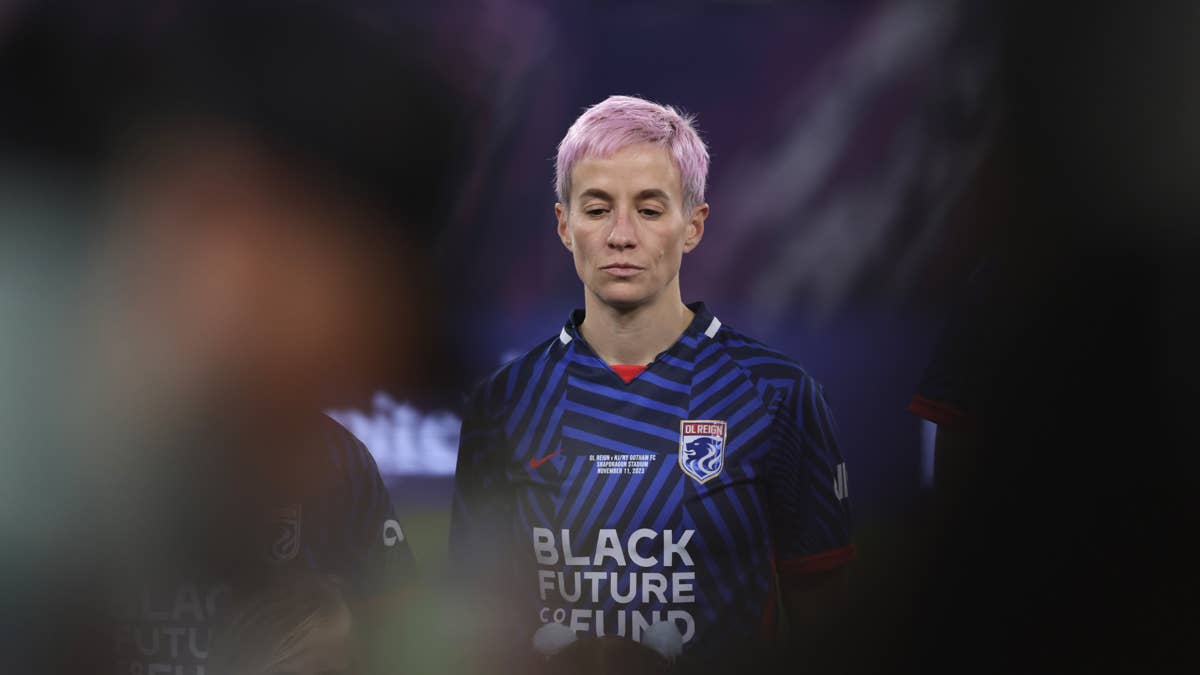
Megan Rapinoe isn't holding back. The USWNT legend and longtime LGBTQ+ advocate is taking aim at Indiana Fever guard Sophie Cunningham, suggesting the WNBA star has helped fuel a dangerous narrative against transgender athletes.
On the debut episode of her new podcast, Why Are You Like This?, Rapinoe didn't mince words when discussing Cunningham's recent alignment with anti-trans activists like Riley Gaines. For Rapinoe, the message was clear: this isn't about protecting women's sports—it's about exclusion.
“If anybody is taking these talking points as legit – or believing they're protecting young girls in sports – I just have to ask: ‘Are you serious?'” Rapinoe said. “I don't know Sophie so I can only project what I see about her beliefs based on her actions. And seeing a picture of her with Riley Gaines after the game told me everything I need to know about what's happening. Riley Gaines has made it her life's mission to exclude trans people from public life.”
Rapinoe's comments come amid a heated national debate over transgender participation in women's sports—a debate that has found a flashpoint in the WNBA. Cunningham, who has been outspoken on the issue, has drawn both support and criticism. Coco Gauff has backed Cunningham, while others have pushed back, and the WNBA has remained silent on the eligibility of transgender players.
Rapinoe argued that the conversation is often framed as a way to shield young girls from predatory men in locker rooms—a framing she calls absurd. “Not happening,” she said bluntly. “It villainizes trans girls as if they're somehow magically older than their peers or are men – when in reality they are also young girls. These laws are excluding kids from playing youth sports.”
The former soccer star stressed that those with major platforms have a responsibility to think critically about the messages they send. “This is where I think the accountability with having a major platform is extremely important,” she said.
Rapinoe also pointed out that the fear of transgender athletes dominating elite women's sports is overblown. “If we want to have a conversation around elite sports, there are effective policies that have been in place for many years that no one noticed because they worked,” she said. Indeed, there isn't a wave of transgender athletes knocking on the WNBA's door, yet the issue has become a lightning rod.
Cunningham, for her part, has stuck to her stance, saying she has “love and respect for everybody” even as the controversy swirls. But Rapinoe's critique cuts deeper, questioning whether such positions—however politely framed—ultimately harm the most vulnerable.
The debate shows no signs of cooling, especially as Caitlin Clark faces backlash for dodging the question. For Rapinoe, the stakes are personal. She's spent her career fighting for inclusion, and she's not about to let that progress be undone.