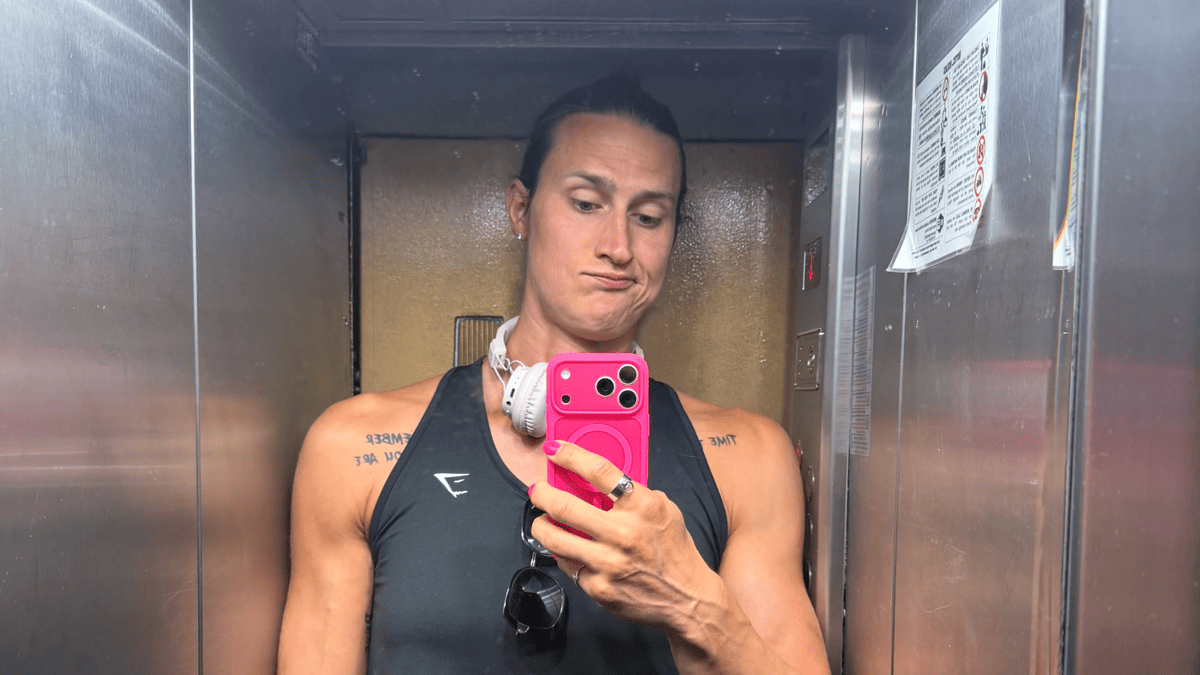
Julie Tétart, a 6-foot-3 center lighting up France's second-tier women's league, has made no secret of her ambition: she'd love to play in the WNBA. But as her dream hangs in the balance, the league itself is staying silent on whether she'd even be allowed to step on the court.
Tétart, who plays for Monaco in France's Ligue 2, has been nothing short of dominant this season, averaging 21.2 points, 20.2 rebounds, and 2.0 assists per game. Her efforts earned her the league's Player of the Year, Defensive Player of the Year, and Domestic Player of the Year honors. In a recent interview with OutKick and Fox News Digital, she called the WNBA a "childhood dream" but remained pragmatic: "If they contact me, I won't say no. But you have to be realistic: I'm old, and there are far better players than me."
The question of her eligibility, however, is far from settled. The WNBA's own rules, as noted by OutKick, state in Article XIII, Section 1(a) that "Only players who are women are eligible to play in the WNBA." But the league has not clarified whether a transgender woman like Tétart qualifies under that definition. As of now, the WNBA has offered no comment on her eligibility.
This silence comes amid a broader, heated debate about transgender athletes in women's sports. Indiana Fever guard Sophie Cunningham recently told ESPN she wants to protect young girls from competing against biological men, a stance that drew both backlash and support. She hasn't wavered: "I said what I said. I think it's kind of common sense," she told reporters. "And I think I'll always believe in that. I think it's really important to protect children, and that's little girls who are also involved in that category. I stand on what I said."
On the other side, Minnesota Lynx head coach Cheryl Reeve has voiced strong support for transgender inclusion, framing it as a human rights issue. "We need to protect trans kids. Every kid has a right to sports regardless of (being) gender diverse, transgender," Reeve said. She acknowledged the complexities that arise at higher levels, where scholarships and elite competition are at stake, but insisted, "The answer isn't no." She also pushed back against what she called problematic narratives that paint transgender women as predators.
The WNBA has long championed inclusivity, but its silence on Tétart suggests the league is not ready to welcome a transgender player this season. That hasn't stopped the conversation from gaining momentum, especially as critics slam the league for dodging the issue. Meanwhile, other stars like Caitlin Clark have faced their own scrutiny for sidestepping questions about transgender athletes.
For Tétart, the dream remains alive, but the path forward is unclear. As the WNBA continues to navigate this polarizing topic, one thing is certain: the league's next move—or lack thereof—will be watched closely by fans, players, and advocates on all sides.