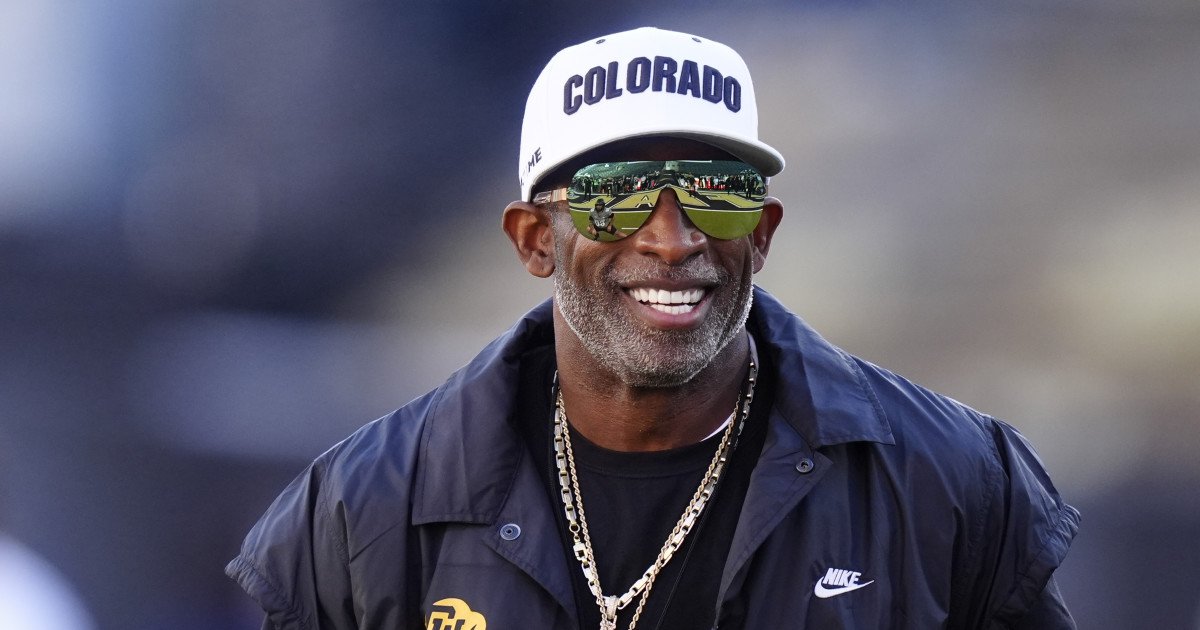
Deion Sanders is never one to follow the conventional playbook, and his latest move in Boulder is turning heads across the college football landscape. According to reports, Coach Prime is preparing for the 2026 season with a radical plan: the Colorado Buffaloes will not have a designated special teams coordinator.
A Drastic Shift After a Tough Season
This decision comes on the heels of a disappointing 3-9 season that saw the special teams unit struggle mightily. The Buffaloes parted ways with coordinator Michael Pollock, whose group ranked near the bottom nationally in net punting and allowed four blocked kicks. Pollock himself acknowledged the harsh realities of the business, stating that when a team goes 3-9, coordinators become targets for change, even if they are performing well.
"When you go 3-9 and you’ve got coordinator attached to your name, you’ve got a bullseye on your chest," Pollock said via Colorado Buffaloes on SI. "Sometimes, you have to make tough decisions with guys that you really care about... The fans and people above us that are making decisions, they want to see some change, so that’s what has to happen."
Staff Overhaul in Full Swing
Sanders' staff revamp extends far beyond special teams. The Buffaloes promoted linebackers coach Chris Marve to defensive coordinator after Robert Livingston left for the Denver Broncos. In another significant departure, pass rush coordinator and NFL Hall of Famer Warren Sapp resigned in February to pursue other opportunities. The university thanked Sapp for his contributions over two seasons, marking another chapter in the ongoing staff exodus that has characterized Sanders' tenure.
This level of turnover puts immense pressure on Sanders to right the ship. The Buffaloes' 2025 campaign was a far cry from the initial hype surrounding Coach Prime's arrival, leaving fans and analysts wondering if his unconventional methods can translate to wins. The decision to forgo a special teams coordinator entirely is perhaps his most unorthodox gamble yet.
What Does "No Coordinator" Mean?
While the Buffaloes haven't named a replacement for Pollock and aren't expected to, the critical question remains: who will handle the crucial third phase of the game? The responsibilities will likely be distributed among existing position coaches, a strategy some programs use but rarely ones with Colorado's profile and resources. It's a high-risk approach that places tremendous faith in Sanders' overall leadership and the adaptability of his remaining staff.
This move is sure to be a major storyline as Colorado prepares for a pivotal 2026 season. All eyes will be on kick coverage, field goal units, and return games to see if this coordinator-less experiment can succeed where a dedicated coach could not. For a program already under the microscope, it adds another layer of intrigue and skepticism.
The pressure isn't just on the field for the Sanders family. As Coach Prime overhauls his staff, his son and star quarterback, Shedeur Sanders, faces his own uncertain future, with the Cleveland Browns eyeing top QB prospects that could impact his professional path.
A Make-or-Break Year for Prime Time
After the excitement of his hiring, the 2025 season was a reality check. Sanders' latest roster and staff maneuvers, including the recent hire of Super Bowl starter Vonn Bell to coach the secondary, show he's not afraid to tear things down and rebuild. Eliminating a special teams coordinator role is the ultimate expression of that philosophy—a belief that the problem wasn't just the coach, but the very structure.
Will this bold, coordinator-less strategy be the spark that revitalizes Colorado football, or will it become a case study in overcorrection? One thing is certain: in the world of college football's most polarizing figures, Deion Sanders continues to write his own rules, for better or worse. The 2026 season in Boulder just became must-see TV.