The final seconds of Sunday's epic Duke-UConn Elite Eight clash delivered a legendary buzzer-beater. But according to a top NFL officiating voice, they also revealed a critical failure by the game's referee that should have changed the outcome.
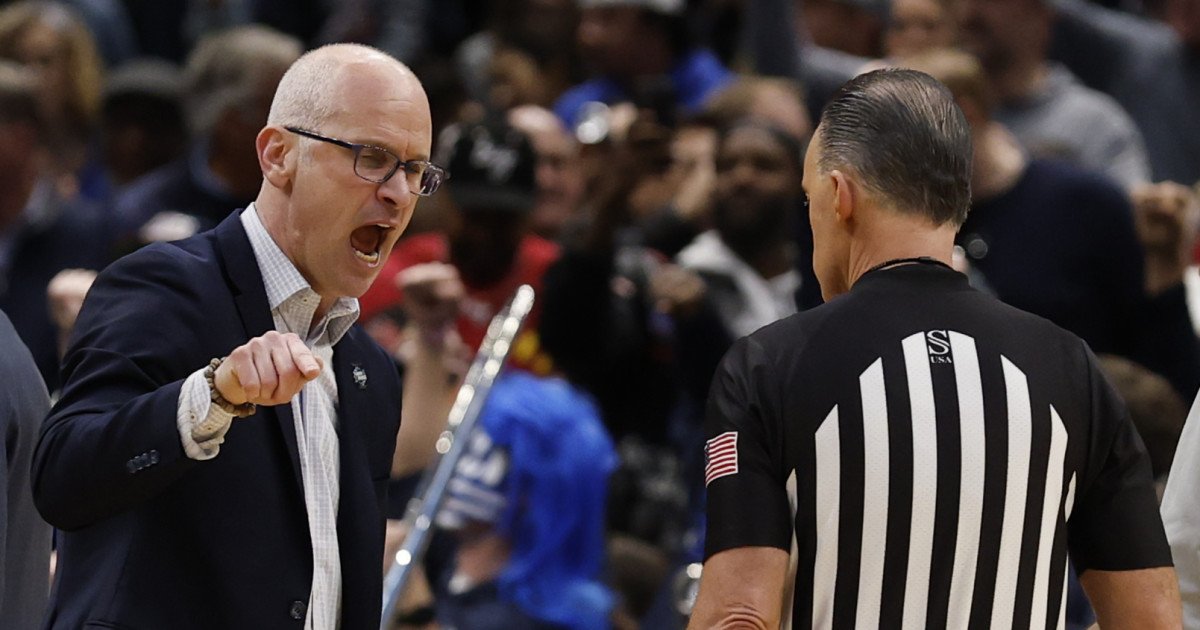
After UConn guard Braylon Mullins sank a stunning, deep three-pointer to snatch a one-point lead with mere tenths of a second remaining, cameras captured Huskies coach Dan Hurley in a heated, face-to-face exchange with veteran official Roger Ayers. The intense moment, which many perceived as taunting, went unpenalized as UConn celebrated its trip to the Final Four.
For retired NFL referee and current rules analyst Terry McAulay, that non-call was an abdication of duty. "Under no circumstances should behavior like this go unpenalized, regardless of the sport or game situation," McAulay stated on social media. "Not unexpected by this coach. Deeply disappointed the official didn't do his job." McAulay's critique suggests Hurley's notorious intensity with officials, a recurring theme this March, should have finally cost him.
A Controversial Omission Speaks Volumes
The controversy gained further traction when it was reported that Roger Ayers would not be among the officials selected for this year's Final Four. McAulay was quick to connect the dots. "The official who failed to penalize Hurley’s abhorrent conduct is conspicuously missing. Speaks volumes," he wrote, drawing a parallel to a 1987 incident involving Bobby Knight where referees who didn't penalize the volatile coach were subsequently sidelined from the tournament.
This incident is just one of many where whistles came under fire during the high-stakes Duke-UConn battle, a game already simmering with tension over key calls.
The Referee's Side: 'Nothing Happened'
In stark contrast to the fiery visual and McAulay's stern assessment, Roger Ayers himself downplayed the entire event. Speaking to college basketball analyst Seth Greenberg, Ayers claimed he was unaware of the brewing storm. "He said, 'What are you talking about?'" Greenberg revealed. "He literally didn’t know what I was talking about. He said, 'Nothing happened. The ball went in. I was running back. They were celebrating. Danny leaned in, said something to me. I said something to him. It was absolutely nothing.'"
This perspective frames the moment as a brief, inconsequential exchange lost in the chaos of celebration, rather than a fineable offense. It's a reminder that not every heated glance in the crucible of March Madness crosses the official threshold, even if it sparks debate about potential sanctions.
A Clash of Sporting Cultures
The core of this debate may lie in the differing officiating philosophies between sports. McAulay, steeped in the NFL's strict protocol for respecting officials and controlling sideline behavior, sees a clear violation that demands a penalty. In college basketball, where coach-official interactions are often more theatrical and continuous, the line is sometimes blurrier. Ayers, in the moment, apparently saw nothing warranting a technical foul that would have given Duke free throws and potentially the game.
The discussion also echoes broader tensions in officiating across sports, similar to recent heated disputes between NFL referees and the league over authority and protocol.
Ultimately, UConn's victory stands. But the post-game conversation has been powerfully shaped by an NFL rules expert's conviction that the referee on the court, in the most crucial instant, failed to make the call that the rulebook—and the integrity of the game—demanded. Whether it was a missed tech or a whole lot of "nothing" depends entirely on which expert you ask, leaving fans to debate what truly constitutes crossing the line when a Final Four berth is on the line.