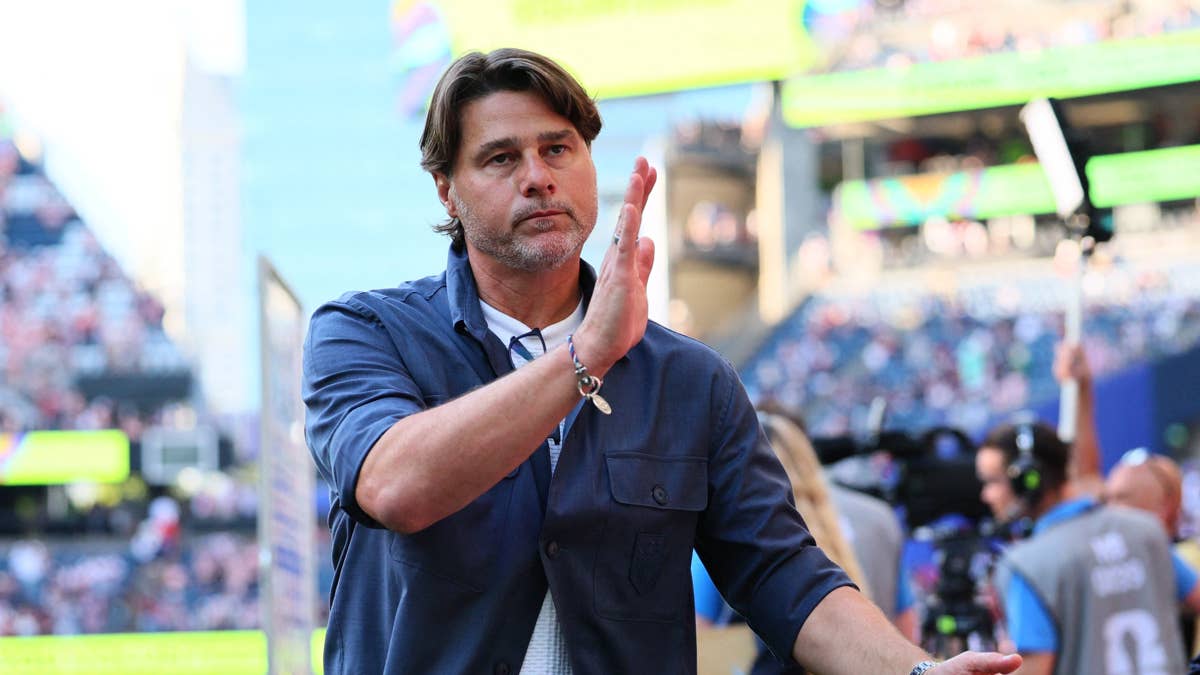
The question of whether Mauricio Pochettino would stay on as head coach of the U.S. men’s national team has finally been answered. After the USMNT's disappointing elimination by Belgium in the 2026 World Cup, many wondered if the Argentine tactician would walk away. But according to David Ornstein of The Athletic, Pochettino is expected to sign a contract extension that will keep him in charge through the 2030 World Cup.
Pochettino had the Americans firing on all cylinders during the group stage, notching wins over Paraguay and Australia before a convincing 2-0 victory over Bosnia-Herzegovina in the Round of 32. However, the dream run came to a screeching halt against Belgium, exposing familiar cracks in the squad’s ability to handle elite competition.
Despite the bitter exit, U.S. Soccer moved quickly to lock up their manager. Pochettino confirmed on July 16 that an offer was on the table: “We are evaluating it, looking at it. They have made me an offer to continue, and we will see. Next week we will make a decision.” It now appears that decision is a yes, with a deal that runs through the 2030 tournament—one that will be co-hosted by the United States, Canada, and Mexico.
Not everyone is thrilled about the news. ESPN gave Pochettino a “D” grade for his World Cup performance, writing: “Along the same lines as Tuchel, U.S. Soccer hired a super coach to elevate a talented but underperforming group of players. Pochettino did enough to get a nation believing in the group stage, but as soon as the USMNT faced a competent team in Belgium, it lost.”
Fans on social media echoed that skepticism. “Long-term deals don’t guarantee progress; USMNT still lacks a clear identity on the pitch,” one fan wrote. Another added, “USA should have tried another coach with the way Pochettino was eliminated.”
The decision to stick with Pochettino signals a long-term commitment to building a program that can compete with the world’s best. With the 2030 World Cup on home soil, the pressure is on to not just participate, but to make a deep run. The extension also comes amid broader debates about the future of soccer in the U.S., including calls for stars to boycott the 2030 World Cup over FIFA's private investment plans.
Pochettino’s track record suggests he can build a team culture and get results in big moments—his work at Tottenham and PSG proves that. But translating that to the international stage, especially with a squad still finding its identity, will be his ultimate test. The next four years will be crucial, and the USMNT faithful will be watching closely.
For now, the message from U.S. Soccer is clear: they believe in Pochettino’s vision, and they’re willing to bet on him to deliver when it matters most—on home soil in 2030.