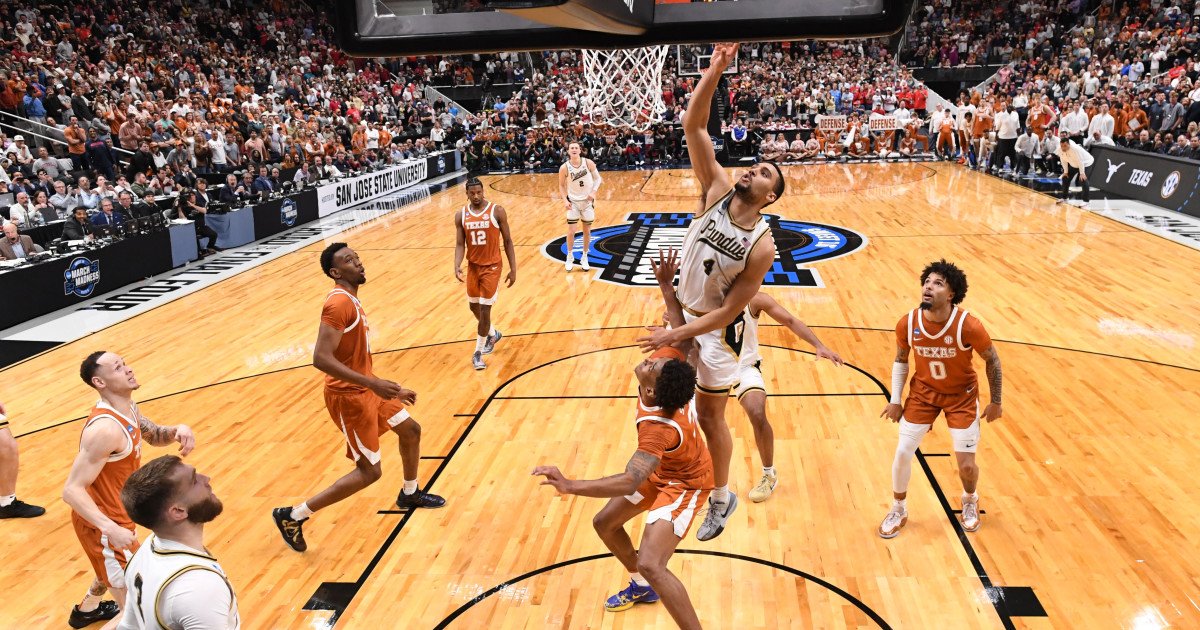
The NCAA Tournament's Sweet 16 delivered another unforgettable moment Thursday night, but the aftermath of Purdue's 79-77 victory over Texas has been dominated by controversy rather than celebration. A last-second tip-in by Trey Kaufman-Renn sealed the win for the Boilermakers, but a vocal contingent of fans and observers are crying foul, alleging the officiating crew tilted the game in Purdue's favor.
A Thriller with a Bitter Aftertaste
In a game that lived up to the March Madness hype, Texas clawed back to tie the score late, setting the stage for a frantic final possession. Purdue guard Braden Smith's driving attempt missed, but Kaufman-Renn soared for the decisive put-back with just 0.7 seconds left. "I was standing under the rim, I was like 'Please get in there, please get in there,' and it did," Smith said post-game. "Trey tipped it perfectly and I was like 'Thank God, thank God that went in.'"
However, the elation from West Lafayette was met with immediate outrage across social media and sports forums. The central complaint: Kaufman-Renn appeared to commit an offensive foul on the game-winning play, a call that went unmade. This non-call became the flashpoint for broader accusations of one-sided officiating throughout the contest.
Social Media Erupts with 'Rigged' Claims
The court of public opinion rendered a harsh verdict. "Texas was hosed in this one. Refs let Purdue get away with way more and then Texas would get balled for doing the same thing," declared one fan online, capturing the sentiment of many. The rhetoric escalated quickly, with another stating, "This game was rigged. Refs had money on Purdue." A third lamented, "Purdue is the luckiest team alive... Push in the back. Not getting called on Purdue tho. Ridiculous. Rigged." This kind of fiery debate is part of what makes the tournament so compelling, even as it sparks intense scrutiny of every decision.
While fan frustration is a hallmark of close tournament losses, the accusations of a "rigged" outcome represent a more serious charge, questioning the integrity of the contest itself. It's a stark contrast to other tournament exits, like where a coach took full responsibility for a defeat, rather than pointing fingers elsewhere.
Miller's Measured Response Points to Rebounding
In a display of sportsmanship, Texas coach Sean Miller steered clear of the officiating firestorm. When asked about the loss, he focused squarely on the game's tangible statistics, not the whistle. "The No. 1 thing for us to have a chance today was to rebound with Purdue," Miller stated. "I thought we really struggled to rebound on defense."
Miller's refusal to blame the officials stands in contrast to the online fury and highlights a fundamental basketball truth: games are often won in the trenches. His analysis suggests that Purdue's physicality on the glass, a hallmark of their team, was the decisive factor, not any perceived bias from the men in stripes. This kind of post-game focus from a coach can sometimes be as defining as a sideline reporter's viral moment.
Moving Forward in a Cloud of Controversy
With the loss, Texas's season concludes at 21-15. Purdue, meanwhile, advances to the Elite Eight, where they will face either Arizona or Arkansas. Their dramatic win, however, will be remembered with an asterisk by many, a testament to how officiating controversies can overshadow even the most thrilling finishes in March.
The incident adds to the tournament's drama but also fuels ongoing debates about consistency in officiating. As Purdue prepares for its next challenge, the conversation around this game serves as a reminder that in the high-stakes pressure cooker of the NCAA Tournament, every call—and non-call—is magnified. For every team celebrating, there's another dealing with heartbreak, whether it's a last-second tip-in or the kind of ugly, grinding defeat that ends a run.