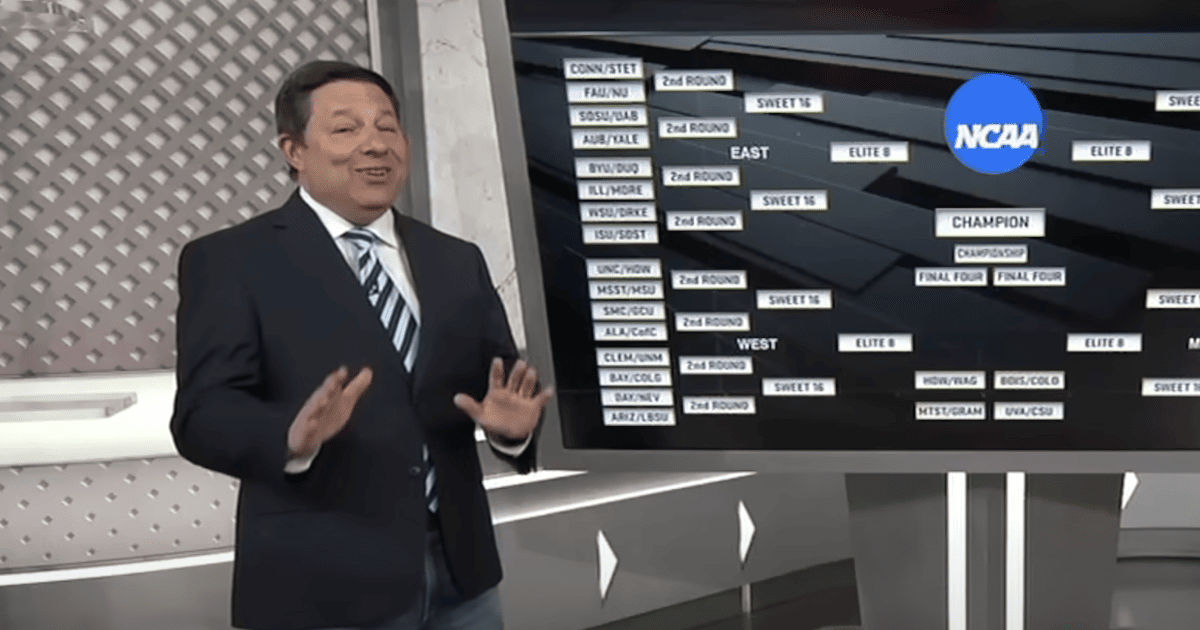
The calm world of bracket forecasting just got a heated dose of March controversy. ESPN's resident bracketologist, Joe Lunardi, has publicly called out former Auburn coach Bruce Pearl over what he deems an "absurd" claim about the NCAA Tournament selection process. The fiery exchange centers on the remarkable, undefeated season of the Miami (OH) RedHawks and who truly belongs in the Big Dance.
The Spark: Pearl's Provocative Stance
Last weekend, Bruce Pearl, now a television analyst, ignited a debate that quickly spread across college basketball circles. He argued that the Miami (OH) RedHawks, despite a pristine 30-0 record, should not receive an at-large bid to the NCAA Tournament if they fail to win the Mid-American Conference tournament. "If we're selecting the 68 best teams, then Miami (OH) is going to have to win their tournament to qualify as a champion," Pearl stated. "Because as an at-large, they are not one of the best teams in the country." This dismissal of a perfect record from a mid-major program immediately raised eyebrows and tempers.
Lunardi's Detailed Rebuttal
Joe Lunardi, the man whose Bracketology projections are gospel to millions this time of year, didn't hold back in his response. In his latest update for ESPN, he systematically dismantled Pearl's argument, emphasizing it "requires context." Lunardi pointed out three critical flaws. First, he noted that there's no definitive proof Auburn—a team Pearl is closely associated with—is actually a better basketball team than Miami. Second, he highlighted Miami's impressive resume, which includes winning "four more true road games than Auburn has played," a significant achievement given road wins are notoriously hard to secure. Finally, Lunardi appealed to history, stating, "in the modern history of the NCAA tournament, great mid-majors have won almost twice as many games as middling high-majors, despite fewer bids and weaker seeding."
Lunardi wrapped his critique with a sharp, sarcastic flourish: "Now, I suppose it's possible Miami is the worst undefeated team of all time, and Auburn is the best .500 team we've ever seen — but it's way more likely Pearl would be better off leaving Bracketology to the professionals."
Reading Between the Lines: An Auburn Agenda?
The intensity of Lunardi's response has led many fans and observers to question Pearl's underlying motive. Why would a former coach so forcefully argue against the inclusion of an undefeated team? The speculation is that Pearl's comments are a strategic play to bolster the resume of the Auburn Tigers, the program he led for nearly a decade and where his son, Steven, is now head coach.
Auburn enters its regular-season finale with a 16-14 record, squarely on the NCAA Tournament bubble. By publicly devaluing the accomplishment of a mid-major like Miami (OH), the theory goes, Pearl is attempting to shift the selection committee's focus toward power-conference teams with more losses but tougher schedules—teams like Auburn. While Pearl no longer patrols the Auburn sideline, his passionate defense of high-major credentials seems conveniently timed.
The Teams at the Heart of the Debate
This war of words puts two teams in stark contrast. The Miami (OH) RedHawks, under coach Travis Steele, have authored a storybook season, aiming for a 31-0 regular season finish. Their perfect record is a testament to consistency and dominance within their schedule. On the other side stands Auburn, a program in transition battling to keep its postseason hopes alive in the brutal SEC. The Tigers' path to an at-large bid is precarious, making every comparison to other bubble teams critically important.
This clash is more than just a petty argument; it's a fundamental debate about what the NCAA Tournament should represent. Is it exclusively a showcase for the "best" teams, often defined by power-conference pedigree and strength of schedule? Or is there room for the magical, undefeated story from a smaller conference, a narrative that has defined March Madness glory for decades? Lunardi's defense of Miami champions the latter, embracing the tournament's history of Cinderella stories and unexpected heroes.
As Selection Sunday approaches, this exchange guarantees that Miami (OH)'s resume will be scrutinized under an even brighter spotlight. Whether the committee agrees with Pearl's skepticism or Lunardi's defense will determine if perfection is indeed enough for a ticket to the dance.