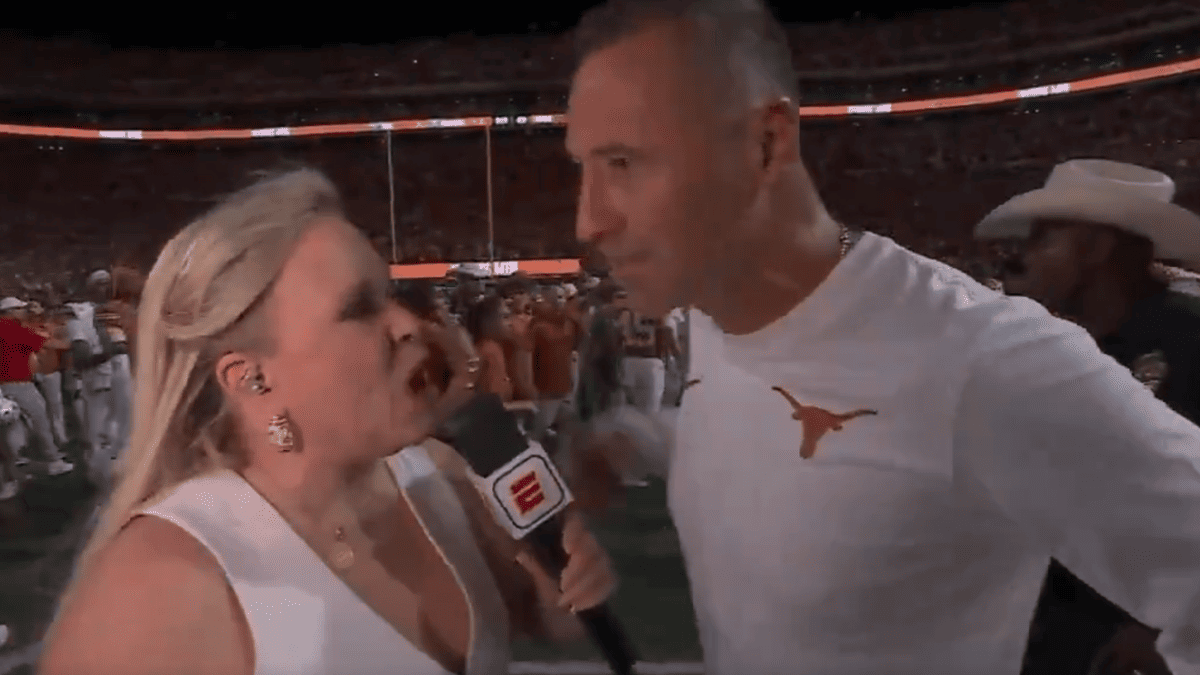
ESPN host Laura Rutledge is the latest voice to defend the SEC's recent College Football Playoff struggles by pointing to their grueling regular-season schedule. But fans are calling her out for what they see as blatant bias.
Appearing on The Pat McAfee Show on Wednesday, Rutledge—an SEC graduate and former SEC Network host—weighed in on the conference's failure to win a national title since 2022. The Big Ten has captured the last three championships: Michigan in 2023, Ohio State in 2024, and Indiana in 2025. Instead of crediting the Big Ten's dominance, Rutledge argued the SEC is its own worst enemy.
“The competition within [the SEC] is so difficult that 9 games of craziness week in and week out, a little different than other parts, other conferences. … Furthermore, they’re gassed,” Rutledge said. Notably, the SEC will play a 9-game conference schedule for the first time in 2026.
The backlash came swiftly on social media. One fan mocked the idea, writing, “Alabama so fatigued and gassed vs Florida State in September.” Another added, “You’re all trying way too hard to prop up a conference who can’t win playoff games. They aren’t losing because they’re gassed, they’re losing because they’re not as good as you guys portray them to be.”
Critics also pointed out the SEC's past scheduling advantage. “Are we going to talk about how they’ve only played 8 conference games up until this year or…” one user noted. Another questioned the logic of expanding the conference: “You don’t get to brag and dance when you invite teams like Oklahoma and Texas to join your superconference, then complain that it’s too hard to get teams in the playoff.”
Rutledge's comments come amid broader debates about conference strength and playoff expansion. The Big Ten's push for a 24-team playoff has already sparked its own controversy, and this latest episode fuels skepticism about ESPN's coverage. One frustrated fan wrote, “I used to love watching any college football content on ESPN. Then I grew up to realize the show hosts are absolutely clueless and just pushing a company agenda.”
While Rutledge's defenders might argue she's simply defending her alma mater's conference, the optics of an ESPN host making such a claim—especially after the SEC's recent playoff exits—have many questioning the network's objectivity. The debate also echoes broader concerns about player health and the toll of a punishing schedule, though Rutledge's argument focused more on competitive fatigue than safety.
For now, the SEC narrative remains a flashpoint. Whether the conference can reclaim its throne in the expanded playoff era—or if the Big Ten's reign continues—will be tested this fall. But one thing is clear: excuses won't win back the skeptics.