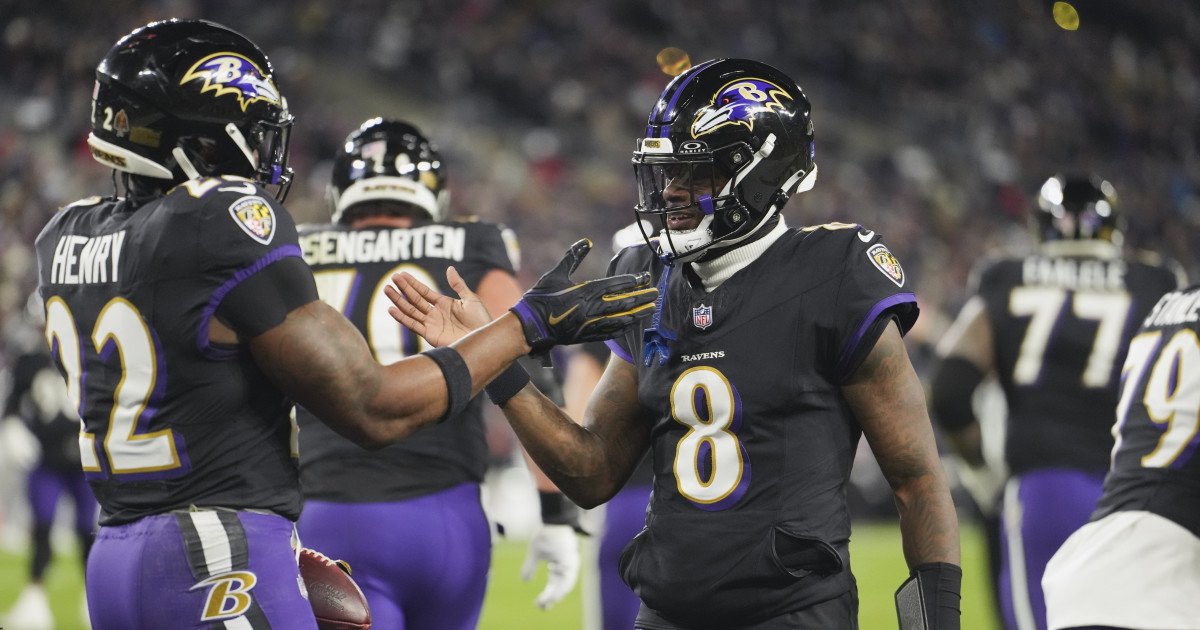
The clock is ticking in Baltimore, and the alarm just got a whole lot louder. The Ravens have officially missed their self-imposed target to secure franchise cornerstone Lamar Jackson to a long-term extension, casting a shadow of uncertainty over the quarterback's future with the team. With a critical deadline in the rearview, the possibility of Jackson eventually hitting the open market has shifted from a distant worry to a pressing concern.
A Window Slams Shut
Baltimore's front office had circled the start of the legal tampering period as their ideal moment to lock down their two-time MVP. That window has now closed without a deal, leaving the team and its superstar signal-caller in a state of limbo. While Jackson is under contract through the 2027 season, the failure to act now introduces a volatile element into the Ravens' long-term planning. Team owner Steve Bisciotti has been vocal about his desire for urgency, hoping to avoid the protracted, drama-filled negotiations that marked Jackson's last contract cycle.
"We want another window, and Lamar knows that," Bisciotti stated. "I'm hoping that it's plug in your number in the same contract he signed [in 2023] and move on. The urgency of that matters to me because we've got free agents, and I don't want to go into free agency with that hanging over our head." The owner's comments underscore a front office eager for stability, but one that is now navigating the consequences of a missed opportunity. This comes on the heels of other roster moves, including the departure of key players like Pro Bowl center Tyler Linderbaum.
Financial Maneuvers and Future Risks
In a related move that highlights the complex financial dance, the Ravens recently restructured Jackson's current deal, creating roughly $40 million in immediate cap space. However, this tactical shift pushes a significant $84.49 million cap hit into the 2027 season, essentially creating a financial cliff. General Manager Eric DeCosta acknowledged the maneuver, adding a void year to 2030, but emphasized the ongoing hope for an extension. "We're certainly hopeful that we'll get an extension done," DeCosta said. "I think it's important to both parties."
The stakes are uniquely high because of a specific clause in Jackson's contract: a no-franchise-tag provision. This means Baltimore cannot use the tag to retain him if he plays out his deal and reaches free agency in 2028, handing unprecedented control to the quarterback. Analyst Mike Florio of Pro Football Talk noted this gives Jackson a clear path to the open market, suggesting negotiations could be delayed until 2027, when the pressure would be immense.
What's Next for Baltimore?
The question now looming over the entire organization is simple: will Jackson be a Raven for life? The team has time, but the leverage dynamics are shifting. With Jackson representing himself without an agent, the negotiation process is unconventional and can lack the constant dialogue typical of team-agent talks. The Ravens' recent activities, including a high-profile trade collapse that involved seeking other star talent, show a team in aggressive win-now mode, making Jackson's presence even more critical.
For Ravens fans, the anxiety is palpable. The specter of their generational talent, the heart and soul of the offense, potentially playing elsewhere is a nightmare scenario. Every passing day without a new agreement fuels speculation. The front office's ability to manage this situation will define the franchise's trajectory for the next decade. Can they secure their MVP before this story becomes a full-blown saga that dominates every offseason until 2028? The missed deadline is the first domino to fall, and all of Baltimore is watching to see where the rest land.