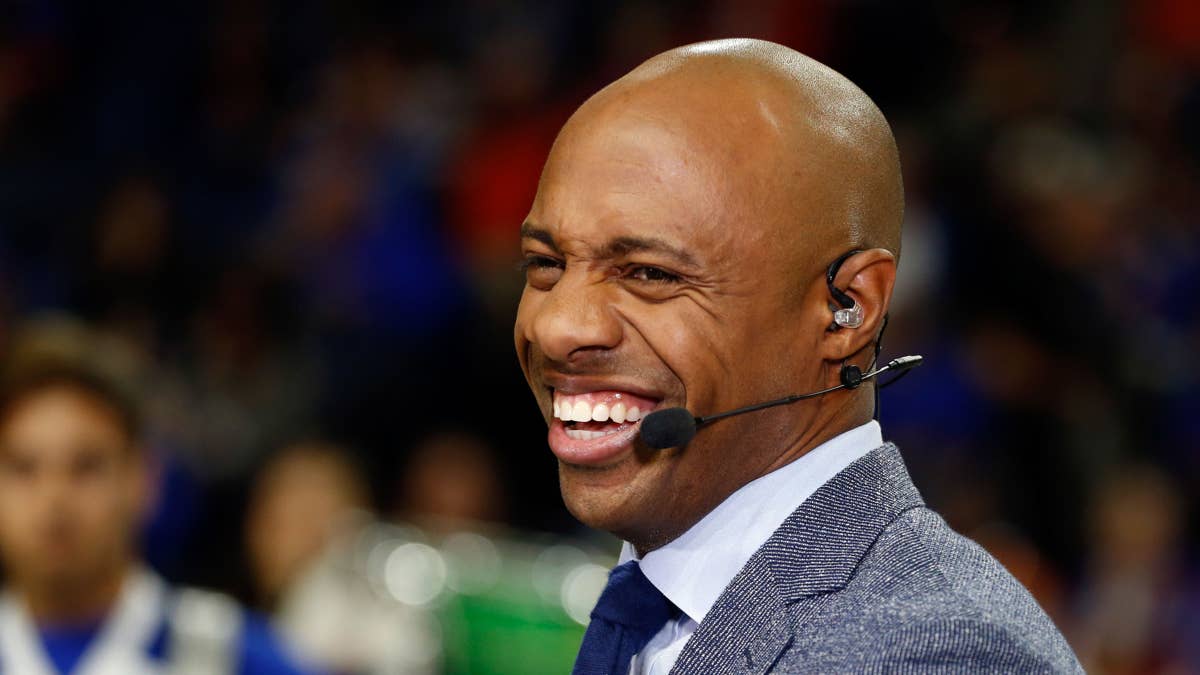
ESPN analyst Jay Williams didn't hold back his fury on Thursday morning after seeing how some news outlets chose to cover the passing of former NBA center Jason Collins. The 13-year veteran, who made history as the first openly gay athlete in a major American sports league, died Tuesday night at age 47 after a battle with Stage 4 glioblastoma.
What set Williams off was a headline that read: “Jason Collins, NBA’s first openly gay player, dies of brain cancer at 47.” To Williams, that framing missed the mark entirely.
“This infuriates me. Jason passes away at 47 and somehow the headline still feels the need to reduce him to a label before acknowledging his humanity,” Williams wrote on social media. “He was a human being, teammate, brother and a person people loved. Headlines today are built for clicks 1st and compassion 2nd.”
The criticism struck a chord with many fans who agreed that Collins' legacy should be about more than just his sexual orientation. Others, however, argued the headline was factual and not disrespectful.
Collins played for six teams during his NBA career, including the Nets, Grizzlies, Timberwolves, Hawks, Celtics and Wizards. The former first-round pick from Stanford averaged 3.6 points and 3.7 rebounds per game. But his impact went far beyond the box score. In 2013, he became a trailblazer by coming out publicly while still an active player, paving the way for greater inclusion in sports.
NBA Commissioner Adam Silver released a heartfelt statement honoring Collins' contributions both on and off the court. “Jason Collins’ impact and influence extended far beyond basketball as he helped make the NBA, WNBA and larger sports community more inclusive and welcoming for future generations,” Silver said. “He exemplified outstanding leadership and professionalism throughout his 13-year NBA career and in his dedicated work as an NBA Cares Ambassador. Jason will be remembered not only for breaking barriers, but also for the kindness and humanity that defined his life and touched so many others.”
The league also called Collins an “inspiration to all who knew him and to those who admired him from afar.”
Williams' frustration echoes a broader debate about media ethics, similar to the recent backlash over a People magazine headline that fans called outdated. In both cases, critics argue that click-driven journalism often sacrifices the dignity of the people being covered.
Collins' death has prompted an outpouring of tributes from former teammates, coaches, and fans who remember him as a kind, dedicated teammate and a pioneer. While Williams and others push for more respectful coverage, the conversation highlights how the media can better honor the full humanity of those we lose.
May he rest in peace.