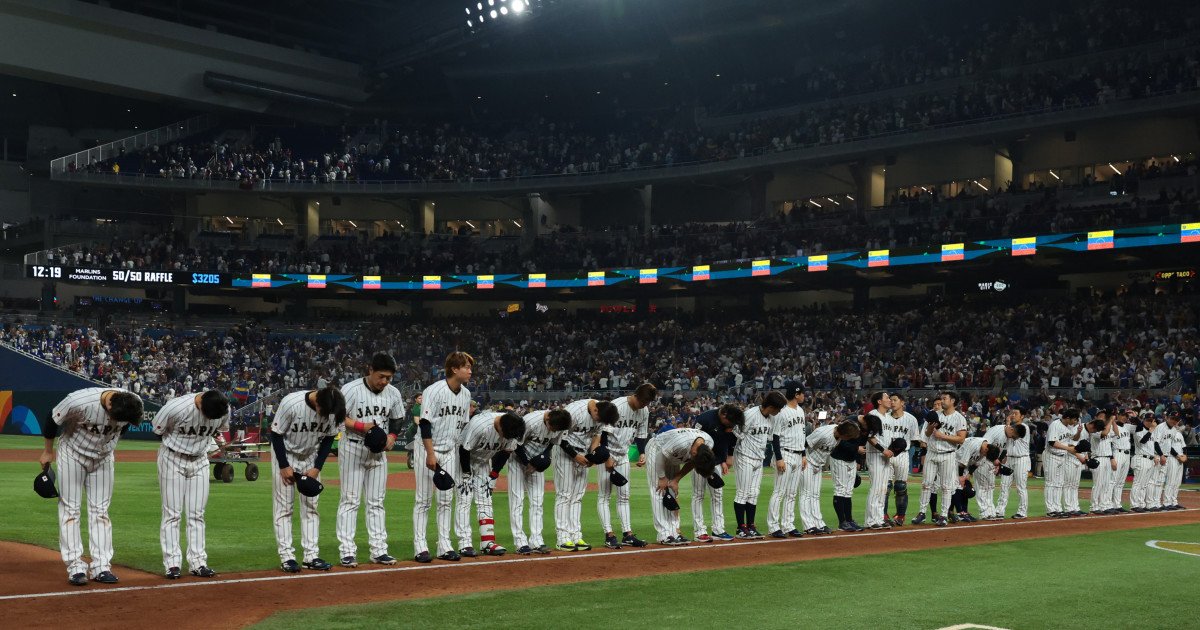
In a move that shakes the international baseball landscape, Japan's manager Hirokazu Ibata has announced his resignation following the team's shocking and historic exit from the World Baseball Classic. The defending champions, who entered the tournament as favorites, saw their title defense crumble in a heartbreaking quarterfinal loss to Venezuela, prompting immediate leadership change.
A Fallen Dynasty
For a nation that has dominated the World Baseball Classic like no other, winning three of the first five tournaments, Saturday's result was nothing short of catastrophic. Japan had never failed to reach at least the semifinals in the event's history. That unblemished record of deep runs came to a stunning end at loanDepot Park in Miami, where Venezuela mounted an epic comeback to win 8-5, booking their ticket to the championship game against the United States.

"The result is everything," Ibata stated bluntly to reporters, capturing the immense pressure and high expectations that come with leading Japanese baseball on the global stage. "Although we lost this time, I hope Japan will grow stronger and win next time." His words reflected a culture where ultimate success is the only acceptable outcome, a sentiment echoed by stars like Aaron Judge, who has called the WBC atmosphere 'bigger than the World Series'.
Collapse in Miami
The game itself was a tale of two halves, a Jekyll-and-Hyde performance that will haunt Japanese fans. Japan looked every bit the champion early, building a commanding lead. The offensive firepower was on full display, highlighted by a three-run homer from Shota Morishita. Even global superstar Shohei Ohtani got in on the action, launching a leadoff home run in the first inning to set the tone.
Then, the unthinkable happened. The wheels completely came off. Venezuela chipped away at the deficit before Boston Red Sox outfielder Wilyer Abreu delivered the crushing blow—a monstrous three-run homer in the sixth inning that completed the comeback. Japan's star-studded lineup, featuring Ohtani, went silent over the final six frames, unable to muster a response as their championship dreams evaporated.
Ibata's Legacy and Challenges
Ibata took the helm after Hideki Kuriyama led Japan to glory in the 2023 tournament. A former All-Star infielder with nearly 2,000 hits in Nippon Professional Baseball, his managerial tenure ends after this singular, devastating tournament run. His task was formidable from the start; Japan entered this WBC with a noticeably depleted pitching staff. Key MLB hurlers like Shota Imanaga and Kodai Senga were absent, and even Shohei Ohtani was limited to designated hitter duties, leaving a heavy burden on ace Yoshinobu Yamamoto and others.
The loss underscores the intense, win-now environment of international competition, where margins are razor-thin and national pride is on the line. Similar high-stakes pressure is felt across sports, from the diamond to the gridiron, as seen when the NFL world rallied around Tyrann Mathieu during a personal tragedy, showing the profound human element behind the competition.
What's Next for Samurai Japan?
The search for a new manager begins immediately for Japanese baseball officials. The successor will inherit a team still brimming with talent but now carrying the weight of unexpected failure. The core, likely still featuring Ohtani, will be eager for redemption, but questions about pitching depth and closing out games will need urgent answers before the next global showdown.
This upset is a testament to the growing parity and drama of the World Baseball Classic. While Japan licks its wounds, other nations like Mexico have shown how a class act on and off the field can capture the world's attention. For Venezuela, the victory was a program-defining moment, propelling them to the title game and proving any team can triumph on baseball's biggest international stage.
As the dust settles, Japan's early exit and the subsequent managerial resignation stand as the most dramatic story of the tournament's knockout rounds. It's a stark reminder that in top-tier sports, past glory guarantees nothing, and the pursuit of victory demands constant evolution—or faces immediate consequence.