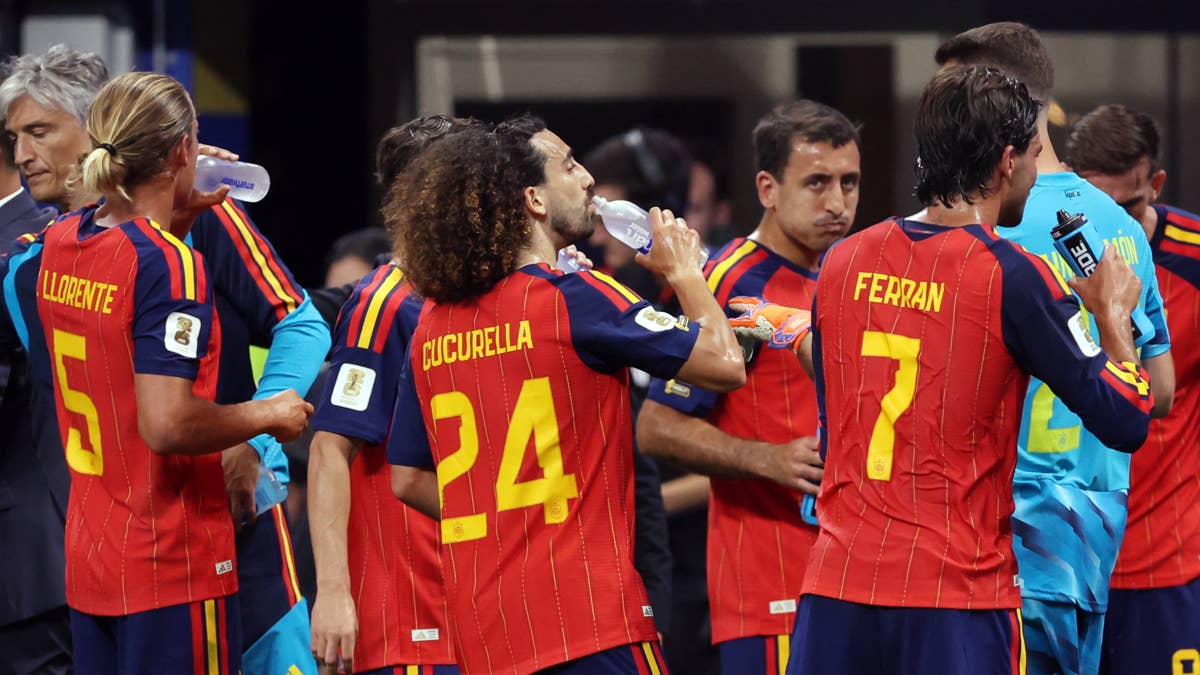
If you've been watching the World Cup on Fox, you've probably noticed something: as players take a mandatory water break, the screen cuts to a flurry of commercials. Fans hate it, but Fox is laughing all the way to the bank. According to reports, the network is raking in a staggering amount of cash from those brief pauses in play.
The Wall Street Journal reports that Fox is charging around $200,000 for a 30-second spot during early-round games, but that number skyrockets to a jaw-dropping $750,000 when the U.S. men's national team is on the pitch. Awful Announcing estimates that Fox could generate nearly $250 million from hydration break ads alone, with the potential to hit $330 million if prices climb for later rounds.

That's a huge windfall considering Fox paid FIFA $485 million for the U.S. broadcast rights. The hydration break ads alone could cover more than half that cost, securing a hefty profit for the network. It's a business move that's working brilliantly for Fox, even if it's alienating a large chunk of the audience.
Fans have made their displeasure loud and clear. Many are switching to Telemundo, which shows the hydration breaks without any commercials. Social media is flooded with complaints. "If you're not watching @FIFAWorldCup games on @Telemundo then you're Doing it all wrong," one user posted. Another declared, "Telemundo broadcast is far superior." Even former NFL star Damien Woody weighed in: "Yea I'm watching Telemundo moving forward."
The frustration isn't just about the ads. Many viewers question the need for the hydration breaks themselves. Netherlands defender Virgil van Dijk voiced his concerns: "I think hydration breaks are really interesting. Every time, going to commercial is a bit — not really that I like it. I think for the neutral watching on TV, it's also not great." Van Dijk suggested that the breaks should be evaluated on a game-by-game basis, only used when temperatures truly warrant them.
Fox's strategy echoes a broader trend in sports broadcasting: maximizing revenue at the expense of viewer experience. But with the World Cup generating massive global interest, the network seems willing to weather the backlash. After all, $250 million is hard to ignore.
For fans who can't stomach the ads, Telemundo offers a refuge. But for Fox, the hydration break has become a golden goose. As one might say, they're not going anywhere.
The controversy also shines a light on the lengths broadcasters will go to recoup hefty rights fees. It's a reminder that behind every thrilling match, there's a business machine grinding away. And right now, that machine is powered by water breaks and high-priced commercials.