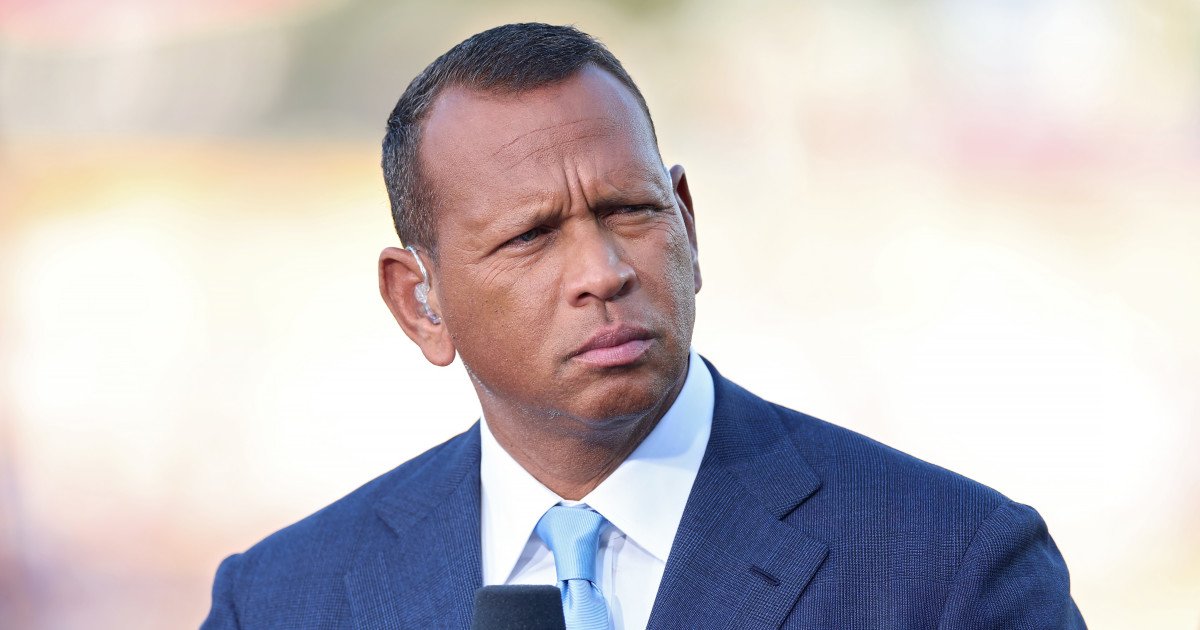
In a stunning display of political and sports reconciliation, former President Donald Trump has completely reversed his once-vitriolic stance on baseball legend Alex Rodriguez. The about-face occurred during a White House celebration for Inter Miami CF's MLS Cup victory, where Trump warmly referred to the controversial slugger as "my friend."
A White House Photo-Op Signals a New Chapter
The scene was all smiles as Rodriguez joined the Inter Miami delegation at 1600 Pennsylvania Avenue. According to reports, the two men "buried the hatchet" and posed for photos, with the White House's official X account proudly posting the moment captioned "POTUS x @AROD." White House spokesman Davis Ingle emphasized Rodriguez's local ties, calling him "a Miami legend" and expressing excitement over his presence at the championship celebration.
This camaraderie is a far cry from the public feud that once defined their relationship. The shift highlights how sports can sometimes bridge even the widest of divides, creating unexpected alliances in the spotlight of victory.
The Not-So-Friendly Fire: A Look Back at Trump's Barbs
To understand the full weight of this reconciliation, one must rewind to 2012-2013. Before his presidency, Trump frequently used his social media platform to launch scathing attacks on A-Rod. His posts were personal and pointed, directly targeting Rodriguez's legacy and character.
- In May 2012, he claimed, "The @Yankees must re-negotiate @AROD’s contract. He is not the same player without drugs."
- He used Rodriguez as a metaphor for being "psyched out" during the 2012 presidential debates.
- In perhaps his harshest critique, Trump labeled him "Druggie A-Rod, @MLB’s biggest fraud" in 2013, suggesting the late George Steinbrenner would have voided his contract.
- He even celebrated Rodriguez's departure from the Yankees, calling it "a great victory for NYC."
This history makes Trump's current "my friend" designation all the more remarkable. It's a stark reminder of how public figures can evolve—or at least publicly recalibrate—their opinions. This isn't the first time a sports figure's interaction with Trump has drawn attention; similar scrutiny followed Travis Kelce's friendly chat with a Trump granddaughter.
The Shadow That Looms: Steroids and the Hall of Fame
The core of Trump's past criticism—Rodriguez's admitted performance-enhancing drug use—remains the defining complication of his baseball legacy. A-Rod is one of the few superstars to confess to using steroids, albeit during a three-year period he claims was before his Yankees tenure. This admission continues to block his path to Cooperstown, leaving one of the game's most statistically dominant players, with the fifth-most home runs in history, outside the Baseball Hall of Fame.
This complex legacy of triumph and controversy makes Rodriguez a perennial figure of debate, much like other polarizing sports personalities who intersect with politics. For instance, Kate Upton has doubled down on her own Trump critique, showing that the sports world's relationship with political figures is rarely simple.
Trump's change of heart toward Rodriguez may simply be a moment of celebratory diplomacy, or it could signal a genuine mending of fences. Regardless, it provides a fascinating case study in how time, setting, and mutual interests can rewrite a narrative. As the sports and political landscapes continue to intertwine, stories of reconciliation and rivalry will undoubtedly keep fans and pundits alike watching closely.