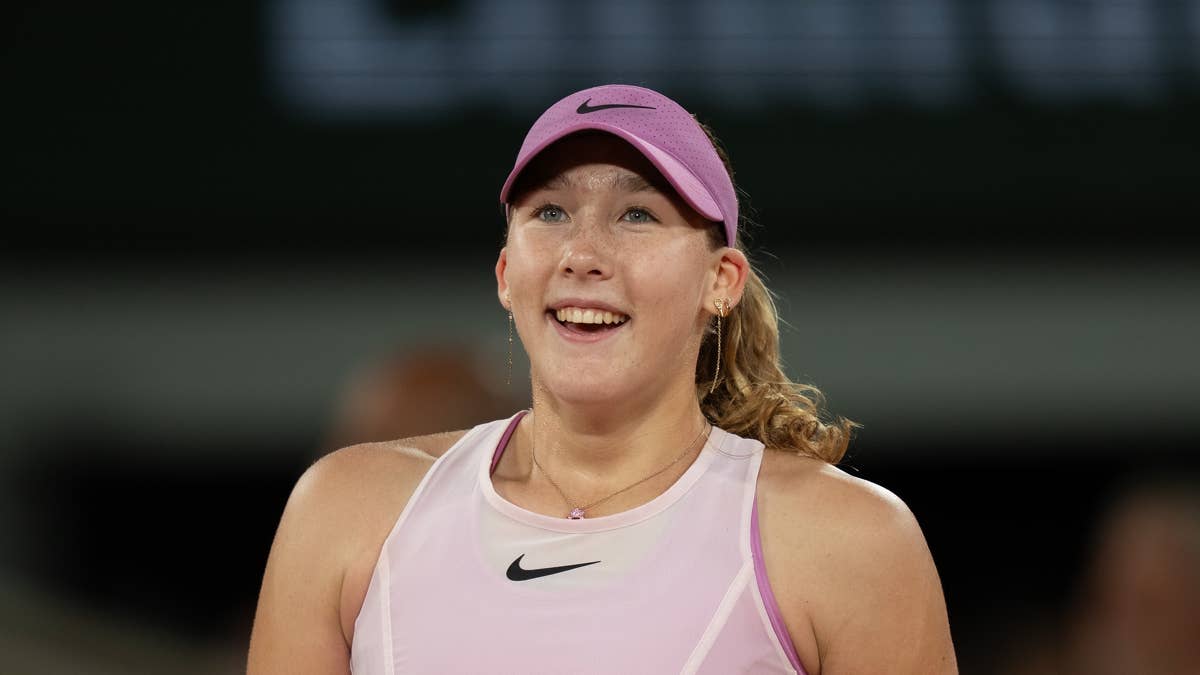
Mirra Andreeva, the 19-year-old tennis sensation, captured her first Grand Slam title at the French Open on Saturday, defeating Maja Chwalinska 6-3, 6-2 in a final that showcased her poise and power. The victory made her the youngest women's singles champion at Roland Garros since Monica Seles in 1992, a historic achievement that should have been a purely joyous occasion.
But the celebration took an awkward turn when two fans in the stands unfurled a Russian flag to honor Andreeva's nationality. Security quickly intervened, forcing the fans to stash the flag away. The incident, captured by tennis writer Ben Rothenberg on social media, has sparked a heated debate among tennis fans about the sport's inconsistent enforcement of flag bans.
The controversy comes amid ongoing restrictions on Russian and Belarusian flags at tennis events following the invasion of Ukraine. While individual players like Andreeva compete under neutral status, fans are increasingly questioning why some national symbols are allowed while others are not. The incident echoes recent tensions, including Venus Williams' classy response to Sabalenka's French Open collapse, which highlighted the emotional weight players carry.
Andreeva, in her on-court speech, showed grace beyond her years, congratulating Chwalinska on a strong tournament and expressing hope for many more finals between them. But off the court, the flag incident has divided opinions. Some fans argue that the security response was justified, given the tournament's rules. Others see a double standard, pointing out that flags from other nations are rarely policed with such vigor.
“This is so dumb. I’ve always disagreed with the decision not to show Russian or Belarusian flag by players names,” one fan wrote on social media. “Double standard.” Another fan countered, “They should have been ejected… pretty sure it would have been a breach of ticket T&Cs.” A third fan speculated, “I bet if there was a US flag, nobody would do anything.”
The debate taps into a broader conversation about how sports governing bodies handle geopolitical issues. Tennis has faced criticism for its patchwork approach—banning flags for Russian and Belarusian players but allowing them to compete. This mixed messaging leaves fans and players alike confused. The situation is reminiscent of Sabalenka's shocking announcement that she's 'not quitting' after French Open heartbreak, which also stirred emotions among the tennis community.
Andreeva's win was a masterclass in resilience. After a shaky start with four consecutive breaks of serve, she settled into a rhythm, dominating the second set. Her victory marks a new chapter in women's tennis, but the flag controversy threatens to overshadow her achievement. As one fan noted, “Maybe this is insensitive but I just can’t bring myself to care when there are clear double standards in which war crimes the sporting world acknowledges.”
The French Open organizers have yet to comment on whether they will tighten flag policies for future events. For now, the incident serves as a reminder of the thin line between celebration and protest in sports. As tennis grapples with these issues, fans will be watching closely to see if the Grand Slam tournaments take a stricter stance. The debate is far from over, and it adds another layer to the already complex Aryna Sabalenka's shocking French meltdown that stunned the tennis world, showing how off-court drama can rival on-court action.
Mirra Andreeva's triumph should be a moment of pure joy, but the flag controversy has turned it into a flashpoint for larger debates about fairness, politics, and the role of national symbols in international sport. Only time will tell how the tennis world navigates these turbulent waters.