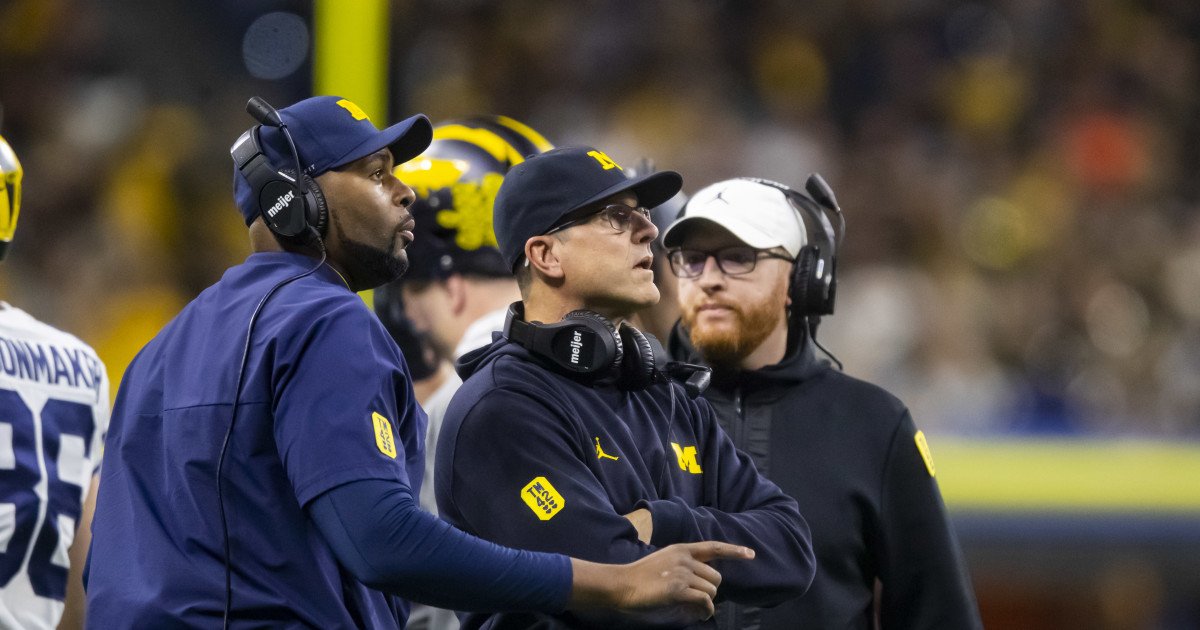
The University of Michigan's football program, already navigating turbulent waters, now faces a legal challenge from within its own former ranks. Chris Partridge, once the Wolverines' linebackers coach under Jim Harbaugh, has filed a wrongful termination lawsuit against the school, claiming he was made a sacrificial lamb during the 2023 sign-stealing controversy.
Partridge was dismissed in November 2023 as the scandal reached its peak, a move that appeared to signal the program's attempt to address internal accountability. However, the narrative shifted dramatically in August 2025 when the NCAA's infractions report explicitly cleared Partridge of any wrongdoing. This exoneration forms the bedrock of his legal claim, which was formally filed this Wednesday.

"I am incredibly thankful for the NCAA Infractions Committee's detailed work," Partridge stated. "For nearly two years, I remained quiet while false narratives about my dismissal circulated. Having my name cleared and my reputation restored is profoundly meaningful for my family and me. My belief in the process never faded, and I stayed committed to my principles as a coach and mentor, focused on guiding young athletes."
The lawsuit alleges the university used Partridge as a "scapegoat" to absorb public and institutional backlash during a crisis-ridden season. His legal action seeks not only damages but a public restoration of his professional standing, arguing his firing was unjustified given the subsequent NCAA findings.
This lawsuit lands as Michigan's athletic department grapples with a series of serious, unrelated allegations that suggest deeper cultural issues. The program recently terminated head coach Sherrone Moore following revelations of an inappropriate relationship with a staff member, an incident that escalated to criminal charges. Furthermore, a separate and disturbing allegation has emerged against former assistant coach LaTroy Lewis, accused of sexual assault. An attorney for the accuser claims Moore was informed of the alleged December 2024 incident but failed to report it, instead attempting to "weaponize" the information.
In response to the accumulating crises, the university has initiated a broad investigation. "These allegations are deeply concerning," said spokesperson Paul Corliss. "The University launched an investigation into the circumstances leading to Sherrone Moore's firing, as well as a wider review of the Athletic Department's culture. We encourage anyone with information to come forward. This work is ongoing." The situation echoes other high-profile cases where institutions face intense scrutiny over their handling of internal misconduct, much like the legal demands for accountability in the Moore scandal from other involved parties.
The confluence of events paints a picture of a storied football program in profound disarray. From the sidelines to the courtroom, Michigan is battling on multiple fronts. The Partridge lawsuit challenges the official story of the sign-stealing saga's fallout, while the newer allegations point to potential systemic failures in leadership and accountability within the department.
For Partridge, the legal battle is a pursuit of vindication. For Michigan, it's another chapter in an ongoing saga that threatens to tarnish the program's legacy far beyond any on-field infraction. The outcome will be closely watched, as it speaks to the complex interplay between crisis management, institutional responsibility, and the real human costs when scandals erupt. As the sports world often sees, the fallout from misconduct can create lasting legal and reputational battles, a theme familiar in stories ranging from tragic off-field cases to disputes over professional conduct.
With an external culture review underway and a former coach taking the university to court, the path forward for Michigan football is shrouded in uncertainty. The coming months will determine not only the validity of Partridge's claims but also the true depth of the cultural reckoning awaiting one of college sports' most iconic brands.