In the chaotic final heartbeat of an instant-classic Elite Eight showdown, a single shot sent one team to the Final Four and left another in stunned silence. But for the voices calling the game for Duke, the drama didn't end with the swish of the net—it ignited a furious debate over a potential technical foul that could have rewritten the ending.
A Moment Frozen in Time
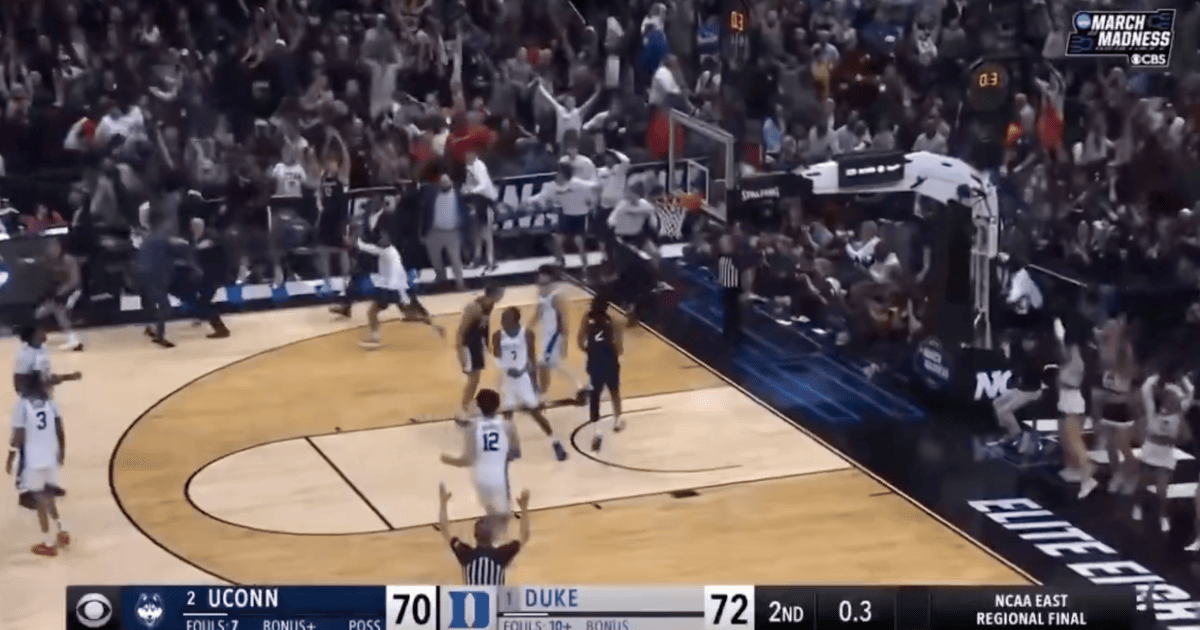
With 10 seconds left and clinging to a two-point lead, Duke's national championship hopes slipped away on a critical turnover. UConn freshman guard Braylon Mullins seized the moment, launching a prayer from well beyond the arc that found nothing but net with a mere 0.4 seconds remaining. The shot propelled the No. 2 seed Huskies to a 73-72 victory over the top-seeded Blue Devils, punching their ticket to the Final Four and ending Jon Scheyer's season in heartbreaking fashion.
As the ball dropped through the hoop, a wave of pure elation washed over the UConn bench. Several players and staff instinctively rushed onto the court in celebration, a common sight in the raw emotion of a buzzer-beater. They quickly realized the game wasn't technically over and scrambled back to their seats. While this sequence is a familiar part of March Madness lore, it became the focal point of controversy for the Duke radio broadcast.
"That Should Be a Technical"
Duke play-by-play voice David Shumate's call captured the stunning turn of events and immediate grievance. "Seven seconds, tried to throw it ahead, deflected! Stolen by Connecticut!" he exclaimed. "Two seconds! IT'S MULLINS UP TOP FOR THE WIN! Oh, he hit it, with three-tenths of a second to go! MALACHI SMITH RAN OFF THE BENCH! That should be a technical, but with three-tenths of a second to go, Connecticut has the lead, 73-72."
Shumate's insistence highlighted a rarely-enforced rule. While bench personnel entering the court during live play is a technical foul, officials almost universally use discretion in the final seconds of a game, understanding the uncontrollable eruption of emotion. This incident mirrors a recent close call for Texas where a coach's court storm avoided penalty. The no-call ensured UConn's legendary victory stood.
The Sound of Sheer Bedlam
On the other side of the emotional spectrum, UConn's broadcast was pure euphoria. Mike Crispino's voice soared with the shot. "Boozer, AND A STEAL! MULLINS GETS IT! IT'S KARABAN TO MULLINS, LONG-RANGE THREE! OOOOOH! IT WENT IN! MULLINS DELIVERS! BEDLAM! BEDLAM HERE!.. ABSOLUTE BEDLAM AS MULLINS THREW A 45-FOOTER IN!"
The contrasting calls underscore how a single moment can be pure agony for one side and unbridled joy for the other. For UConn, it was the culmination of a clutch play by a freshman, assisted by Alex Karaban, who is on a mission to cement his legacy under Dan Hurley. For Duke, it was a brutal finish where the debate shifted instantly from the shot itself to the aftermath.
A Legacy Game and Lingering Questions
This game will be replayed for decades, a defining chapter in March Madness history. Yet, the announcers' technical foul demand adds a layer of "what if" to the legacy. Would Duke have gotten free throws to potentially tie or win with 0.4 seconds left? It's a debate that will fuel fan arguments for years.
The incident also throws a spotlight on the intense pressure and scrutiny of tournament officiating. Every whistle—or lack thereof—is magnified. This game, already filled with high stakes, joins others like the controversial charge/block call involving Boozer that have put crews under the microscope during this year's tournament.
In the end, the officials' silence was the final word. No technical was called, the clock expired, and UConn's celebration was official. The Huskies move on, perhaps already looking ahead to logistical challenges like the late-night tip-offs that have frustrated their fanbase. For Duke and its radio team, the memory is of a shot that went in, a bench that briefly emptied, and a rule they believed should have given them one last, desperate chance.