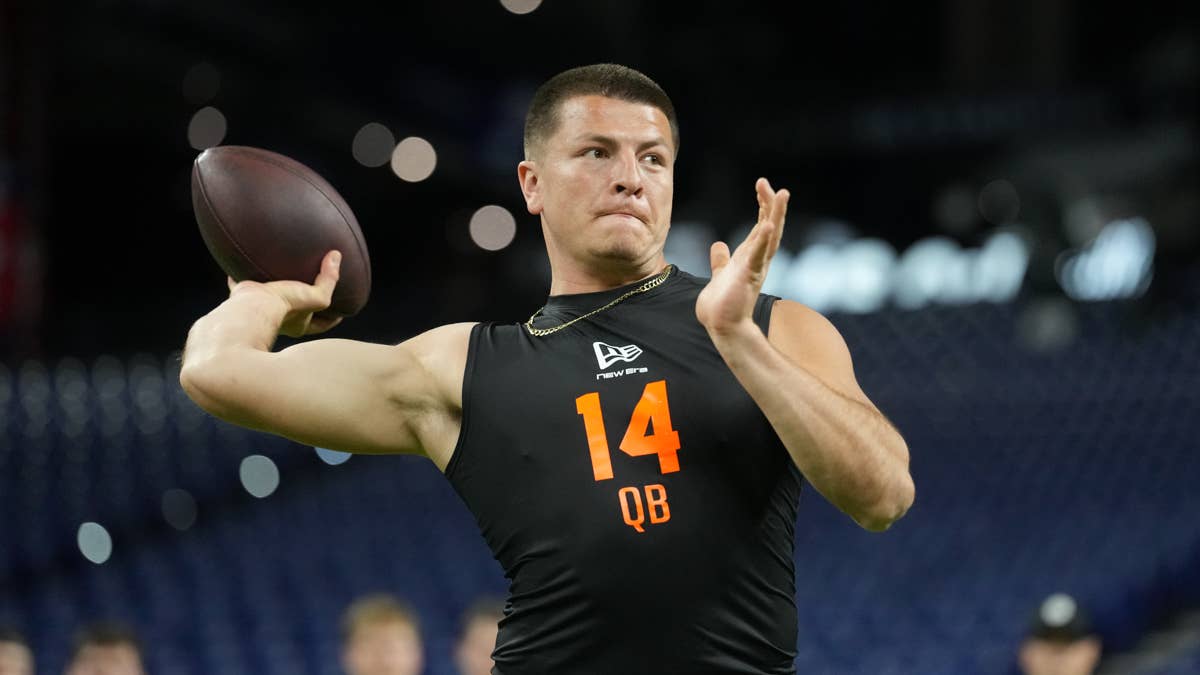
It was supposed to be the weekend that changed Diego Pavia's life. Instead, it became a painful chapter in NFL Draft history. The Vanderbilt quarterback, who lit up the SEC and finished second in the Heisman voting, watched all seven rounds come and go without hearing his name called. That makes Pavia the first Heisman runner-up to go undrafted since 2014 — a 12-year drought of unwanted distinction.
Pavia, who earned SEC Offensive Player of the Year and led the Commodores to a stunning turnaround under head coach Clark Lea, was projected by some as a late-round flier. But concerns about his 5-foot-10 frame and perceived brashness left teams cold. In a draft where Mel Kiper Jr. named three NFL teams as the biggest losers, Pavia's snub stands out as one of the most shocking individual stories.

“I would just say turn on the tape,” Pavia said at the Combine in February, responding to critics who question his size. “It’s not like we’re not playing these guys who are going first round, second round on Saturdays in the SEC. So, I know the SEC and the Big Ten probably have the most guys drafted in the first and second round. So, we’re playing those guys and ain’t nothing going to change.”
The 24-year-old New Mexico native isn't wrong. He faced top-tier competition week after week and thrived. But NFL scouts reportedly flagged his attitude as a potential locker-room issue, and his height — which would make him the shortest quarterback to play in the NFL since the 1970 merger — was a dealbreaker for many.
Pavia's journey to this point is anything but typical. He spent two years at a junior college, two at New Mexico State, and two at Vanderbilt, amassing six years of college experience. “I’ve seen a lot of football,” he said. “I feel like I can process a defense really fast, get the ball where it needs to go, check us into good plays, stay out of bad plays. And I feel like [that’s how you win football games].”
The quarterback class this year was deep, with first overall pick Fernando Mendoza leading the way. But the draft's accelerated pace — which Mike Greenberg has pushed to fix with a timeout rule — may have left teams less willing to take a chance on a polarizing prospect like Pavia. Some analysts have even blamed the rise of NIL for gutting the later rounds, as reported by the NFL, which could have contributed to Pavia's fall.
As of now, Pavia remains a free agent, and no team has yet signed him to a deal. But the second-team All-American isn't giving up. His confidence remains unshaken, and he believes his tape speaks louder than any measurement or rumor. “I played six years of college football,” he reminded everyone. “I’ve seen a lot of football.”
Whether a team eventually takes a flier on him remains to be seen. But for now, Diego Pavia is stuck in a lonely piece of NFL Draft history — a Heisman runner-up without a home. And that's not the company he imagined.