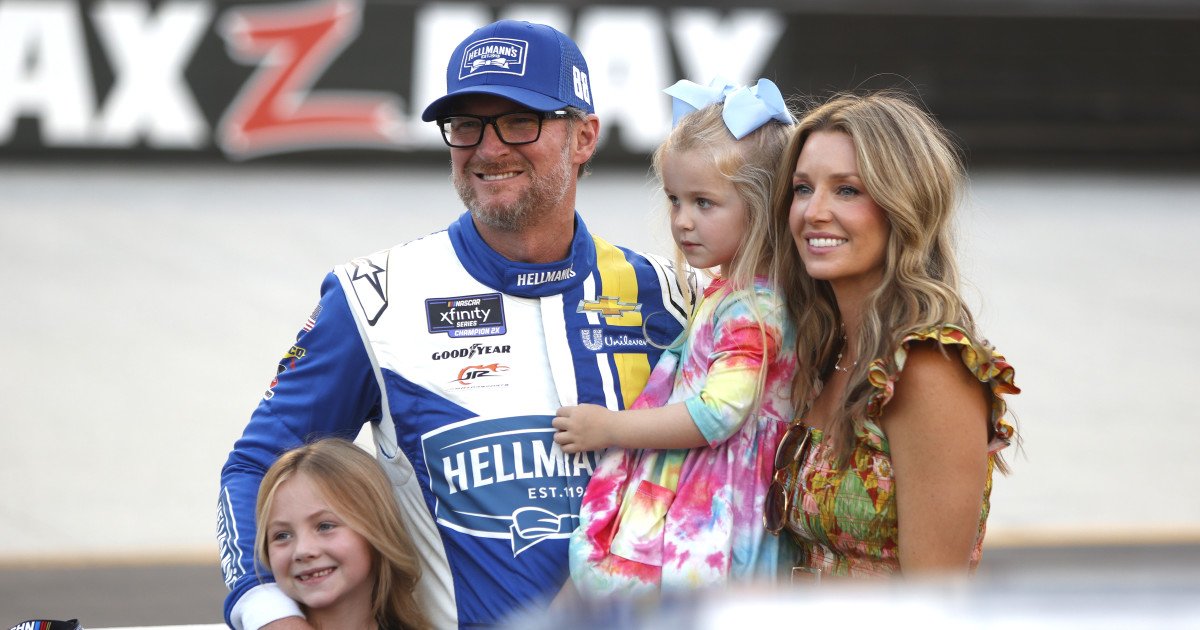
Dale Earnhardt Jr. is sending a clear message to his family: sometimes, you have to let drivers settle their own scores. The NASCAR legend and broadcaster found himself in a unique advisory role after a recent CARS Tour race, where a victory lane celebration turned into a confrontation, drawing his own family members into the fray.
A Family Affair in the Hot Seat
The scene unfolded after drivers Caden Kvapil and Doug Barnes Jr. exchanged more than just congratulations following the checkered flag. As tensions flared, two familiar faces stepped in: Earnhardt's nieces, Karsyn and Kennedy Elledge. The sisters, who have connections both to the series and to their uncle's JR Motorsports team, attempted to de-escalate the situation, physically intervening to separate the competitors.
While their intentions were undoubtedly in the right place, their famous uncle is now urging caution. Speaking on his podcast, Earnhardt acknowledged the difficult position his nieces were in but outlined the potential pitfalls of such involvement.
The Fine Line of Involvement
"That's a fine line," Earnhardt stated emphatically. "If it wasn't a JR Motorsports car... They have to absolutely try to kind of keep the peace, but they have to also be careful not to cross the line and be physical themselves."
His warning underscores the complex dynamics at play. The Elledge sisters aren't just spectators; they work within the racing series and are directly connected to the car owner of the winning vehicle—Earnhardt himself. This dual role creates a conflict where the instinct to protect assets and maintain order must be weighed against the risk of escalating a situation or facing repercussions.
"It's a balance because they do work for the series," Earnhardt explained. "They also have a connection to me. I own the car that won the race that guy's mad at." He expressed relief that the incident didn't spiral further, noting, "I didn't see anything that I would say was problematic."
Inside the Moment of Intervention
Karsyn Elledge provided a firsthand account on the "Door Bumper Clear" podcast, detailing the split-second decision to act. "At first, I thought they were gonna come up and have some heated conversations, get in the window, say, 'Hey, (expletive) you man,' whatever, and then walk away," she recalled. "I was gonna give him the opportunity to do that."
Her tolerance vanished the moment physical boundaries were tested. "But the second his hands went in the window, I was like, 'Alright.' So I grab around his arm, I muscle him around as hard as I can with my body just away." Her description paints a picture of instinct taking over, a protective reaction to a situation rapidly moving beyond verbal sparring.
Thankfully, the scuffle was brief and didn't develop into a more serious altercation. The incident, however, has served as a learning moment for the entire Earnhardt racing family. The takeaway is clear: while the passion and protectiveness inherent in motorsports are understandable, there's a protocol and a peril to stepping into the fire.
Earnhardt's advice moving forward is pragmatic. He suggests that in similar future scenarios, his nieces—and by extension, others in similar positions—might be better served by allowing the drivers to work it out or leaving the intervention to official security personnel. It's a lesson in managing the high emotions of competitive sport without putting oneself directly in harm's way. For a family whose name is synonymous with racing's greatest triumphs and tragedies, safety and discretion remain paramount, even—or especially—when the adrenaline is pumping in victory lane.