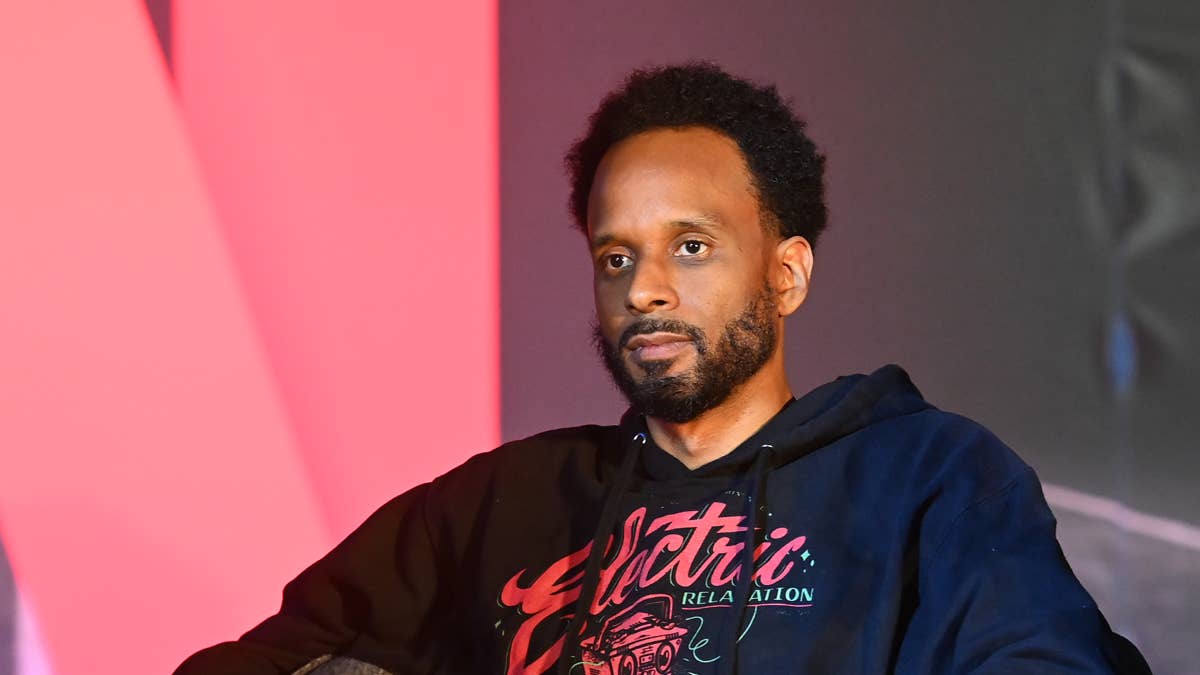
Bomani Jones, the former ESPN star known for his sharp takes on "Around the Horn" and "Highly Questionable," has built a successful post-ESPN career with an HBO show and a thriving podcast. But when young people come to him for advice on breaking into sports media, he's at a loss.
"It breaks my heart," Jones said during an appearance on The Young Man and the Three alongside New Orleans Pelicans forward Trey Murphy III and comedian Adam Friedland. "I literally can't tell them anything."

Jones, who has been a go-to mentor for aspiring sports media professionals, says he's told people to stop sending hopefuls his way. "I have no idea what the answer is. I don't know what the industry is going to do," he admitted. "I can't imagine trying to break a new podcast at this point. I don't know how any of this runs. I'm just trying to hold onto the people that I've got, forget about trying to get bigger, I'm trying to hold onto what I've got."
The veteran commentator's frustration stems from a media landscape that has shifted dramatically in recent years. The rise of digital platforms, social media, and a fragmented audience has made it harder than ever for new voices to break through. Jones himself found success in a different era, when ESPN was the undisputed king of sports media and talent could build a following on cable TV alone.
"It breaks my heart, because I was able to change my life in a lot of ways by doing this job," Jones said. "And it's not even that I can't recommend to you that you do it, if you want to do it, that's fine. I just can't tell you anything about how you're supposed to make it."
Jones also pointed to the internet as a major factor in the industry's decline. "It's where people go to be unhappy. What catches on the internet is unhappiness," he said. He explained that he deliberately tried to pivot his content toward positivity — focusing on "things we love and the people that we love" — but admitted that approach hasn't been a clear business win. "I made it explicit and said it out loud: 'I am going to make my content about things we love and the people that we love and go around that,' and I am not convinced that that has been good for business."
Jones's comments come at a time when sports media is under scrutiny for its handling of controversies and personalities. For instance, ESPN's Holly Rowe recently fired back at media bullying of Angel Reese, highlighting the tension between journalists and athletes. Meanwhile, Boston media has faced criticism for going easy on the Mike Vrabel-Russini scandal, raising questions about accountability in sports journalism. Even Emmanuel Acho has clashed with Paige Bueckers over media gaslighting, showing that the battle for fair coverage is ongoing.
Jones's heartbreak is a reminder that even the most successful figures in sports media are struggling to navigate a rapidly changing industry. For the young people who look up to him, his message is sobering: the path that worked for him may no longer exist.