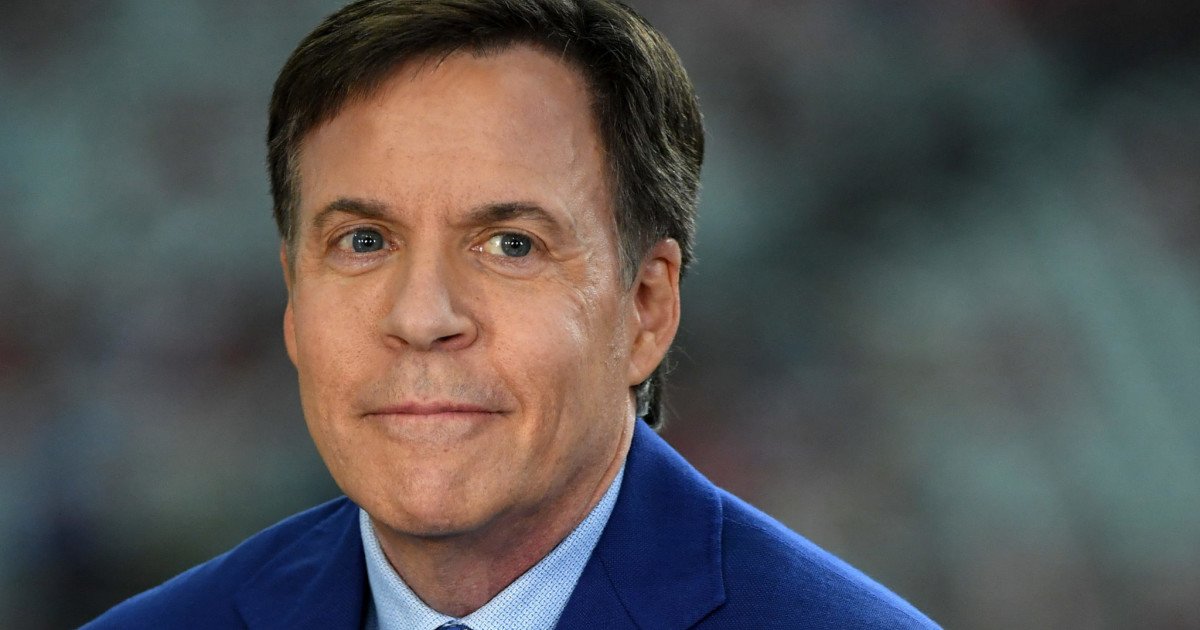
The debate surrounding transgender athletes in elite competition has found a powerful new voice. Legendary sportscaster Bob Costas has stepped into the fray, offering a full-throated endorsement of the International Olympic Committee's recently unveiled policy aimed at defining eligibility for women's events.
The IOC's framework centers on a specific biological marker: the SRY gene. Under the new guidelines, athletes who test negative for this gene will be permitted to compete in the female category at IOC-sanctioned events. Those who test positive will be deemed ineligible. The committee has described the SRY gene as a fixed, lifelong characteristic that provides "highly accurate evidence" of male sex development, advocating for saliva or blood tests as a minimally intrusive verification method.
During a recent CNN appearance, Costas made his position unmistakably clear. "There are people who use this issue cynically for political purposes and they're demonizing people who happen to be trans, who should be treated with respect and dignity and understanding," Costas stated. "However, common sense is not transphobic... this policy is common sense."
He elaborated by drawing parallels to other tiers of competition. "There's a reason why the high school champions don't compete with the college champions," Costas argued. "There is a reason why no trans man, who was once a woman, and has become a man has ever competed successfully with men in the Olympics." To drive his point home, he invoked one of sports' biggest current stars, Caitlin Clark. "If Caitlin Clark could play in the NBA, everybody would applaud it. That would be an incredible thing. But if the last guy on the bench of an NBA team went to the WNBA and started averaging 40 points, everybody would know that is BS."
Costas's comments land as the sports world continues to grapple with complex questions of inclusion, biology, and competitive equity. His stance aligns him with other prominent figures who have weighed in on similar issues, such as when Simone Biles' rival cheered the IOC's initial moves on this front.
The policy has also garnered praise from former President Donald Trump, who connected the decision to his own administration's actions. "Congratulations to the International Olympic Committee on their decision to ban Men from Women's Sports," Trump said. "This is only happening because of my powerful Executive Order, standing up for Women and Girls."
As the 2024 Paris Games approach, the IOC's stance is sure to be a flashpoint. The decision represents a significant shift in how international sports bodies navigate gender identity and athletic competition. While the policy aims to protect what it calls the "fairness, safety and integrity" of women's sports, it has ignited intense discussion about the future of transgender participation at the highest level.
Costas, a revered figure with decades of experience covering the Olympics and major sporting events, brings considerable weight to the conversation. His perspective adds to a growing public discourse that extends beyond the track or pool, touching on cultural and political divides. It's a debate that shows no signs of slowing, mirroring other high-profile sports conversations, from analysts shifting their stance on star players to controversies over athletes' conduct off the field.
Whether the IOC will maintain this policy long-term remains to be seen, but for now, one of broadcasting's most trusted voices has made it clear where he stands. As the world watches, the intersection of sports, science, and society continues to be one of the most compelling stories in the game.