College football is a sport built on tradition, and few traditions run deeper than a great rivalry. The best ones — Ohio State vs. Michigan, Alabama vs. Auburn, Oklahoma vs. Texas — still deliver chills. But not every rivalry keeps its spark. Some have faded, victims of conference realignment, shifting program power, or just the passage of time.
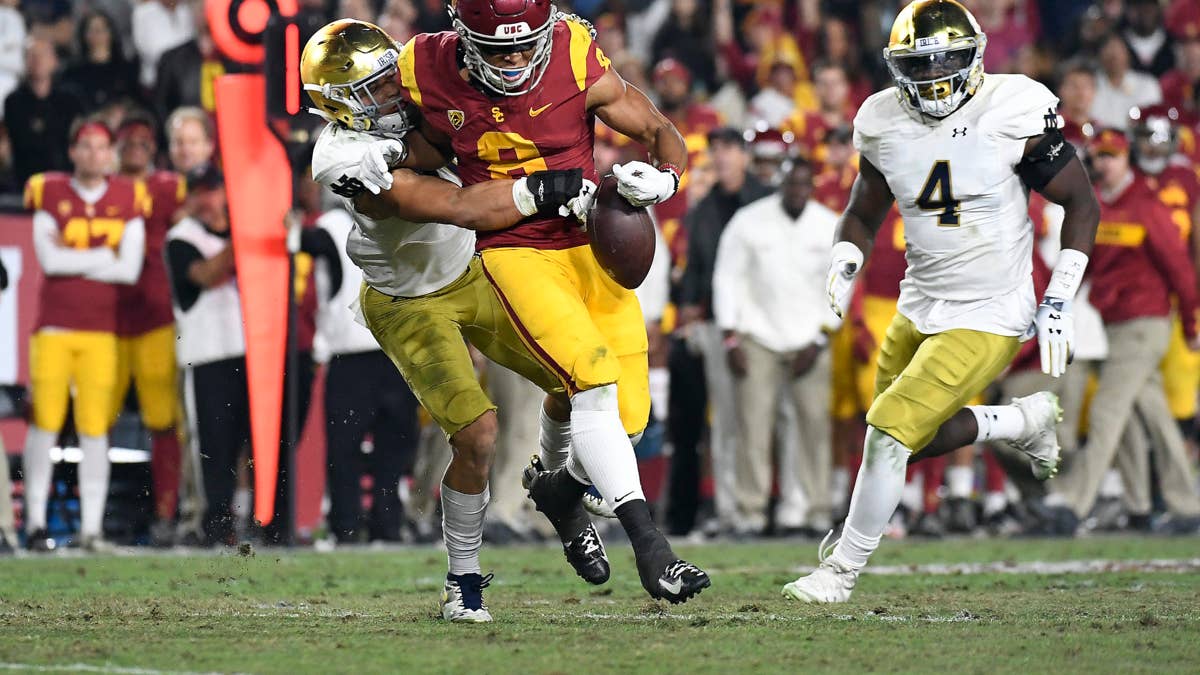
Take Notre Dame and USC. The Irish and Trojans are reportedly talking about reviving their series, which goes dark in 2026. Notre Dame head coach Marcus Freeman has made his stance clear: “I want to play them every single year. When? I don’t care. I don’t care when we play them. Start of the season, middle of the season, end of the season — I don’t care. I want to play USC every year because it’s great for college football.” But is it still great? USC now lives in the Big Ten and hasn’t been a genuine national title threat in years. Notre Dame remains an independent, more tied to ACC opponents than to the Trojans. The mystique is gone.
Here are five rivalries that, in our view, have become overrated — matchups that once shook the sport but now feel more like a nostalgic nod to the past.
Notre Dame vs. USC
This one used to carry national championship implications. Now? It feels like a relic. USC’s move to the Big Ten and Notre Dame’s independent status have diluted the annual drama. The Trojans haven’t been a serious contender in years, and the Irish have built their schedule around ACC teams. The magic of this intersectional showdown has faded, and the current talks to bring it back feel more like a PR move than a return to glory.
Florida vs. Florida State
In the 1990s, 2000s, and early 2010s, this Sunshine State showdown was appointment viewing. Both programs were national title contenders. But the last few years have been rough. Florida has slipped in the SEC, and Florida State hasn’t found its footing under Mike Norvell. The intensity is still there, but the stakes have plummeted. It’s a rivalry that now feels more like a rebuilding game than a battle for the top.
Miami vs. Florida State
Similar story here. Miami and Florida State defined college football in the 2000s, with both programs trading blows for national supremacy. Miami made a run last year, reaching the national title game, but Florida State remains in flux. The Seminoles haven’t recaptured their swagger, and the rivalry lacks the high-stakes tension it once had. Until both teams are consistently in the College Football Playoff conversation, this one will feel like a shadow of its former self.
Texas vs. Texas A&M
Texas A&M bolted the Big 12 for the SEC, and Texas eventually followed. Now they’re both in the same conference, but the rivalry has lost its edge. The annual game was once a Lone Star State brawl with huge implications. Now it feels like just another SEC matchup — one that’s more about bragging rights than national relevance. The move to the SEC hasn’t restored the old magic.
Stanford vs. Cal
This rivalry gave us one of the most iconic moments in college football history — “The Play” — but that was decades ago. Conference realignment and the modern game have pushed both programs to the margins. Stanford and Cal are no longer national players, and their annual clash feels more like a nostalgic throwback than a meaningful showdown. It’s a game that honors history but doesn’t create much present-day buzz.
Rivalries evolve. Some grow stronger, others fade. These five still have passionate fan bases, but the stakes that once made them must-watch events are mostly gone. For now, they’re reminders of a golden era — not the future of the sport. If you’re looking for a rivalry that still delivers, check out the debate over conference power shifts or the controversy surrounding the CFP schedule.