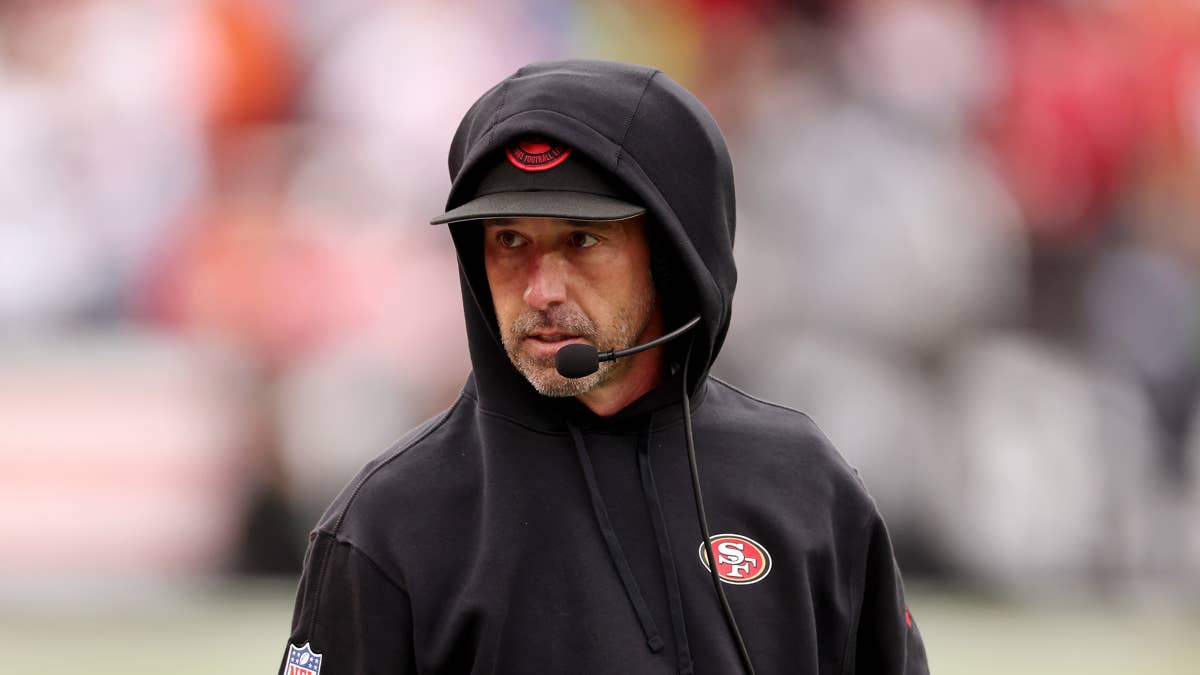
The San Francisco 49ers are facing scrutiny after reports emerged that the team actively tried to suppress news of head coach Kyle Shanahan's serious car accident earlier this month. The crash, which left Shanahan with a broken nose, three fractured ribs, a broken hand, and a concussion requiring 40 stitches, occurred on July 14 near his northern California home. Yet the story didn't break online for over a week—and now, some are asking why.
According to NBC Sports' Mike Florio, the 49ers wanted the incident kept "quiet," and members of the media allegedly obliged. Florio argues that reporters who knew about the crash but held off publishing until the team gave the green light violated their primary duty to the public. "That's not how it's supposed to work," he wrote. "Reporters owe a primary duty to their audience, not to the entities they cover."
General manager John Lynch addressed Shanahan's condition over the weekend, confirming the coach is still dealing with lingering concussion symptoms. "Kyle basically is going to be like in the protocol," Lynch said. "We're going to let the doctors dictate how he comes back, when he comes back." Assistant head coach Chris Foerster will take over some duties, with the team relying on a group effort until Shanahan returns.
This isn't the first time the 49ers have navigated a high-profile health situation. The team's handling of Shanahan's accident echoes the careful management of player injuries, but critics argue that keeping a coach's hospitalization under wraps crosses a line—especially when it happened on a public highway with emergency responders involved.
Florio didn't mince words about the media's role. "Basic information about the situation was publicly available," he noted. "And folks who publicize relevant information to the public for a living chose not to do it until they got the go-ahead from the 49ers." The incident has reignited debate about the cozy relationship between sports teams and the journalists who cover them, a dynamic that has only intensified over the past two decades.
For now, Shanahan is taking a phased approach to recovery, similar to how the team handles players in concussion protocol. The 49ers coach's road back will be guided by medical staff, not by media timelines. But the question lingers: in an era of instant news, how much control should teams have over what the public knows—and when?
As the NFL season approaches, the 49ers nation holds its breath, hoping for Shanahan's full recovery while the league watches how this story—and the ethics behind it—unfolds.