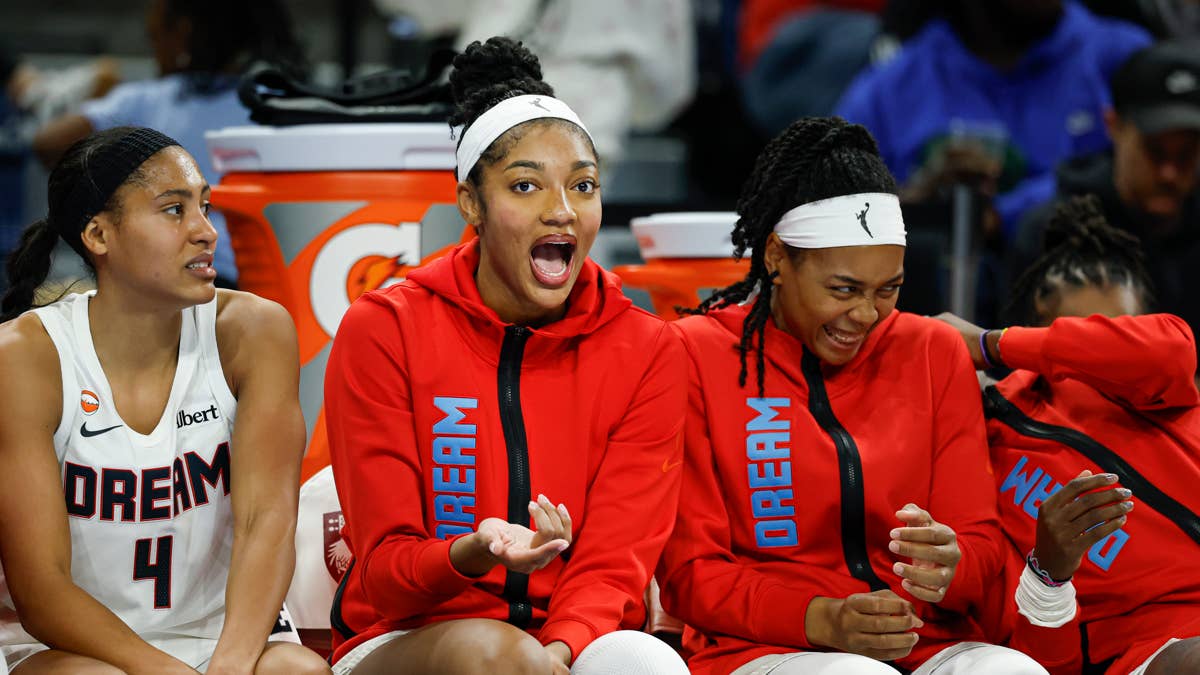
The WNBA is ramping up its security protocols and resources as a growing number of players face alarming online threats, ranging from hate speech to menacing messages tied to sports gambling and personal attacks.
Several high-profile stars have publicly condemned the vitriol, which has targeted them for their on-court performance, their league affiliation, and even their identities. The issue reached a boiling point after Chelsea Gray shared a particularly hateful message from a fan, who was subsequently fired from his job.
Veteran guard Natasha Cloud didn’t hold back in calling for league action. “I think as one of the main faces of our league, too, it creates a dialogue that needs to be had. It puts pressure on Cathy [Engelbert, WNBA commissioner], who we’ve been begging to step up for us in these spaces,” Cloud told Front Office Sports. “Now I think it demands her to actually take some initiative and to do something about it. I don’t know what it is that she’s going to do, but I also think that simple statements of not condoning (expletive) is also really good for public relations as well.”
The league and the Women’s National Basketball Players Association (WNBPA) held a video conference on Tuesday to address the crisis head-on. In a joint statement, they said the conversation “underscored the importance of addressing issues early through proactive communication and strengthening the league-union relationship.” The league committed to enhancing security resources and exploring partnerships with organizations that align with its values.
“Yesterday’s discussion marked the beginning of an ongoing dialogue, and we are united in our commitment to building on this work together,” the statement added.
Rookie sensation Angel Reese also weighed in after being called a “protected species” by a WNBA coach. “There is no place for discrimination or hate in this league from anyone — from fans to coaches to players,” Reese said. “And I’m just grateful that we are able to move on from the situation and just play winning basketball.”
The league’s move comes amid a broader conversation about athlete safety in professional sports. The threats are not limited to the WNBA, as seen in other leagues where death threats have erupted after on-field incidents or where players have faced menaces over international performances. The WNBA’s proactive stance signals a growing recognition that online harassment is a systemic issue requiring institutional response.
Cloud’s pointed remarks reflect a broader frustration among players who feel the league has been slow to act. She emphasized that mere statements of condemnation are not enough—players want tangible protections. The league’s commitment to “continuing to enhance security resources” suggests that more concrete measures are on the horizon.
As the WNBA navigates this turbulent period, the focus remains on creating a safe environment where players can focus on basketball. The league’s pledge to collaborate with the union and external organizations marks a critical step, but players will be watching closely to see if words translate into action.