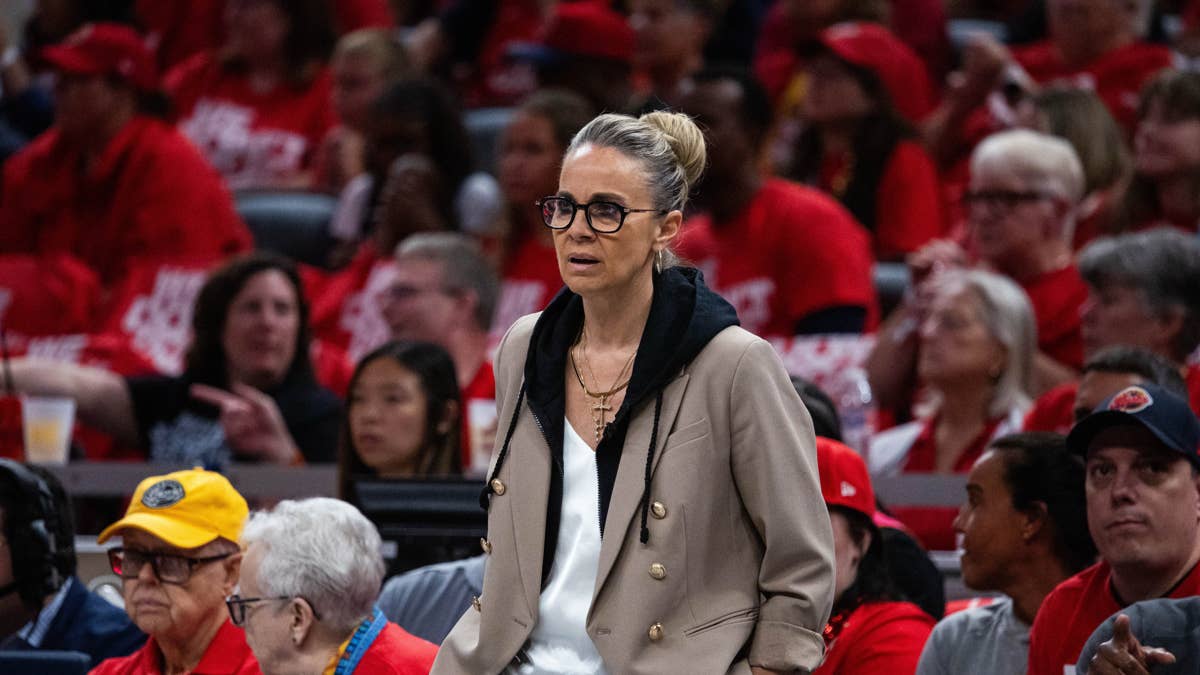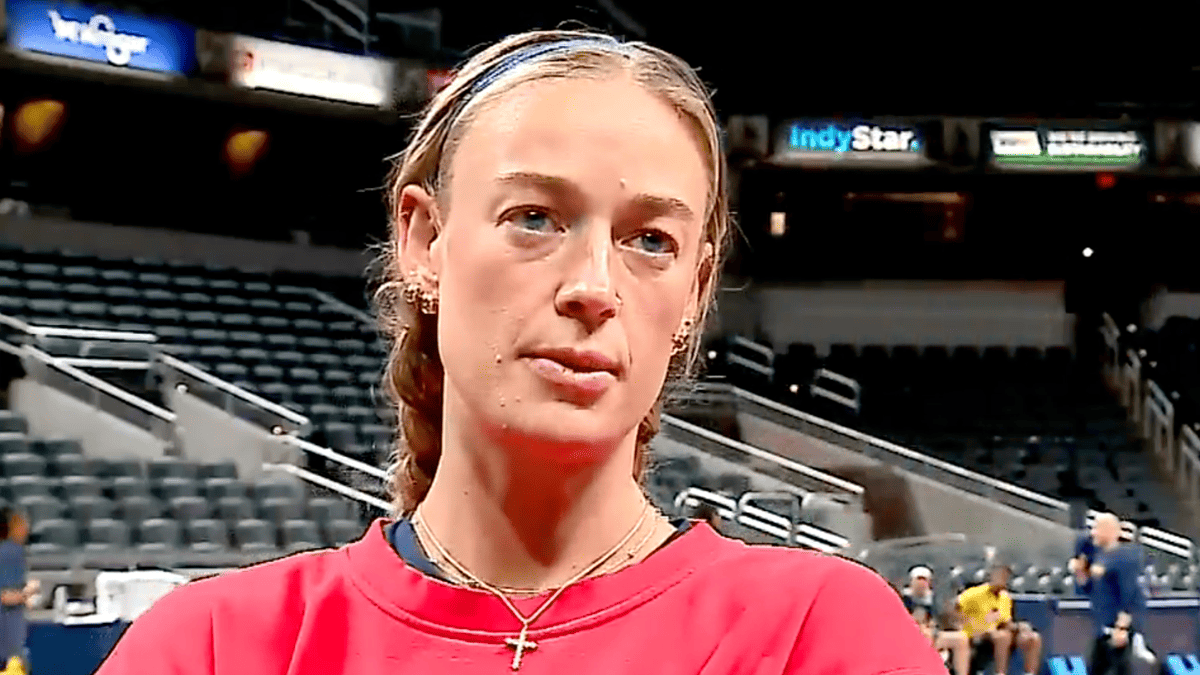
Sophie Cunningham has never been one to shy away from the spotlight, but her latest comments about the WNBA media are drawing more eye-rolls than applause. The Indiana Fever guard, who has been at the center of several off-court storylines recently, took aim at reporters for what she sees as a lack of focus on the game itself.
“The WNBA media… all we ever do is cover everything except basketball. What are we doing?” Cunningham asked during a press availability on Wednesday.
On the surface, she has a point. The discourse around the league has increasingly drifted toward drama, politics, and personalities rather than X’s and O’s. But here’s the thing: Cunningham is one of the biggest reasons for that drift.
It was Cunningham who decided to share her views on transgender athletes in an ESPN profile. It was Cunningham who doubled down on those comments when speaking to reporters, saying, “I said what I said. I think it’s kind of common sense. And I think I’ll always believe in that. I think it’s really important to protect children, and that’s little girls who are also involved in that category. I stand on what I said.”
And it was Cunningham who posed for a photo with political activist Riley Gaines after a game, a moment that quickly went viral and added fuel to the fire. She also engaged in a pregame chat with Lynx coach Cheryl Reeve that became its own talking point, though Cunningham later said there was love and respect between them.
Now, Cunningham is well within her rights to say and do as she pleases. But she can’t then complain when the media—and fans—focus on those actions instead of her jump shot. That’s the reality of professional sports in 2026, where off-court drama often overshadows the action. It’s not unique to the WNBA; the NFL, NBA, and MLB all face the same dynamic, as ESPN’s new boss has even hinted at cutting back on debate shows to refocus on actual sports.
But Cunningham’s critique feels particularly tone-deaf given her own role in the circus. Fans were quick to call her out on social media, with one writing, “Oh so now she wants to stick to sports?” Another added, “You opened your mouth. What did you think was gonna happen!?” A third fan pointed out the irony: “She’s literally the one who brought it up. Now she’s above it all and only wants to talk basketball?”
Even her own coach, Stephanie White, has expressed frustration over the distractions, as noted in recent reports. And the tension has spilled into the stands, with a pro-Cunningham rally outside a game turning chaotic.
Look, every athlete has the right to speak their mind. But when you step into the political arena and make headlines for reasons unrelated to basketball, you forfeit the right to demand the media stick to the sport. Cunningham has made her bed, and now she has to lie in it—even if that means hearing the boos from opposing fans, as Andrew Bogut recently cheered on.
If Cunningham truly wants the focus back on hoops, the solution is simple: let her play do the talking. But until she stops making news off the court, she can’t expect the media to ignore it. That’s not hypocrisy from the press—it’s just the story she’s written for herself.