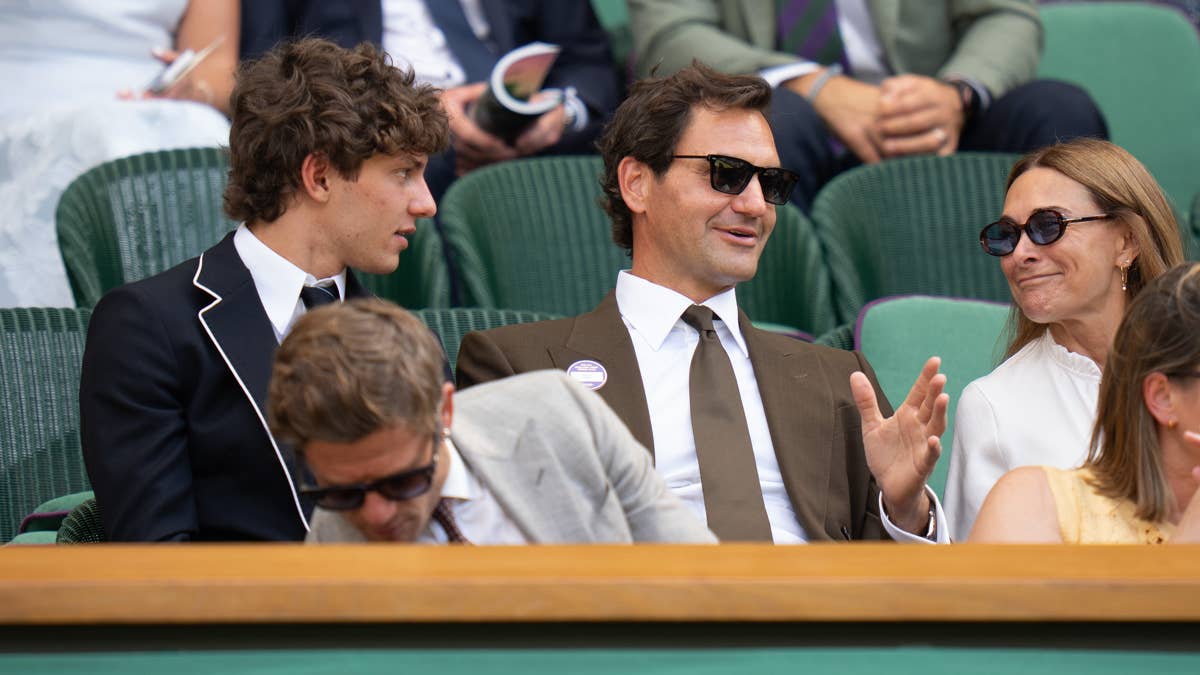
Even as Roger Federer soaked up the atmosphere at the 2026 Wimbledon Championships, the legendary Swiss couldn't help but voice a nagging concern about the sport he helped define. A video of Federer criticizing modern tennis has resurfaced on social media, and while the clip isn't fresh, his argument feels more relevant than ever.
Speaking before the 2025 Laver Cup, the 20-time Grand Slam champion took aim at the homogenization of tennis surfaces. He argued that tournament directors have allowed court speed and ball speed to become so uniform that players can win on clay, grass, and hard courts without changing their game. “That’s why we, the tournament directors, we need to fix it,” Federer said. “We need to have not only fast courts, but what we would want to see is Alcaraz or Sinner figure it out on lightning fast and then have the same match on super slow and see how that matches up.”

Federer's point is simple: variety makes tennis more exciting. When every week feels the same, the sport loses some of its magic. He noted that players can now go from winning the French Open to Wimbledon to the US Open “and just play the same way.” That's a far cry from the era when Pete Sampras struggled on clay and Rafael Nadal dominated on dirt but had to adapt his game on faster surfaces.
The stats back up Federer's frustration. Over the last three years, Carlos Alcaraz and Jannik Sinner have claimed 10 of the last 11 Grand Slam titles. The only exception was the 2026 French Open, which slipped away due to Alcaraz's injury and Sinner's battle with the heat. While both players are undeniably phenomenal, the lack of variety in tournament conditions is making the majors feel repetitive.
Federer's call for change isn't just nostalgia—it's about preserving the sport's identity. Tennis has always been defined by its surfaces, from the red clay of Roland Garros to the lightning-fast grass of Wimbledon. When those differences are erased, the game loses a layer of strategy that fans love. As tennis fans are loving ESPN's newest voice, Andy Roddick, they're also craving the kind of tactical diversity that made Federer's era so compelling.
Of course, not everyone agrees. Some argue that the dominance of Alcaraz and Sinner is a testament to their versatility, not a flaw in the system. But Federer's critique isn't about the players—it's about the environment they play in. He wants tournament directors to create conditions that test champions in different ways, forcing them to adapt rather than simply repeat their winning formula.
Unfortunately for Federer, don't expect any drastic changes at this year's US Open. The hard courts in Flushing Meadows will likely play much like they have in recent years, favoring baseline power over serve-and-volley artistry. That's a shame, because as tennis fans vow to boycott ESPN's Wimbledon coverage over paywall, they're also expressing a broader discontent with how the sport is being packaged and presented.
Federer's voice carries weight because he's not just complaining—he's offering a solution. He's calling on tournament directors to take action and bring back the surface diversity that once made tennis unpredictable. Whether they listen remains to be seen, but his message is clear: the game needs more than just great players; it needs great stages that challenge them in different ways.
As the tennis world debates the future of the sport, Federer's comments serve as a reminder that even legends can spot problems that others overlook. And if anyone has earned the right to speak up, it's the man who mastered every surface—and wants to see others do the same.