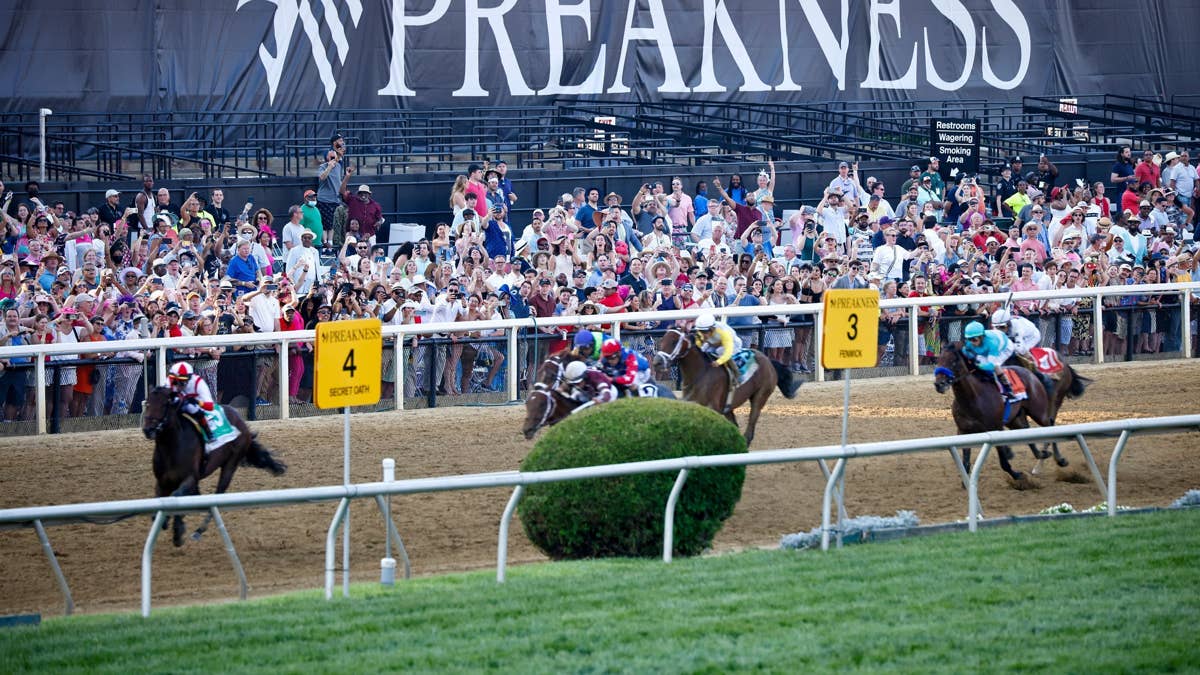
For years, horse racing fans have watched the Kentucky Derby winner skip the Preakness Stakes, citing the tight turnaround between races. Now, a major shake-up could change that narrative.
According to a report from Austin Karp of the Sports Business Journal, the Preakness Stakes has inked a new six-year media rights deal with NBC Sports that will see the race moved from its traditional third Saturday in May to a Sunday, one week later. The announcement is expected to be made official at a press conference Wednesday afternoon, featuring representatives from NBC Sports, the Maryland Jockey Club, and Maryland Governor Wes Moore.

“The Preakness Stakes will double its media rights revenue in a new six-year deal with NBC Sports, and the second leg of horse racing’s Triple Crown will move off its traditional Saturday race day and run on a Sunday while moving back a week on the calendar,” Karp wrote.
The schedule shift means the Preakness will now fall on Memorial Day weekend in four of the next six years, potentially turning the race into a holiday destination for fans. It’s a move that could inject fresh energy into a sport that has seen declining attendance and track closures in recent years.
Saving the Triple Crown?
The debate over spacing out the Triple Crown races has been simmering for decades. Proponents argue that a longer gap between races would give Derby winners more recovery time, increasing the likelihood they’ll compete in the Preakness and keep the Triple Crown chase alive. Since 1980, only two horses have swept all three races, and years when the Derby winner skips the Preakness often see a ratings dip.
Traditionalists, however, have long resisted any changes, arguing that the grueling schedule is part of what makes the Triple Crown so special. But with the sport facing existential challenges, the need to adapt may be overriding tradition.
“If they don’t find a way to inject more excitement and viewership into the race, there won’t be any traditions to maintain soon,” the report notes, highlighting the urgency behind the decision.
Still, the move is not without its risks. If shifting the Preakness back eight days doesn’t entice more Derby winners to run, the sport could face deeper questions about its future. The hope is that this change, combined with the media boost, will revitalize interest in the Triple Crown and bring back casual fans.
For now, the horse racing world waits to see if this gamble pays off. The new deal is a bold bet on the sport’s revival, and the upcoming press conference will likely offer more details on what fans can expect.
As the industry grapples with these changes, it’s worth remembering that the legacy of Preakness winners remains a cornerstone of the sport’s history. Whether this new direction will honor that legacy or redefine it remains to be seen.