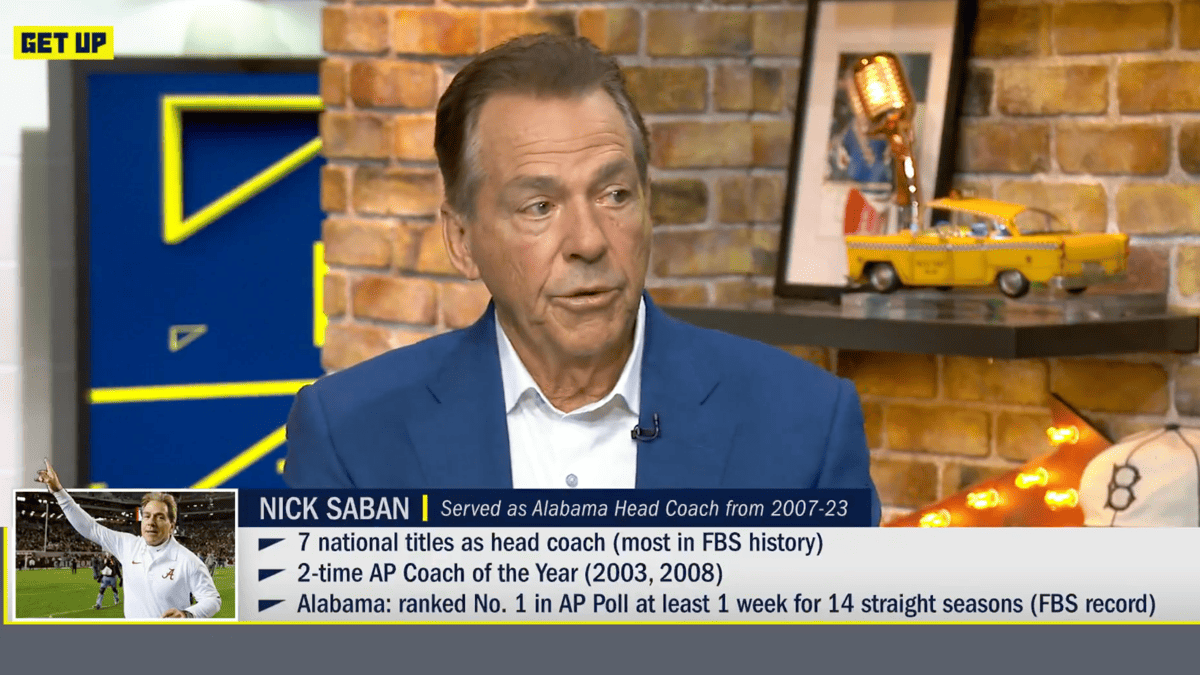
Nick Saban found himself in an unfamiliar spot Tuesday morning — not on a sideline, but in the crosshairs of a heated national debate over the future of college athletics.
The legendary former Alabama coach joined ESPN's "Get Up!" to throw his support behind the Protect College Sports Act, a bill that would create a revenue-sharing salary cap for student-athletes across the country. Saban argued the legislation is essential to keep college sports from spiraling into an unchecked arms race.
Not everyone was buying it. Quincy Avery, a well-known quarterbacks coach who has trained some of the top passers in college football, took direct aim at Saban on X, calling him a "liar" and questioning the logic behind a hard cap.
"Nick's is a liar," Avery wrote. "Many major international sports leagues operate without a hard salary cap. MLB doesn't have one either. The market is the market. That doesn't mean teams have to go broke, it means spending adjusts to what the market can support. And there's no cap on what coaches can make."
Avery didn't stop there. He also ripped the government's involvement in the issue, saying he hates that lawmakers find time to regulate sports while ignoring bigger problems. "They spend time regulating things that don't need regulation and somehow find a way to come together for that," he wrote. "But on issues that actually affect our country, they couldn't give two (expletives) because they're too busy fighting over partisan politics. It's gross."
Avery wasn't alone in his criticism. Former ESPN star Jemele Hill blasted the bill on Monday evening, calling it a "gigantic scam" and pointing out the hypocrisy of price-fixing player compensation while fans keep getting taxed. "So they're fine with 'price fixing' when it comes to the players, but they're more than happy to throw that out of the window when it comes to taxing the fans," Hill wrote on X. "This entire bill is a gigantic scam."
The backlash highlights a growing divide between those who want to rein in the wild west of NIL and the transfer portal, and those who believe the free market should decide what athletes are worth. Saban, who has been out of coaching since retiring, has stayed vocal on the issue — though he's made it clear he has no plans to return to the sideline, as he recently reiterated when he said he's done coaching for good.
Supporters of the Protect College Sports Act argue it would bring stability and fairness to a system that's been rocked by realignment, NIL deals, and the portal. Critics say it's a power grab that would cap athletes' earnings while coaches and administrators keep cashing massive checks.
For now, the debate is only heating up. Saban's star power puts him at the center of it, and the accusation that he's lying on national television shows just how personal this fight has become.