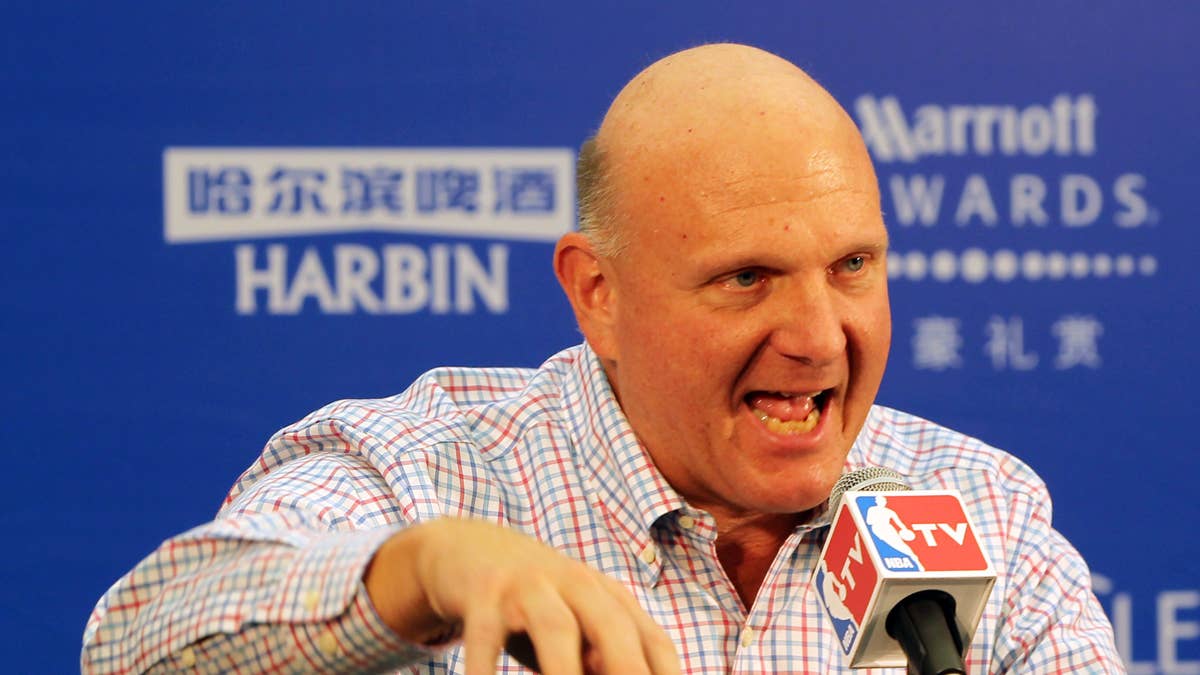
When Steve Ballmer bought the Los Angeles Clippers in 2014, he instantly became the wealthiest owner in NBA history. Fast forward a decade, and his fortune has ballooned to the point where he's nearly ten times richer than any other owner. That massive financial gap is reportedly making his fellow owners nervous.
On a recent episode of The Dan Le Batard Show, the host suggested that the league's recent actions against Ballmer—including the delayed Kawhi Leonard trade to Toronto—are rooted in fear. Le Batard argued that the owners are worried Ballmer's immense wealth could be used to challenge the NBA's salary cap system in court.

“I’ve been sort of confused by why it’s taking so long, and the reason it’s taking so long is because the owners are afraid of Steve Ballmer’s money,” Le Batard said. “And they’re afraid that the entire construct of what it is that they built, the salary cap illusion of, ‘we’re all in partnership on equity,’ is going to fall apart if you punish him so much… that he then takes to court, ‘Hey you don’t have the right as the commissioner of the league to do all of this stuff to me just because you say.’”
Le Batard emphasized that these are not poor owners—they're billionaires themselves. But Ballmer's estimated net worth of over $100 billion puts him in a different stratosphere. “What is he going to do with the money that makes them afraid? And what he can do is, like, ‘The salary cap’s a sham, I don’t have to respect this. Why do I have to respect this?’” he added, suggesting a potential legal battle could unravel the league's financial structure.
The theory gained traction after a scandal last year involving Kawhi Leonard accepting endorsement deals from a company called Aspiration, which was allegedly used to circumvent the salary cap. The story, which won a Pulitzer Prize, put Ballmer and the Clippers under scrutiny. Ballmer has denied any wrongdoing, but the incident raised questions about whether the billionaire is tired of being constrained by the cap while his team struggles to contend.
Le Batard's comments echo broader concerns about the power dynamics in the NBA. With Ballmer's wealth, he could potentially fund a legal challenge that might expose the salary cap as a collective bargaining agreement that could be contested in court. “And now you’ve got people being deposed, and a commissioner, like, ‘What do you mean you get to make all the rules on something I own?’ Yeah, it’s collectively bargained; let’s try to see what comes up in court. You guys all want to come to court to me? The answer’s no. The answer is they’re afraid of what he can do publicly to them with his money,” Le Batard said.
This isn't the first time league owners have faced scrutiny over financial fears. Recently, Seattle Seahawks ownership changes sparked similar debates about money influencing power structures. And the historic payout for the US women's soccer team showed how financial fairness can become a league-wide issue.
For now, the Clippers remain a team with championship aspirations but limited results. Ballmer's deep pockets haven't translated into on-court success yet, but his potential to reshape the league's financial landscape could be the real game-changer. As Le Batard put it, the owners are scared—not of Ballmer's team, but of his checkbook.