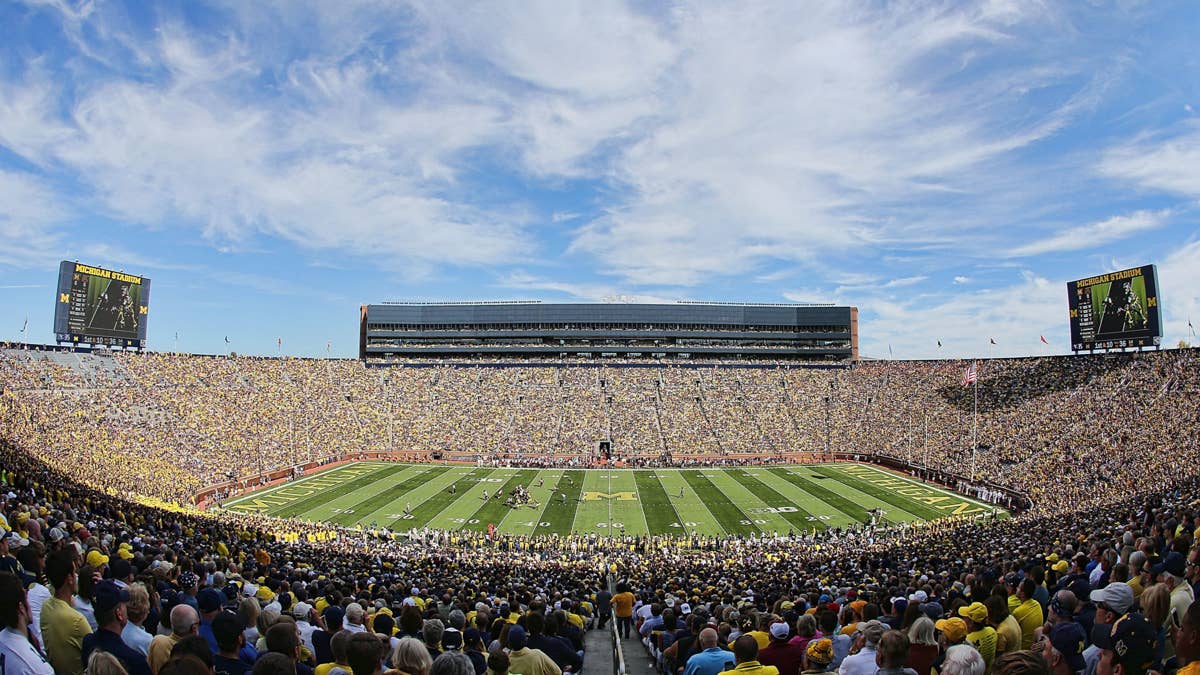
The cathedral of college football just got a little more commercial. Michigan Stadium, known affectionately as 'The Big House' and home to the Wolverines since 1927, will feature sponsor advertisements on the padded walls surrounding the field for the 2026 season. The ads—from Coca-Cola, Gemini, and Meijer—are rendered in white lettering against the iconic blue walls, a look that some might call understated. But don't tell that to the Michigan faithful.
In a recent fan poll conducted by SB Nation, the reaction was overwhelmingly negative. When asked whether they loved or hated the new in-stadium advertisements, a whopping 75% of respondents said they hate them, with only 25% expressing approval. The message from Wolverines fans is clear: they don't want their hallowed ground touched by corporate branding.
This move places Michigan in a growing trend across college football. With roster costs skyrocketing—some programs now spend $20 million or more on player salaries—schools are scrambling to find new revenue streams. The pressure to stay competitive financially is immense, and in-stadium ads are just one of many monetization strategies being deployed.
Ohio State and Notre Dame have already taken the plunge with jersey sponsors, a once-unthinkable step. Michigan's decision to add field-level ads feels almost tame by comparison, yet the backlash highlights the deep emotional connection fans have to the stadium's pristine aesthetic.
Change is always hard, especially for a program steeped in tradition. But the economics of modern college football are forcing athletic departments to make tough choices. As one analyst noted, "When teams are spending $20 million or more on their rosters, programs are going to do everything they can to make more money."
The ads are part of a broader shift that has seen other stadiums face fan ire over premium pricing and concession costs. It's a brave new world where the fan experience is increasingly monetized, and not everyone is happy about it.
Michigan will kick off its 2026 season on Saturday, September 5, against Western Michigan at 7:30 p.m. ET. When the team runs out of the tunnel, the new ads will be impossible to miss. Whether fans will eventually warm to them—or continue to voice their displeasure—remains to be seen.
For now, the message from Ann Arbor is loud and clear: tradition matters, and the faithful aren't ready to sell out just yet.