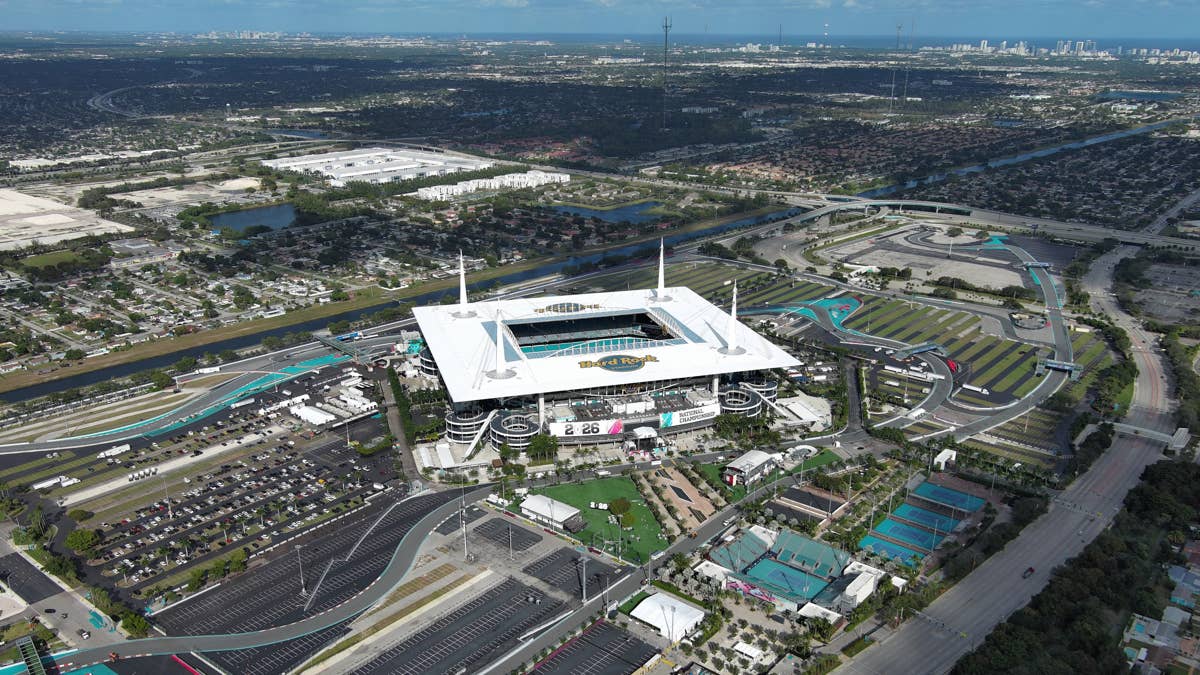
Miami's reign as a Super Bowl host city has come to an end. The NFL has quietly dropped Hard Rock Stadium from its Super Bowl rotation, a move that has stunned fans and local officials alike. The news came directly from Miami Dolphins owner Stephen Ross this week, who explained that the stadium no longer meets the league's requirements for the big game.
"The one thing that suffered is Miami hasn't gotten a Super Bowl here, and we normally have one every five years," Ross said, via Brian Brandell of South Florida Business Journal. "Miami is not really in line for one. It's always exciting to have the Super Bowl but that was before we had all the other events."
So what changed? According to Daniel Sillman, CEO of Relevent, the issue boils down to space. Hard Rock Stadium lacks sufficient room for the hospitality events that have become a cornerstone of Super Bowl week. The problem is compounded by the fact that Formula 1 and the Miami Open have already claimed much of the available real estate around the venue.
Ross acknowledged the challenge, saying, "We are looking at how to make improvements. I want to make the stadium always feel like a new stadium, we are looking at what the next phase will be and making the fan experience that much better."
This is a tough pill to swallow for a city that has hosted the Super Bowl 11 times—more than any other location. Miami's balmy weather and vibrant culture have long made it a favorite among players and fans. But in today's NFL, the game is about more than just the action on the field. It's a week-long spectacle that demands massive hospitality spaces for corporate partners and VIPs.
Looking ahead, the Super Bowl schedule is already set through 2028. Super Bowl LXI in 2027 will be at SoFi Stadium in Inglewood, California. The following year, Mercedes-Benz Stadium in Atlanta will take center stage. And for Super Bowl LXIII in 2029, Allegiant Stadium in Las Vegas gets the nod. There are whispers that Nashville could host the Super Bowl in 2030, but nothing is official yet. For now, Miami is out of the picture.
The loss of Super Bowl hosting rights is a blow to South Florida's economy, but it also opens the door for other cities to step up. As the NFL continues to evolve its event requirements, stadiums like Hard Rock will need to adapt or risk being left behind. For a venue that has seen so many iconic moments—from Dan Marino's magic to the Dolphins' undefeated season celebrations—this is a new chapter that no one saw coming.