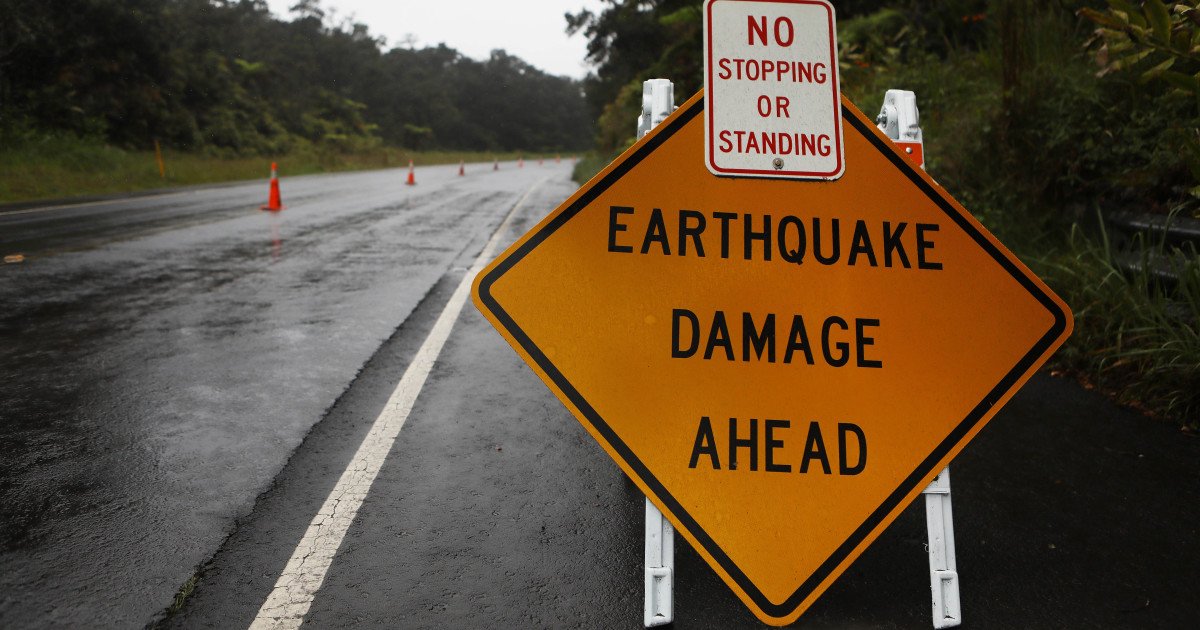
Residents across Louisiana got a rude awakening Thursday morning when the ground beneath them decided to shake things up. A significant earthquake, measuring 4.4 on the Richter scale, struck just south of Shreveport shortly after 5:30 a.m., sending tremors through the region and straight into the history books.
A Wake-Up Call for the Record Books
While earthquakes might not be the first natural phenomenon people associate with the Pelican State, this early morning event proved Louisiana is not immune to seismic activity. The United States Geological Survey (USGS) confirmed the quake's strength and location, immediately sparking conversations about its historical significance. This tremor now officially stands as the second-most powerful earthquake ever recorded within Louisiana's borders.

"Anyone feel shaking up that direction?" asked New Orleans meteorologist Payton Malone in a social media post alerting the public. He provided crucial context, noting, "The strongest quake recorded in Louisiana was a 5.3 south of Grand Isle in the Gulf." This comparison highlights just how rare and substantial Thursday's event truly was for the region.
Conflicting Reports and Widespread Sensations
The seismic activity didn't stop with a single report. Meteorologist Jake Lambright added another layer to the story, reporting a separate 4.9 magnitude event north of Edgefield, Louisiana, off US-71. "I just received an alert for a magnitude 4.7 earthquake near East Point, LA, north of Coushatta," Lambright stated, illustrating the confusing flurry of data. He actively sought eyewitness accounts, asking, "If you felt it, where are you located? I’m working to confirm more information."
This call for reports was answered swiftly. Residents from Coushatta to Sabine Parish quickly chimed in with personal experiences of the shaking, confirming the quake's reach was both real and perceptible to many. The rapid public response painted a picture of a widespread, though thankfully not catastrophic, geological event that interrupted the morning routine for countless people.
The timing of the quake, in the pre-dawn hours, meant most people were at home, likely asleep. The sudden shaking served as a jarring alarm clock, prompting immediate reactions on social media as people sought to confirm what they had just experienced. The event underscores that earthquakes can and do happen in areas not traditionally known for them, serving as a reminder of the planet's dynamic nature.
Thankfully, initial reports indicated no major damage or injuries from the tremors. The primary impact was the shock and surprise of a significant earthquake in a region where such events are uncommon. The seismic waves may have faded, but the discussion about Louisiana's geological profile has certainly been reignited.
Scientists and geologists will undoubtedly be analyzing the data from this event for some time. Understanding the fault lines and stresses that led to this historic quake will be crucial for assessing future seismic risk in the region. For now, the people of Louisiana can breathe a sigh of relief that the historic shaking resulted in more startled residents than structural damage.
As the sun rose on Thursday, the story wasn't about sports scores or athletic feats, but about the ground itself making a unexpected play. The entire Sports Central News team joins in hoping everyone in the affected areas of Louisiana is safe and sound after this remarkable natural event.