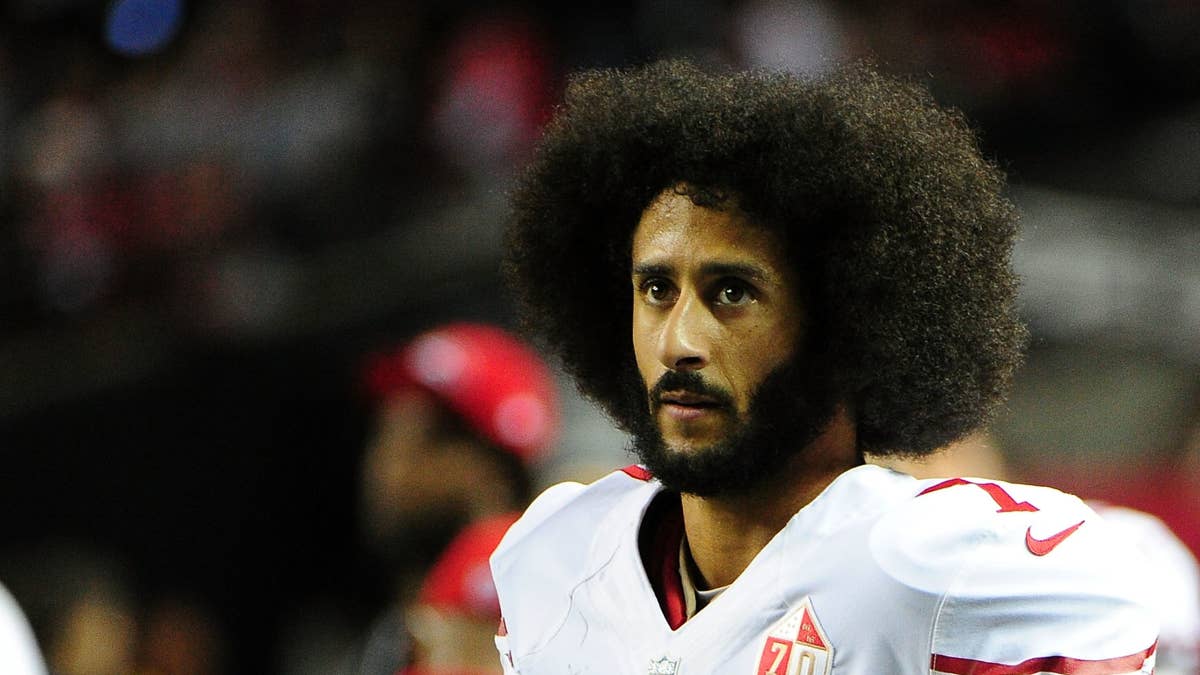
Colin Kaepernick has long maintained that his peaceful protests during the national anthem cost him his NFL career. Now, he's putting a price tag on that exile: a staggering $150 million in lost earnings.
In a recent interview with The San Francisco Standard, the former 49ers quarterback detailed how he believes the league orchestrated his blackballing after he took a knee in 2016 to protest police brutality. At 29, fresh off leading San Francisco to a Super Bowl, Kaepernick expected calls from other teams. Instead, he got silence.
“A decade later, he’s still waiting — essentially blacklisted from the sport he loved,” the report noted, citing Kaepernick's own estimate of his financial losses. The former Nevada standout hasn't played a down since 2016, and no team has offered him a contract since.
Despite the personal cost, Kaepernick says he has no regrets. He remains deeply committed to the cause that sparked his protest, even as he steps back from the spotlight.
“I’ve been very focused on doing the work. I mean, I want to make sure we’re doing it, moving things forward, having impact,” he told The Standard. “But the other part is, there was a realization that I was being positioned as the sole figure to be able to represent the movement, and I need to create space for other people to step up and be leaders.”
Kaepernick's activism has earned him recognition beyond the gridiron, including a humanitarian award from the Muhammad Ali Center in 2026. Yet the door to the NFL remains firmly shut, or so it seems.
“Over the last 10 years, we have consistently reached out to teams, over and over again, knocking on every door possible,” he said. “For me, I want to make sure that at any point in time, if my door is knocked on, that I’m ready to go.”
His most recent public attempt came in 2022 with a workout for the Las Vegas Raiders, but no contract followed. At 37, Kaepernick's chances of returning to the field grow slimmer each season, yet he hasn't ruled out a comeback.
The NFL has never officially banned Kaepernick, but critics and supporters alike have pointed to a pattern of teams passing on him despite his talent. The league's handling of his case remains a flashpoint in the broader debate over player activism and free speech.
Kaepernick's story echoes the struggles of other athletes who've used their platforms to speak out, from Erin Andrews' fight against victim-blaming to the ongoing debates in the WNBA over leadership and pay. But his case remains unique in its financial scale and its lasting impact on the league's image.
As Kaepernick approaches his 40s, the likelihood of an NFL return fades. But his legacy is already secure — as a quarterback who risked everything to stand (or kneel) for what he believed in. And while the money may be gone, his voice remains as powerful as ever.