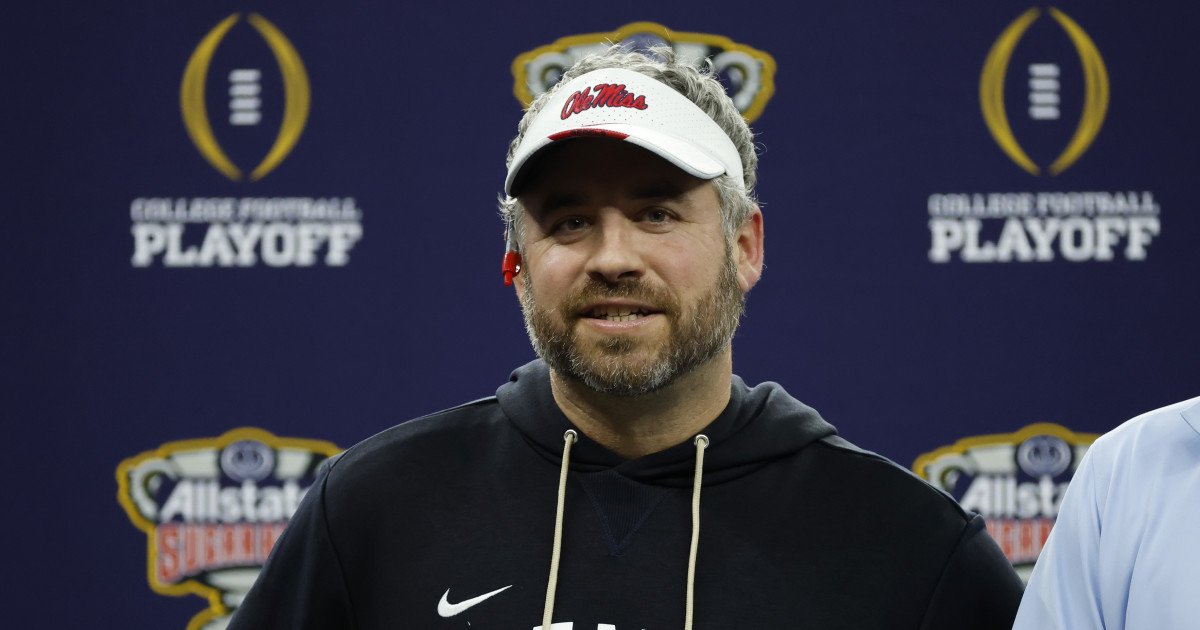
The college football world got its first real taste of the Pete Golding era at Ole Miss this week, and it came with a side of controversy. Golding, facing his first major public test since taking over the Rebels, directly addressed accusations from Clemson head coach Dabo Swinney that his program engaged in "blatant tampering" to land star linebacker Luke Ferrelli.
In a firm but measured response, Golding dismissed Swinney's claims and painted a picture of a straightforward, by-the-book recruitment process. "I'm not going to use this podium as a grandstand," Golding stated, emphasizing his trust in the established systems. "That's why there is enforcement. That's why we have a compliance office."

Golding detailed his version of events, explaining that Ferrelli had expressed interest in Ole Miss before the Fiesta Bowl. "I told him, 'Hey, I want you to be our green-dot Mike, but right now we've got one,'" Golding recounted. "I said, 'If that spot becomes available, it's yours.' It's a kid that wanted to be here, that we wanted to be here... and he's here, and we're happy to have him."
The accusations from Swinney, made several months ago, were far less diplomatic. The Clemson coach laid out a multi-tiered system of alleged wrongdoing, claiming Golding's actions went beyond simple rule-bending. "There's tampering. And then, there's blatant tampering," Swinney said earlier this year. He described what he called "Tampering 301," alleging communication with a player who wasn't yet in the transfer portal had reached an extreme level.
This clash highlights the ongoing, fierce debate surrounding player movement and recruitment ethics in modern college football. As programs jockey for position in the transfer portal era, accusations like these are becoming more common. The situation echoes other high-profile disputes, such as when the NCAA recently pushed back against conference efforts to slow tampering probes, showing the governing body is still trying to assert its authority in a rapidly changing landscape.
Currently, the NCAA is investigating Swinney's claims. However, the potential effectiveness of any punishment remains a major question mark. The organization's power to police such activities has been widely perceived as diminished in recent years, leading many to wonder if investigations carry any real weight anymore. This comes amid broader discussions, like the Big Ten's recent demand for a pause on transfer tampering rules, which argue the current system is unworkable.
For Golding, this public rebuttal is about more than just one player. It's an early statement on how he intends to run his program. With the Rebels off to a promising 3-0 start, he's quickly winning over the fanbase, and handling controversy with a calm, confident demeanor only solidifies that support. He's steering clear of a public feud, instead pointing to protocols and procedures.
Meanwhile, Swinney continues to build his own staff for the future, having recently made a major splash by hiring NFL veteran Rich Bisaccia. But for now, the focus is on the past and the recruitment of Ferrelli. Whether the NCAA's investigation will bring clarity or simply add to the confusion surrounding transfer rules is yet to be seen. One thing is clear: in today's college football, the battle for talent is fought as fiercely off the field as on it, and accusations of foul play are now part of the game.