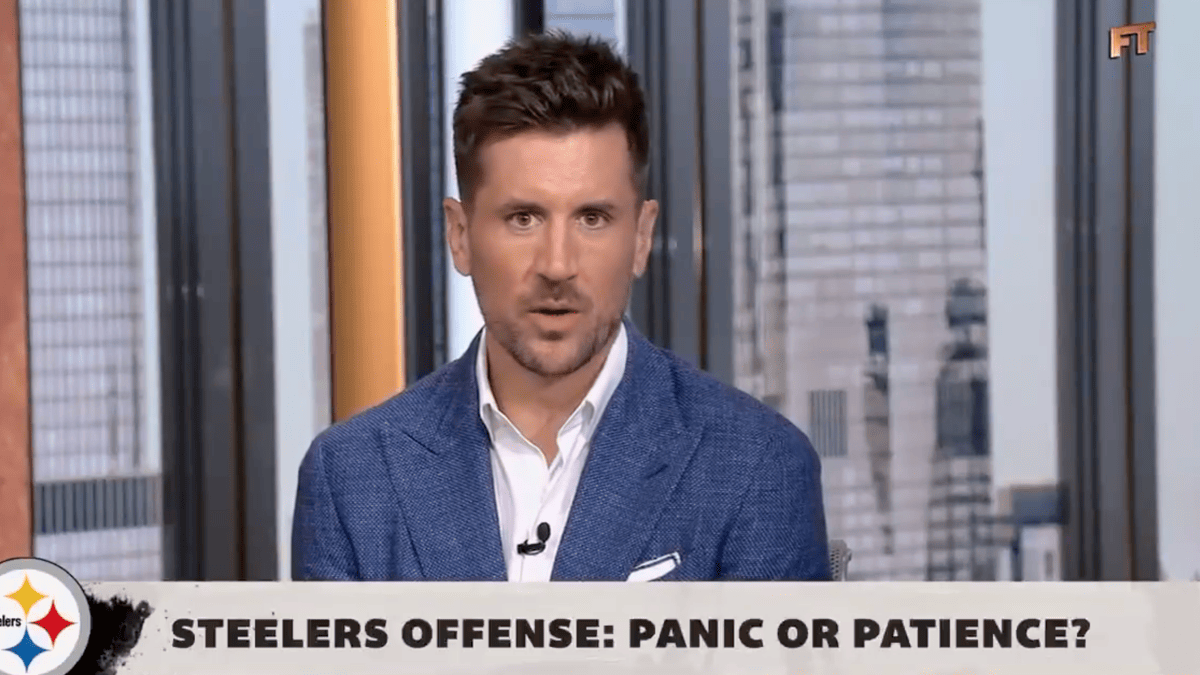
ESPN has built a reputation as the self-proclaimed "Worldwide Leader in Sports," but Wednesday's First Take segment may have set a new standard for journalistic irresponsibility. The network decided to have Jordan Rodgers—yes, Aaron Rodgers' brother—weigh in on the Pittsburgh Steelers' struggling offense, a unit led by none other than Aaron himself.
The segment, which asked whether fans should be "panicking or patient" about the Steelers' offense, was a masterclass in awkwardness. After two games that can generously be described as underwhelming, the Steelers' offense has looked disjointed, and Aaron Rodgers has faced his fair share of criticism. So who better to offer an unbiased take than his own sibling?
Unsurprisingly, Jordan Rodgers urged patience, while attempting to mask his obvious bias with a half-hearted disclaimer: "Rodgers was actually very accurate down the field…not trying to be a homer." The "not trying to be a homer" bit was about as convincing as a weatherman in a hurricane.
Let's be clear: Jordan Rodgers isn't the villain here. He's a family member doing his job, and expecting him to trash his brother on national TV is unrealistic. The blame squarely falls on ESPN's producers, who either failed to see the glaring conflict of interest or simply didn't care.
The backlash was swift and brutal on social media. Longtime sports media critic Jimmy Traina didn't mince words: "I'm not going to blame Jordan Rodgers for this. Whoever is in charge of the segment and in charge of First Take should take the hit for making him talk about his brother. This is embarrassing and cringe." Another fan called it "broadcasting malpractice," while one simply lamented, "Look at what they've done to ESPN."
This isn't just a one-off misstep; it's a symptom of a larger problem. ESPN has increasingly blurred the lines between journalism and entertainment, often prioritizing drama over objectivity. This segment was a glaring example, but it's far from the only one. The network has faced criticism before for overly cozy relationships with leagues and athletes, and this incident only adds fuel to that fire.
It's worth noting that Aaron Rodgers' performance has been a hot topic, and there's no shortage of analysts who've weighed in on his struggles. But having his brother provide that analysis is a bridge too far. It's like asking a defense attorney to prosecute their own client.
ESPN has a responsibility to maintain some semblance of editorial integrity. By airing this segment, they've shown a willingness to sacrifice credibility for a cheap talking point. The network should be embarrassed, and it's time for a serious rethink of how they handle such obvious conflicts of interest.
As the Steelers continue to struggle, the debate over Aaron Rodgers' future will only intensify. But one thing is certain: the next time ESPN wants to analyze his performance, they should find someone who isn't related to him. There's plenty of media scrutiny to go around, and it doesn't need to come from the family dinner table.