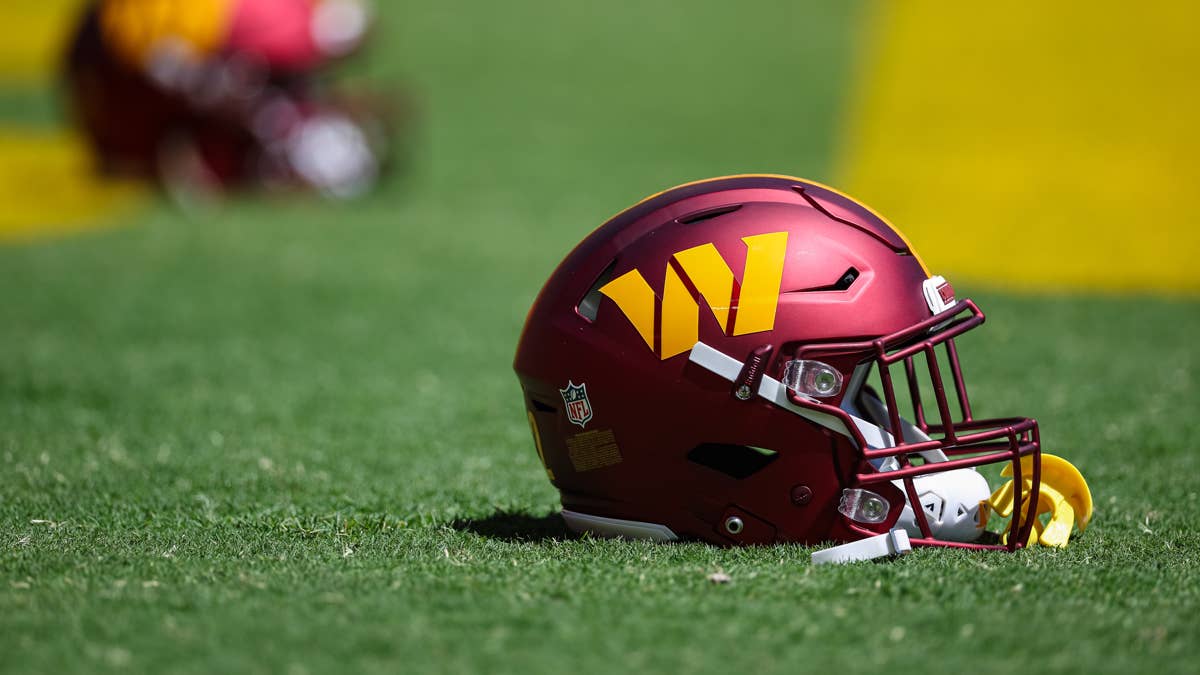
The Washington Commanders have stepped right back into a cultural minefield. The team's newly unveiled alternate helmet logo—a bold 'W' pierced by a spear—was intended as a bridge between past and present. Instead, it has become a lightning rod for controversy, drawing immediate and fierce condemnation from Native American organizations who see it as a disrespectful revival of harmful stereotypes.
A Logo That Misses the Mark
Team officials likely envisioned the design as a subtle nod to franchise history, a way to acknowledge the past while moving forward under the new Commanders banner. For a vocal segment of the fanbase, it achieved just that. However, for the Association on American Indian Affairs, the gesture fell painfully short. The organization didn't mince words in a statement to USA Today Sports, branding the logo "disappointing and inappropriate" and issuing a clear demand: stop using Native imagery as mascotry.

"It is time to stop repeating this cycle and listen to Native Peoples who have been clear, consistent, and unwavering on this issue," the statement read. "We are not your mascot." This sentiment echoes the long, contentious battle that ultimately led the franchise to abandon its former name, a fight that figures like activist Suzan Harjo know all too well.
Old Wounds Reopened
Harjo, a veteran of multiple lawsuits against the team over its prior identity, views the new logo as a cynical attempt to placate fans still clinging to the old era. "There are a lot of people in Washington D.C. (and parts of Virginia and Maryland) who really long for the days of the dreaded R-word," Harjo stated. "It was a vile name. It was one of the vilest ever." Her comments underscore the deep hurt that persists, suggesting the franchise's latest move feels like a step backward rather than forward.
The criticism extends beyond individual activists. The National Congress of American Indians (NCAI) also condemned the design, warning of its "insidious message." In their view, any "prideful nod to a harmful past" is inherently damaging, regardless of the team's intent. This isn't the first time the Commanders have faced scrutiny over their branding; their recent uniform overhaul was met with fan approval, but this logo controversy strikes a far more sensitive nerve.
A Divided Fanbase and a Persistent Problem
Despite the outcry, support for the spear-and-W emblem is undeniable. A significant portion of the Commanders' fanbase has never fully embraced the name change, viewing the old identity as an integral part of the team's legacy. For them, the new logo is a welcome acknowledgment of that history. This divide highlights the complex challenge the organization faces: how to honor its past without perpetuating the harms associated with it.
The controversy also places the NFL in a familiar, uncomfortable spotlight. The league has grappled with issues of cultural appropriation before, and the Commanders' situation is a stark reminder that a simple name change doesn't erase deeper issues. As the team continues its rebuild on the field, including major scouting efforts like deploying top brass to the Ohio State Pro Day, this off-field drama threatens to overshadow gridiron progress.
The Bigger Picture in Sports
This incident is part of a broader, ongoing conversation in sports about respect, representation, and the line between tribute and appropriation. It's a debate that surfaces in various forms, from golf's Masters fashion controversies to the intense reactions sparked by SI Swimsuit covers. What sets the Commanders' case apart is its direct tie to a specific, marginalized community's identity and the long history of litigation and protest surrounding the franchise.
As the dust settles on the logo's reveal, the Washington Commanders find themselves at a familiar crossroads. They must decide whether to defend a design that resonates with a segment of their fans or to heed the calls from Native American groups to fully move away from imagery they find offensive. The team's next move will speak volumes about what they learned from their own contentious history and what kind of legacy they truly wish to build for the future.