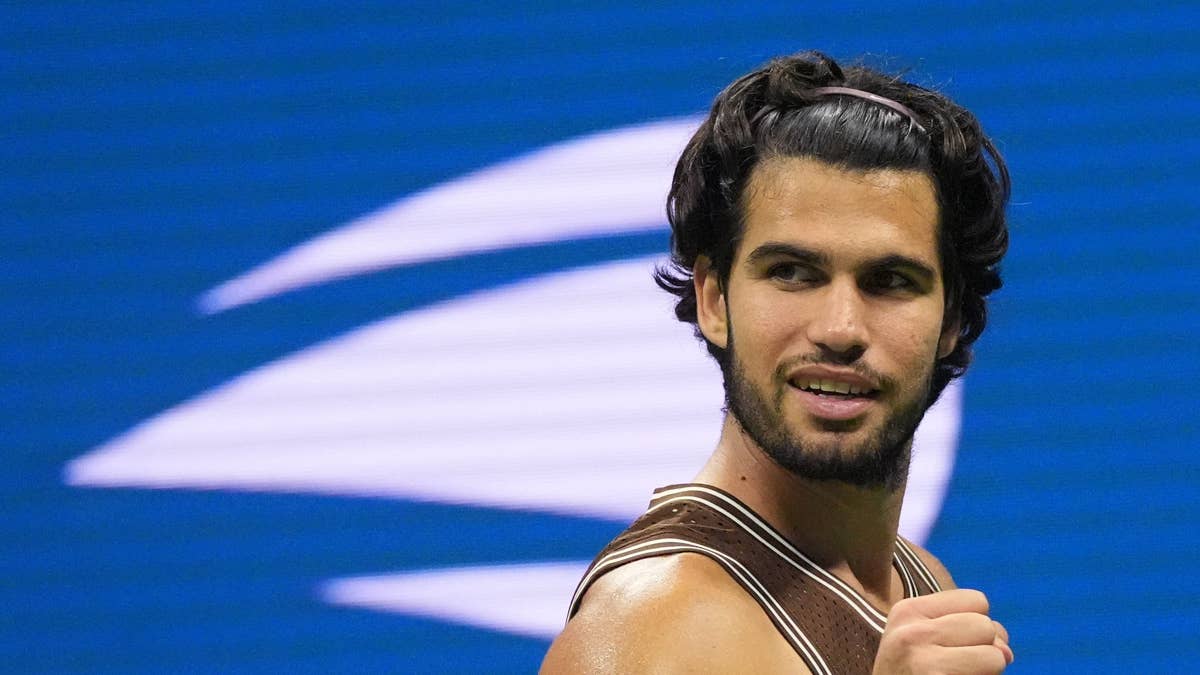
Carlos Alcaraz is back on the court, but the Spanish superstar isn't just focused on winning another Grand Slam. After a four-month layoff due to a wrist injury, Alcaraz is using his return at the US Open to sound the alarm on a sport he believes is pushing its athletes to the brink.
"It's impossible to keep up with the grueling tennis calendar," Alcaraz said, pointing to the rising number of injuries across the tour. "We're seeing a lot of players getting injured, a lot of players getting tired. If they don't do anything about it, we're gonna see it even more in the future."
The seven-time Grand Slam champion, who captured his third French Open title in June, missed the entire grass-court season and the Paris Olympics because of the injury. While he's eager to compete at Flushing Meadows, he's already planning for a future where rest takes priority over ranking points.
"Seeing how tight the calendar is, obviously I don't want to have this break because of an injury. But in the future, I'm gonna take some breaks… some long breaks. Maybe not 4 months, but 1 month, 2 months… start missing some tournaments because it's impossible to play them all," Alcaraz explained. "They're adding more important tournaments. In a way, they're making us play…"
Alcaraz isn't alone in his frustration. The tennis world is buzzing with calls for change, especially after Jannik Sinner's shocking withdrawal from the US Open, which has only intensified the debate.
Sports journalist Dan Wolken echoed Alcaraz's concerns on social media, writing, "Tennis really really needs a reckoning about the calendar. The sport has become too physical to support the schedule but most players can't skip tournaments because their ranking will drop."
The issue is a vicious cycle: players need to compete to maintain their rankings, but the relentless schedule leaves them vulnerable to injuries that force even longer absences. Alcaraz's own situation is a prime example—he missed four months, but a shorter, planned break could have prevented it.
Some critics have even pointed to Alcaraz's on-court attire as a distraction, but the real story is the physical toll the sport is taking. As the tour expands with more mandatory events, players are left with little room for recovery.
Alcaraz's message is clear: if tennis doesn't adapt, the sport's biggest stars will keep breaking down. He's already vowed to take extended time off in the future, even if it means skipping marquee tournaments. "I'm gonna start missing some tournaments," he reiterated, a warning that the current system is unsustainable.
With the US Open underway, all eyes are on Alcaraz's performance, but his words carry weight beyond the court. His commitment to the 2026 event is clear, but whether the sport will listen to his plea for a better calendar remains to be seen.