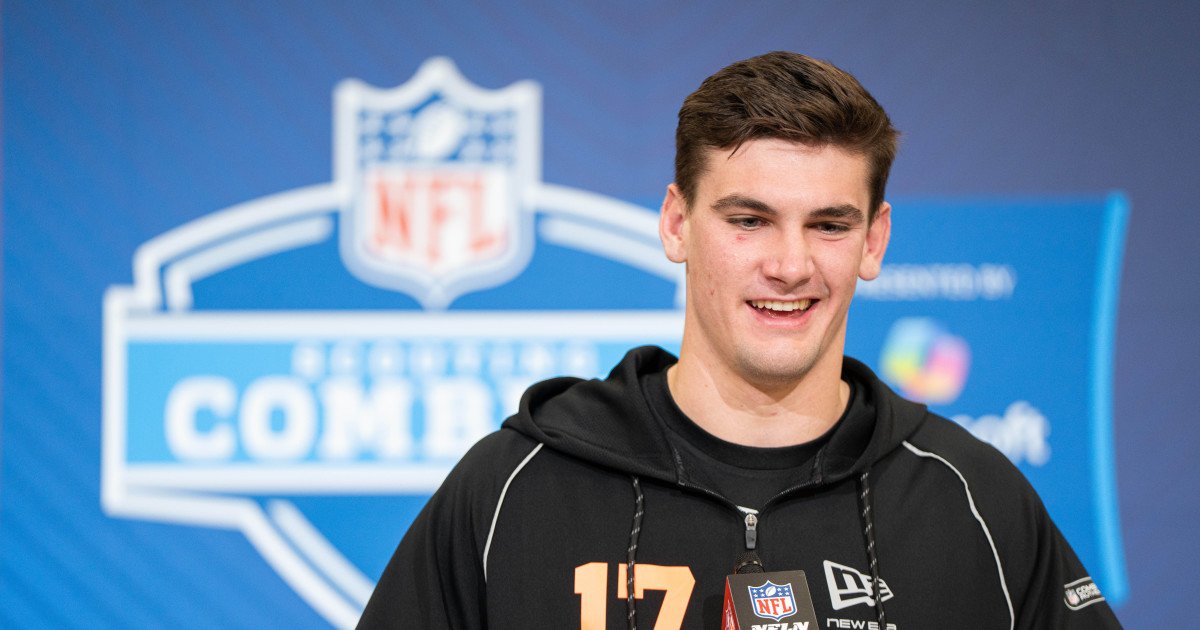
The NFL Scouting Combine has always been about human potential—raw athleticism, grit, and the intangible qualities that make football players great. But this year, a different kind of potential is dominating conversations in Indianapolis hotel lobbies and team suites: the potential for artificial intelligence to fundamentally reshape how NFL teams operate, and who gets to keep their job.
The Unseen Combine Story: Fear in the Front Office
While prospects like Mississippi State's Brenen Thompson dazzle with 4.26-second 40-yard dashes, a more subdued tension is brewing among the league's decision-makers. According to reports from ProFootballTalk's Mike Florio, multiple NFL employees are grappling with a new reality—their roles in scouting and quality control may not be safe from the march of automation.

"The two biggest areas of concern are, for now, scouting and quality control," Florio wrote, citing conversations with general managers and team sources. The core of the anxiety? AI programs are already capable of producing player evaluation reports that are described as "eerily thorough and accurate" based on data input. What once required countless hours of film study and cross-referencing by a team of scouts can now be synthesized by algorithms in moments.
More Than Just Number Crunching
The concern extends beyond simple data aggregation. Florio's column raises a provocative question: "Could AI eventually trim, and possibly supplant, the analytics department in each team?" If the primary function of these departments is tracking data, refining probabilities, and tweaking formulas, AI can perform these tasks faster and at a fraction of the cost. This isn't science fiction; it's a looming budgetary and structural decision for every franchise owner.
Perhaps the most startling speculation comes regarding the game itself. Florio posits a future where "the head coach could simply become the conduit for the decisions made by an AI program as to every situation that unfolds during a game." Imagine a world where fourth-down decisions, play calls, and even personnel packages are dictated not by gut instinct or years of experience, but by an algorithm calculating optimal outcomes in real-time.
Human Excellence Still Steals the Show
Amidst this technological unease, the Combine still delivered its signature moments of pure, unassailable human speed. Mississippi State wide receiver Brenen Thompson didn't need an algorithm to prove his worth—he blazed a 4.26-second 40-yard dash on Saturday, coming heartbeats away from challenging Xavier Worthy's record 4.21.
The speed display was part of a stunning sequence. Just before Thompson's run, LSU's Zavion Thomas scorched the track with a 4.28-second time. The back-to-back exhibitions left veteran scouts in awe. ESPN's Jeff Legwold noted that "several personnel evaluators... couldn't remember players who had run 40s in the 4.2s on back-to-back attempts." For now, that kind of visceral, eyewitness assessment still requires a human in the stands.
The 2026 Combine may be remembered as a turning point. It showcased the breathtaking physical pinnacle of the sport while simultaneously highlighting the existential questions facing the people who build the teams. The league is caught between two worlds: one where a receiver's electrifying speed is measured in hundredths of a second, and another where his professional fate could be determined by lines of code. The fear isn't that AI is coming—it's that it's already here, and it's learning fast.