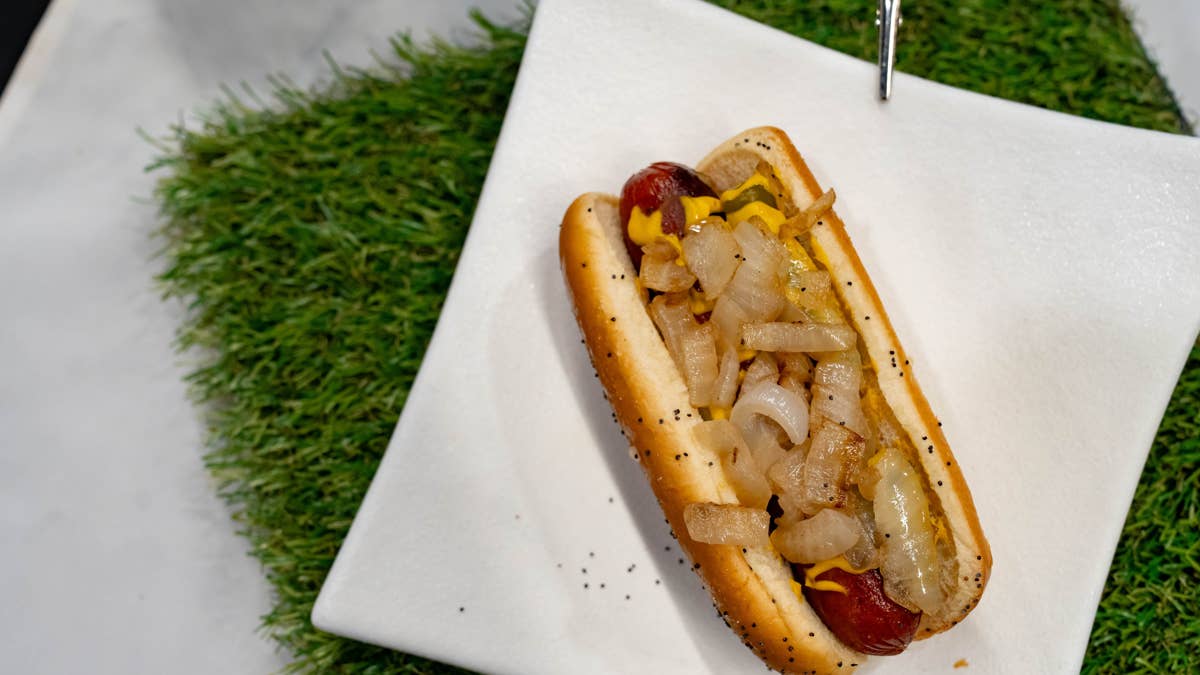
The Formula 1 Miami Grand Prix revs into town this weekend, but it’s not just the roar of engines turning heads—it’s the price of a hot dog. The event’s infamous “golden glizzy,” a $100 wagyu beef frank topped with a full tin of caviar, crème fraîche, and actual gold flakes, has fans crying foul over what many call an “obscene” markup.
Set for Sunday, May 3—one day after the Kentucky Derby—the Miami Grand Prix promises a weekend of high-speed thrills and luxury living. But for the hundreds of thousands of spectators expected to pack the Miami International Autodrome, the cost of a simple snack has become a flashpoint. While most ballparks and stadiums across the country offer a standard hot dog for five or six bucks, Miami is serving up a gourmet version that costs more than many fans’ tickets.

The Golden Glizzy: A $100 Frankfurter
The “golden glizzy” first appeared at the Miami Open and has now rolled into the Grand Prix paddock. Served at Chevre, a high-end concession stand, the hot dog is made from wagyu beef—a premium Japanese breed known for its intense marbling—then lavished with a full tin of caviar, a dollop of crème fraîche, and a sprinkle of edible gold. It’s a culinary stunt that screams exclusivity, but critics argue it’s a step too far, even for a sport synonymous with champagne and yachts.
“Not paying that!” one fan wrote on social media. Another added, “I like hot dogs and caviar, but no thanks.” The backlash has been swift, with many pointing out that the price tag feels out of touch with everyday racegoers. “I mean…this is just absurd. But you know the influencers will be all over it and paying for it,” one commenter noted.
Food and beverage prices at major sporting events are notoriously inflated, but the Miami Grand Prix’s hot dog has sparked a debate about where the line should be drawn. For context, a similar gourmet hot dog at a typical MLB game might run $15 to $20—still a premium, but a far cry from three figures. “There’s just no way it’s worth it,” another fan concluded.
Miami’s Luxury Sports Scene Under Fire
This isn’t the first time Miami’s sports scene has faced scrutiny over lavish displays. Earlier this year, Trump's UFC Entrance Met With Uncharacteristic Boos in Miami showed that even political heavyweights can’t always win over the crowd. And during the Miami Open, Sabalenka's Trump Photo Sparks Firestorm highlighted how quickly controversy can ignite in South Florida.
Yet the hot dog outrage feels different—it’s a gut-level reaction to everyday pricing gone wild. For many fans, the golden glizzy symbolizes a growing divide between the ultra-wealthy attendees and the average race lover who just wants a decent meal without breaking the bank. As one fan put it, “What’s the most you would be willing to pay for the best hot dog in the world?” The answer, for most, seems to be far less than $100.
Will Fans Bite?
Despite the backlash, the golden glizzy is likely to find buyers among the influencer crowd and deep-pocketed VIPs. The Miami Grand Prix has positioned itself as a destination for the rich and famous, and a $100 hot dog is just another line item in a weekend that can easily cost thousands. But for the everyday fan, it’s a bitter pill to swallow—and a reminder that in the world of F1 luxury, even a humble hot dog can become a status symbol.
As the engines fire up this weekend, one thing is certain: the golden glizzy will be a talking point long after the checkered flag falls. Whether it’s a culinary masterpiece or a marketing gimmick gone too far, it’s already made its mark on the 2025 Miami Grand Prix.